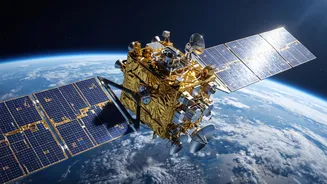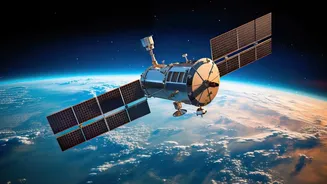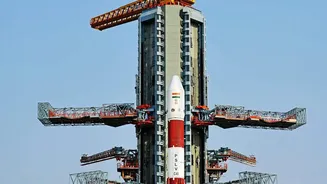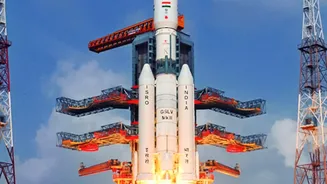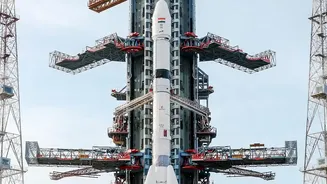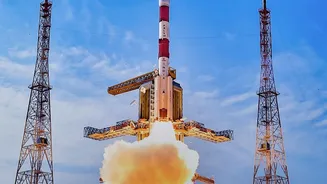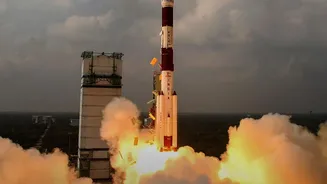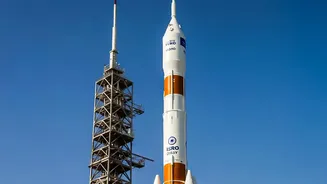




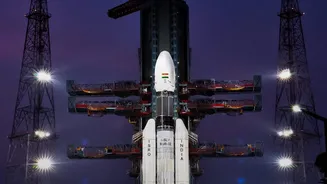
India is preparing to launch the NVS-03 satellite, a crucial mission by ISRO aimed at reinforcing the nation's sovereign navigation capabilities. This launch is more than a routine update; it's a vital step to ensure the long-term reliability of NavIC.
Why This Launch Matters
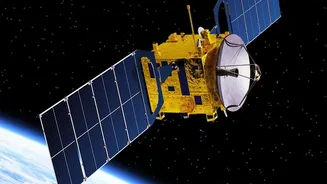
The upcoming launch of the NVS-03 satellite is a critical move to strengthen India's indigenous regional navigation system, known as NavIC (Navigation with Indian Constellation). Developed by the Indian Space Research Organisation (ISRO), NavIC provides essential positioning, navigation, and timing services for India and a region extending 1,500 kilometres beyond its borders. However, the system has faced significant challenges. Several first-generation satellites have been hampered by the failure of their imported atomic clocks, a component essential for providing accurate location data. With some satellites also nearing the end of their 10-year operational lives, the NavIC constellation's reliability has become a pressing concern. The NVS-03 is part of a new series of five second-generation satellites designed to replace the aging fleet, restore full service, and introduce upgraded technology.
A Question of Reliability
A navigation satellite is fundamentally a clock in the sky, and its accuracy is everything. These satellites work by transmitting timed signals, and a receiver on the ground calculates its position by measuring the tiny differences in when it receives signals from multiple satellites. Even a nanosecond-level error in timing can result in a positioning error of several metres on the ground. The first generation of NavIC satellites relied on imported rubidium atomic clocks that experienced a high rate of failure, reducing the number of fully functional satellites below the minimum required for robust service. This issue directly impacted the system's ability to provide standalone positioning services, making the launch of replenishment satellites like NVS-03 essential for the continuity and dependability of NavIC.
Upgrades for a New Generation
NVS-03 and its counterparts in the second-generation series bring significant technological advancements. One of the most important upgrades is the inclusion of an indigenously developed rubidium atomic clock. Developed by ISRO's Space Applications Centre, this home-grown technology is a major step towards self-reliance, aiming to solve the reliability issues that plagued the earlier imported clocks. Additionally, the new satellites transmit signals in the L1 frequency band, alongside the existing L5 and S bands. The L1 band is one of the most widely used frequencies for civilian GPS and other global navigation systems. Its inclusion is expected to make it easier for manufacturers to produce NavIC-compatible chipsets for smartphones and other consumer devices, driving wider adoption of the service.
The Strategic Need for Self_Reliance
The push for an independent navigation system like NavIC has deep strategic roots. India's decision to develop its own system was accelerated after access to the American GPS was reportedly denied during the 1999 Kargil War. This highlighted the risk of relying on foreign_controlled systems, which could be restricted or degraded during geopolitical conflicts. Having a sovereign navigation capability ensures that India's military and security forces have secure, encrypted, and uninterrupted access to positioning data for critical operations. Beyond defence, NavIC provides crucial services for disaster management, transportation, precision agriculture, and financial systems that rely on accurate time_stamping, reinforcing India's technological autonomy.