






A Changing of the Guard
Meta has confirmed that Santosh Janardhan, its head of infrastructure and co-head of engineering, will step down in early 2027. Janardhan, who joined the company in 2009 when it was still just Facebook, has been a central figure in building the vast network
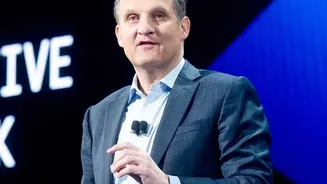
of data centres and custom hardware that powers its global services. In an internal memo, he stated it was 'time to pass the baton', noting the immense growth in the scale and complexity of the company's infrastructure. He will stay on through the first quarter of 2027 to ensure a smooth transition. Taking his place is David Brown, who joined Meta in July 2026 after nearly two decades at Amazon Web Services (AWS), where he oversaw critical compute and machine learning services.
The New Leader's Mandate
David Brown's appointment is a significant signal of Meta's strategy. By hiring a seasoned executive from AWS, the world's largest cloud provider, Meta is bringing in deep expertise in building and operating hyper-scale infrastructure with rigorous efficiency. Brown will not only lead the infrastructure division but will also serve as the Chief Technology Officer of Meta Compute. This initiative, led by President Dina Powell McCormick and technical lead Daniel Gross, is responsible for planning how Meta secures the immense computing power it needs for its AI ambitions. Janardhan praised Brown in his farewell memo, stating he possesses 'the operational depth and technical instincts' required for the role. This move is widely seen as a push to bring a new level of operational discipline to Meta's massive buildout.
The $145 Billion Context
This leadership transition is not happening in a vacuum. It comes as Meta is undertaking one of the most aggressive capital expenditure programs in corporate history. The company has guided for spending between $135 billion and $145 billion in 2026 alone, with the vast majority earmarked for AI infrastructure. This figure has escalated dramatically, from $72 billion in 2025 and just $28 billion in 2023. This spending funds the construction of massive data centres, the purchase of tens of thousands of specialized AI accelerator chips, and securing long-term energy contracts to power it all. The enormous outlay has put pressure on the company’s finances, resulting in negative free cash flow of $2.12 billion in the third quarter and prompting S&P Global Ratings to lower its outlook on Meta's credit rating to negative.
Why Infrastructure Is the Battleground
For tech giants like Meta, Google, and Microsoft, AI infrastructure has become the primary battleground. The performance of future products, from AI assistants like Meta's Muse to the core recommendation algorithms that drive ad revenue, depends entirely on the power and efficiency of the underlying hardware. Building this infrastructure is a monumental challenge involving more than just buying servers. It requires solving complex problems in scalability, managing petabytes of data, and ensuring high-speed networking between thousands of chips. Failure to scale effectively can create crippling bottlenecks that slow down innovation and cede ground to competitors. By bringing in an AWS veteran, Meta is betting on a leader who has experience winning this exact kind of war at an unprecedented scale.
What It Signals for Meta's Future
The handover from Janardhan to Brown signals a new phase in Meta's AI journey. While Janardhan was an architect of the systems that enabled global social networking, Brown is an operator schooled in the hyper-efficient, service-oriented world of cloud computing. His appointment comes as Meta is reportedly exploring whether it could one day turn its vast, expensive infrastructure into a commercial cloud business of its own, competing directly with his former employer, AWS. The immediate task, however, is to translate Meta's colossal spending into tangible returns, both in product capabilities and financial performance. Brown’s primary challenge will be to steer this expansion while addressing investor concerns about cost control and the path to profitability for Meta's AI ventures.