


A Tale of Two Moons
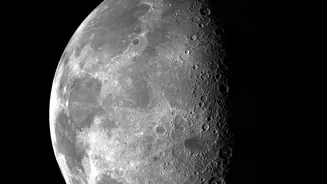
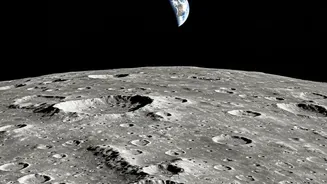
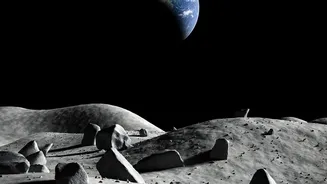
Anyone who has looked at maps of the Moon knows it is a world of two halves. The nearside, permanently turned toward Earth, is covered in vast, dark plains of volcanic rock called 'maria'. In contrast, the farside is dominated by a more ancient, heavily
cratered landscape with a much thicker crust. For decades, scientists have wondered what caused this dramatic difference, or 'dichotomy'. It's one of the biggest puzzles in lunar science. Was it a massive asteroid strike? A collision with a long-lost second moon? While many theories have been proposed, direct evidence has been missing, primarily because every sample ever returned from the Moon—by both the Apollo and previous robotic missions—came from the familiar nearside. That is, until now.
Historic Samples from the Hidden Side
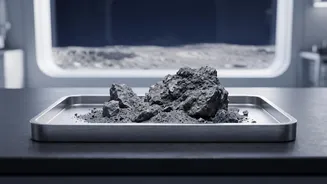
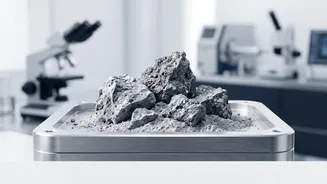
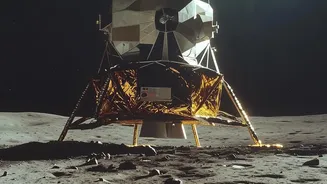
In a historic achievement, China's Chang'e-6 mission successfully collected and returned the first-ever rock and soil samples from the Moon's far side in 2024. The spacecraft landed in the vast South Pole-Aitken Basin, the oldest and largest impact crater on the Moon, a place scientists believed might hold clues to the Moon's earliest history and perhaps even material from its mantle. By finally getting their hands on material from this unexplored territory, researchers could make direct chemical comparisons between the two hemispheres, testing theories about the Moon's formation and evolution in the laboratory.
The Gravitational Connection
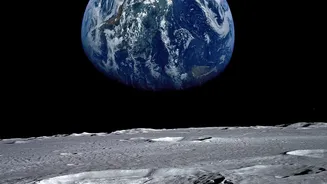
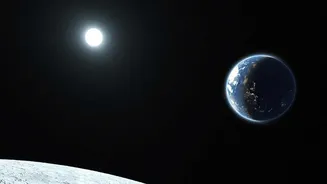
Recent analysis of these farside samples, published by a team led by Professor Hejiu Hui of Nanjing University, points to a fascinating culprit: Earth's gravity. According to their research, the mystery begins shortly after the Moon formed and became tidally locked with Earth, meaning the same side was always facing our planet. This gravitational lock wasn't perfectly gentle. The team suggests that Earth's immense gravity exerted a stronger pull on the nearside, creating 'tidal heating'. This process would have kept the nearside warmer than the farside. While the mantle—the layer beneath the crust—appears chemically similar on both sides, this temperature difference seems to have had dramatic consequences.
A Molten Rock Conveyor Belt
The scientists propose that this uneven heating set up a massive convection system within the Moon's ancient, globe-spanning ocean of molten rock. Think of it as a giant, slow-moving conveyor belt. Hot magma and lighter crustal materials, such as magnesium-rich rocks, were driven from the warmer nearside toward the cooler farside. This planetary-scale migration of material would have piled up on the farside, creating its thicker crust. Meanwhile, the remaining magma, rich in heat-producing elements like potassium and thorium, was concentrated on the nearside. This would explain why the nearside experienced more prolonged volcanic activity, which created the dark maria we see today.
Solving a Lunar and Terrestrial Puzzle
This theory neatly explains several key features of the Moon's two faces: the farside's thicker, more magnesium-rich crust and the nearside's concentration of volcanic plains and heat-producing elements. It shows how the same underlying mantle material could produce two vastly different surfaces, all thanks to the persistent gravitational influence of Earth billions of years ago. Understanding how the Moon evolved is crucial not just for lunar science, but for understanding the Earth-Moon system as a whole. The Moon's surface is like a time capsule, preserving a record of events from the early solar system that has long been erased on our own geologically active planet. By studying these precious farside samples, we are piecing together the story of our nearest celestial neighbor, and in doing so, learning more about the forces that shaped our own world.