





The IEA's Shocking Projection
The International Energy Agency has sounded the alarm: global electricity consumption from data centres, artificial intelligence (AI), and cryptocurrency could double by 2030. According to its latest reports, usage is projected to surge from an estimated
485 terawatt-hours (TWh) in 2025 to nearly 1,000 TWh by the end of the decade. This massive increase is equivalent to adding the entire current electricity consumption of a country like Japan or Germany to the world's power grids. The agency identifies the explosive growth of AI as the primary driver, potentially accounting for three-quarters of this new demand. The IEA is so concerned it has begun using satellite imagery to track the construction of major new AI-focused data centres worldwide.
What's Fuelling the Surge? AI and Digitalisation
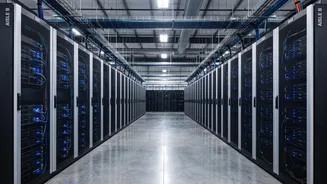
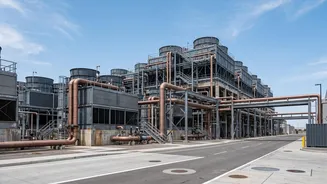
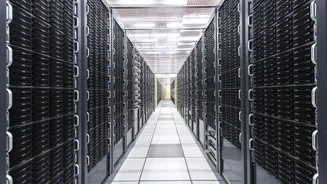
The insatiable appetite for data is the core reason for this energy boom. The rise of generative AI is a major factor; a single advanced AI query can consume nearly ten times more electricity than a simple Google search. Training massive AI models is even more energy-intensive. This, combined with our growing reliance on cloud computing, video streaming, and digital transactions, means more and more powerful servers are needed. These servers not only consume electricity to run but also require enormous amounts of power for cooling systems to prevent overheating. Tech giants have become some of the largest corporate buyers of electricity globally to power these 'hyperscale' facilities.
India's Data Centre Boom
This global trend has profound implications for India, which is in the midst of its own unprecedented data centre expansion. Driven by a booming digital economy, data localisation policies, and huge investments from global and domestic players, India's data centre capacity is growing at a compound annual growth rate of around 24%, outpacing the global average. The country's capacity has already quadrupled in recent years, with a significant portion of new construction being AI-ready. Major hubs like Mumbai, Navi Mumbai, and Chennai are seeing exponential growth, attracting billions in investment. Projections suggest India’s data centre market could grow from around 1.4 GW in 2025 to as much as 12 GW by 2030, positioning it among the top five global markets.
A Challenge for India's Power Grid
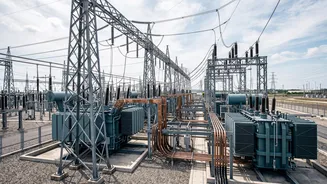
This rapid growth presents a formidable challenge for India's energy infrastructure. The country's data centre electricity demand is projected to increase dramatically, with some estimates suggesting a nearly five-fold increase to 57 TWh by 2030. The Indian government itself acknowledges that data centre power demand could reach around 17 GW by 2031-32. This added strain on the grid comes as the nation is already working to meet rising demand from industrialisation and a growing population. Ensuring a reliable, uninterrupted power supply is critical, as any downtime can be catastrophic for digital services. The challenge is not just about generating more power, but also about upgrading transmission infrastructure to deliver it to the concentrated data centre hubs without causing instability.
The Path to Sustainable Digital Growth
The key question is how to power this digital expansion sustainably. While tech companies are major investors in renewable energy, the sheer pace of growth means demand is also increasing for fossil fuels like natural gas and coal in many parts of the world. For India, meeting this demand while pursuing its ambitious goal of 500 GW of non-fossil fuel energy capacity is a delicate balancing act. The solution will likely involve a multi-pronged approach: accelerating the build-out of solar and wind power, investing in advanced cooling technologies to make data centres more efficient, and exploring grid-smart solutions that allow data centres to operate more flexibly. The facilities being designed today will operate for decades, making it crucial to lock in sustainable and efficient design choices now to avoid future problems.