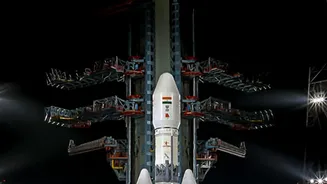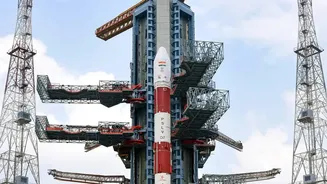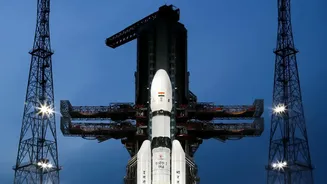





The New Space Race is Private
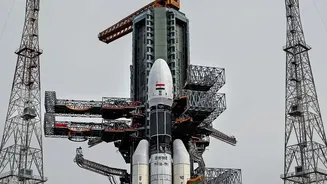
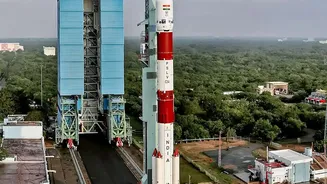
For decades, a career in India’s space sector meant one thing: securing a coveted position at the Indian Space Research Organisation (ISRO). Today, that picture is changing dramatically. Following landmark government reforms in 2020 that opened the sector to private
enterprise, India is now home to more than 400 space-tech startups. Companies like Skyroot Aerospace, Agnikul Cosmos, and Pixxel are not just launching rockets and building satellites; they are building a new economic engine. This shift is driven by IN-SPACe, a government body created to facilitate private participation, effectively turning ISRO into a guiding partner focused on R&D while private firms handle manufacturing and commercial services. The Indian space economy, currently valued at around $8.4 billion, is projected to surge to over $40 billion by 2033, creating a massive demand for new talent.
The Down-to-Earth Goldmine: Data Analytics
Perhaps the most significant job creation is happening not on the launchpad, but in data centres. Modern satellites are powerful data-gathering machines, creating a multi-billion dollar downstream market. Companies are hiring satellite data scientists and geospatial analysts in droves to turn this raw data into actionable intelligence. These professionals use satellite imagery and signals to advise on everything from crop health for agriculture and risk assessment for insurance firms to urban planning and disaster management. This field requires skills in remote sensing, Geographic Information Systems (GIS), Python, and machine learning, opening a major new pathway for tech graduates into the space industry.
Building the Ecosystem: Lawyers, Financiers, and Designers
An industry cannot be built on engineers alone. As the private space sector matures, it requires a full ecosystem of supporting professionals. There is a growing need for space lawyers who can navigate complex international treaties, orbital slot rights, and satellite licensing. Venture capitalists and finance professionals are needed to fund the next wave of innovation, with the government already seeding this with dedicated funds. Furthermore, these new companies need to sell their services and tell their stories. This has created opportunities for business development associates, marketing managers, and science communicators. Even visual designers and filmmakers are being hired to document missions and create compelling brand narratives for this new frontier.
The Software That Runs the Stars
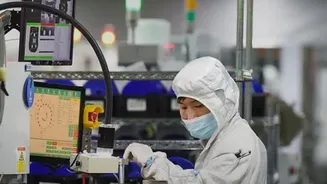
Behind every successful launch and satellite deployment is millions of lines of code. Aerospace software engineering has become one of the fastest-growing specialisations. These engineers develop everything from the on-board flight software that guides rockets to the ground-based systems for mission control and the AI algorithms for autonomous navigation. In an increasingly crowded orbit, robotics and automation engineers are also critical, designing systems to prevent debris collisions and perform automated manufacturing tasks. This convergence of software and space means that professionals with skills in C++, Python, embedded systems, and AI are just as valuable as traditional propulsion experts.
How to Prepare for Liftoff
For students and professionals looking to enter this dynamic field, the path is no longer limited to a top score on the ISRO entrance exam. While a foundation in STEM remains crucial, the skill set has broadened. Aspiring space professionals should focus on gaining expertise in high-demand areas like data science, AI and machine learning, mechatronics, and software development. Internships with startups like Pixxel, Skyroot, or Dhruva Space are becoming a key entry point, often leading directly to full-time offers. Following the founders and engineering leads of these companies on professional networking sites can provide valuable insight into the specific skills and roles they are hiring for. The key is to move beyond the astronaut dream and see the space sector for what it is becoming: a diverse and expansive industry with a role for almost every kind of talent.