
What is a Super-Earth?
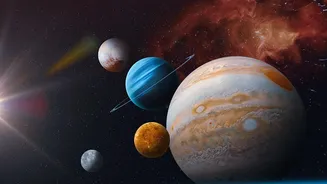
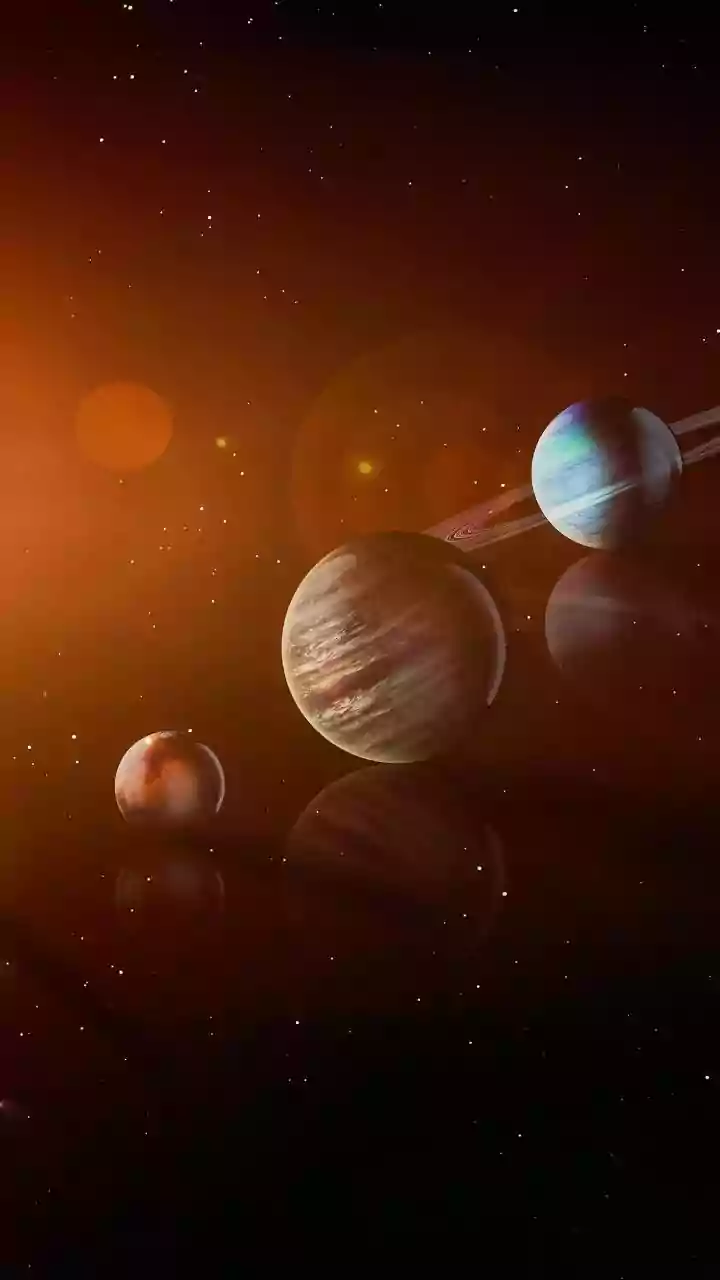
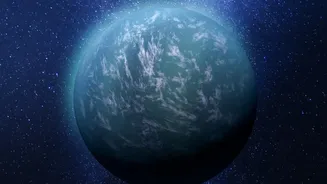
Before diving into the latest findings, it's helpful to understand what a 'Super-Earth' is. Our solar system has two main types of planets: small, rocky worlds like Earth and Mars, and massive gas or ice giants like Jupiter and Neptune. But as we look
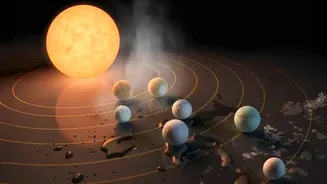
out into the galaxy, we've found that one of the most common types of planets is something we don't have here at home: the Super-Earth. These are planets more massive than Earth but lighter than Neptune, typically with a mass between two and ten times that of our own planet. They can be rocky, gaseous, or a mix of both, and their discovery has challenged old assumptions about how planetary systems form.
Peering Through the Haze of GJ 1214 b
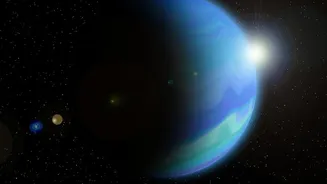
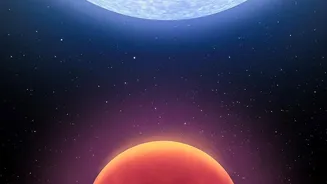
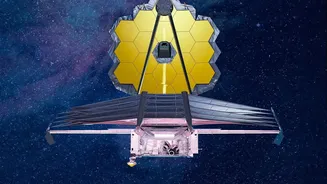
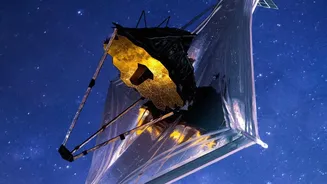
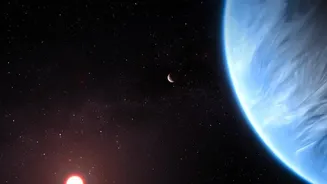
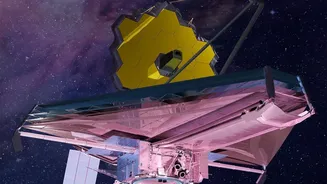
One of the most intriguing recent subjects of Webb's gaze is a planet called GJ 1214 b, located about 40 light-years away. Classified as a 'mini-Neptune' or 'Super-Earth', this world has puzzled astronomers for over a decade because it's shrouded in a thick layer of haze or clouds that older telescopes like Hubble couldn't penetrate. But Webb's powerful Mid-Infrared Instrument (MIRI) can see light wavelengths that were previously invisible, allowing it to finally pierce this veil. The result is the clearest picture yet of this mysterious planet's atmosphere.
Finding the Signature of Water
By tracking GJ 1214 b for nearly its entire orbit, scientists created a 'heat map' and analyzed the starlight filtering through its atmosphere. This technique, called transmission spectroscopy, works because different chemicals absorb specific colours of light. The missing colours in the star's light spectrum act like a chemical fingerprint, telling astronomers what molecules are present. The data from GJ 1214 b suggest that its atmosphere is not primarily made of light hydrogen molecules, but of heavier ones. This points to a steamy atmosphere, likely containing significant amounts of water vapour. While the planet is far too hot for liquid oceans, the presence of so much water vapour hints it might have formed as a 'water world' with vast quantities of icy material.
Not All Water is a Sign of Atmosphere
The search is complex, and finding water isn't always straightforward. In another case involving a rocky Super-Earth named GJ 486 b, Webb also detected hints of water vapour. However, this planet orbits its star so closely that its surface is a scorching 430 degrees Celsius. Scientists are cautious, noting that the water signature might not be from a planetary atmosphere at all. It could be coming from the star itself, as cool red dwarf stars can have water vapour in their outer layers. Distinguishing between a planet's steamy atmosphere and a star's 'humid' spots is a major challenge that requires further observation.
The Search for Habitable Worlds Continues
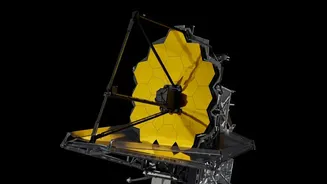
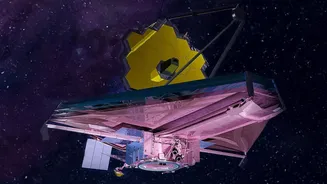
While planets like GJ 1214 b are too hot to support life as we know it, detecting water vapour is a monumental step. These discoveries demonstrate the incredible power of the James Webb Space Telescope to characterize the atmospheres of distant worlds. Each observation provides crucial clues about how planets form and evolve, especially those unlike any in our solar system. By studying the chemical makeup of these alien skies—whether they are steamy, filled with carbon dioxide, or something else entirely—we move closer to the ultimate goal: finding a rocky planet in the 'habitable zone' with an atmosphere that could potentially support life. The quest for Earth 2.0 is just getting started.