





Beyond Textbooks and Blackboards
For generations, the Indian classroom has been defined by rows of desks, a teacher at the front, and knowledge delivered through textbooks and chalk. But imagine a different scene. A student in a government school in a Tier-2 city puts on a headset and is
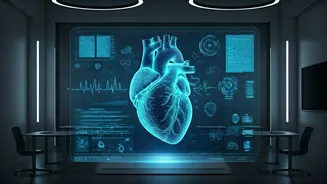
instantly transported. Suddenly, she is not in a classroom but inside a human heart, watching the valves open and close. Her classmate is assembling a virtual car engine, learning the function of each part by manipulating it with his own hands. This isn't science fiction; it's the new reality being powered by immersive virtual reality (VR) simulations. Companies and educators are rolling out dedicated VR labs designed to make learning tangible, interactive, and unforgettable, fundamentally changing the 'how' of education.
How It Works: The Virtual Lab
So, how does a VR classroom function? At its heart are specialised VR headsets, often loaded with a curated library of educational content. Indian EdTech firms like AjnaLens, for example, have developed platforms with hundreds of interactive modules aligned with the CBSE and other state board curricula. These aren't passive videos; they are fully interactive simulations. A physics student can conduct an experiment on gravity in a frictionless environment—something impossible in a real lab. A chemistry student can mix volatile chemicals and observe reactions without any physical danger. The simulations allow for trial and error, a crucial part of the scientific method that is often constrained by limited resources and safety concerns in traditional school laboratories. By providing a safe, repeatable, and endlessly explorable environment, VR helps demystify complex concepts that are often abstract and difficult to grasp from a textbook diagram.
The Push from Policy and Pedagogy
This technological shift is not happening in a vacuum. It is heavily supported by a major philosophical change in India’s educational landscape, driven by the National Education Policy (NEP) 2020. A core tenet of the NEP is the move away from rote learning towards experiential, discovery-based, and analytical learning. The policy explicitly calls for integrating technology to improve educational outcomes and emphasizes the importance of 'learning by doing'. VR simulations are a perfect fit for this vision. They provide the 'doing' part for subjects that have historically been theoretical for most students. Initiatives like the Pradhan Mantri Schools for Rising India (PM SHRI) are actively incorporating these technologies, aiming to equip thousands of schools with cutting-edge tools like VR labs to create a more engaging and effective learning environment for all.
Early Results and Student Engagement
While the large-scale rollout is still in its early days, the initial feedback from pilot programmes is overwhelmingly positive. Teachers report a dramatic spike in student engagement and curiosity. Concepts that previously required multiple lectures to explain are now being understood in a single VR session. Students who were once disengaged are now actively participating, asking questions, and exploring subjects with newfound enthusiasm. The ability to visualise and interact with topics—from the structure of a DNA molecule to the geography of the solar system—fosters deeper understanding and better retention of information. It transforms learning from a passive activity into an exciting adventure, which is perhaps its greatest strength.
Challenges on the Horizon
Despite the immense potential, the path to widespread adoption is not without its hurdles. The primary challenge is cost. High-quality VR hardware and software require significant investment, which may be prohibitive for many schools, especially in rural areas. This raises concerns about a new digital divide, where students in well-funded urban schools get access to superior learning tools. Another major challenge is teacher training. Simply installing VR labs is not enough; educators need to be trained on how to effectively integrate these tools into their lesson plans. Furthermore, content needs to be continuously updated, rigorously vetted for accuracy, and carefully mapped to the specific curriculum of different educational boards to ensure it complements, rather than distracts from, core learning objectives.