





The Psychology of Comfort
There's a reason we don't crave a cold salad when the monsoon clouds gather. Our desire for warm, hearty foods like soup is deeply rooted in our biology and psychology. When the weather is gloomy and we’re less exposed to sunlight, our serotonin levels
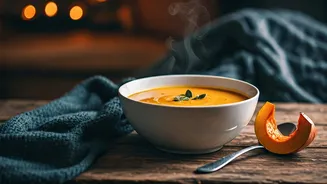
can dip, affecting our mood. Warm, carbohydrate-rich foods can help boost the production of this feel-good neurotransmitter. Beyond the science, there's the simple, undeniable comfort of warmth. Holding a warm bowl in your hands, inhaling the steam, and feeling the heat spread through you is a primal form of solace. It's a sensory experience that signals safety, care, and nourishment. This connection often begins in childhood, linking these foods to memories of family and home, making every spoonful a taste of nostalgia.
Why Pumpkin is the Perfect Hero
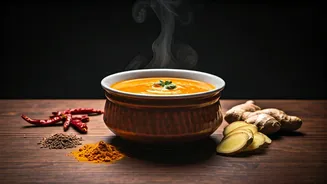
In India, the humble pumpkin, or kaddu, is a year-round staple, but it truly shines during the monsoon and cooler months. It's more than just a vegetable; it's a part of our culinary fabric, appearing in everything from savoury subzis to sweet halwas. Its natural sweetness and earthy flavour make it the perfect candidate for a comforting soup. When cooked down, pumpkin develops a creamy, luxurious texture without needing much help from heavy fats like cream. It’s packed with vitamins A and C, and antioxidants, making it a nutritious choice that feels indulgent. Its versatility allows it to pair beautifully with a wide array of Indian spices, from the warmth of ginger and cinnamon to the gentle heat of a single chilli.
The Secret to a Superior Soup
The difference between a good pumpkin soup and a great one often lies in a single step: roasting. While boiling the pumpkin is faster, it introduces water into the flesh, diluting its flavour. Roasting, on the other hand, caramelises the natural sugars in the pumpkin, concentrating its essence and adding incredible depth. The process is simple. Cut your pumpkin into chunks (no need to peel it yet), toss it with a little oil, salt, and maybe a few unpeeled garlic cloves, and roast until it’s soft and slightly browned at the edges. Once it cools, the skin will peel away effortlessly, and the soft, fragrant flesh will be ready for the next step.
Crafting Your Perfect Bowl
Once your pumpkin is roasted, the rest is easy. Sauté some aromatics—onions, ginger, and the roasted garlic—in a pot until soft. Add the roasted pumpkin flesh and enough vegetable or chicken stock to just cover the ingredients. Let it all simmer for about 10 minutes to allow the flavours to meld. Now for the magic. Use an immersion blender (or carefully transfer in batches to a regular blender) and blitz until the soup is completely smooth and velvety. At this stage, taste and adjust. Does it need more salt? A pinch of black pepper? Maybe a whisper of nutmeg or cinnamon to bring out its sweetness? You are the chef here. If you prefer a richer soup, a small splash of coconut milk or fresh cream can be stirred in at the end, but a well-roasted pumpkin often makes this unnecessary.
Finishing with Flair
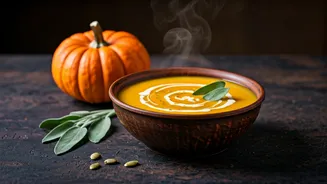
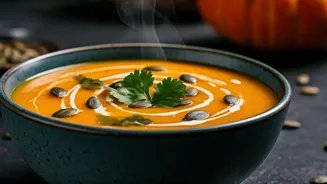
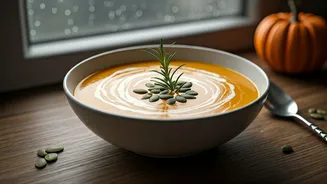
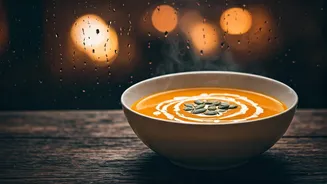
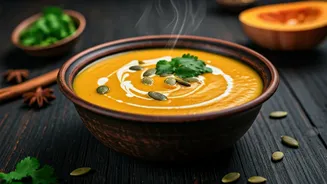
A great soup deserves a great garnish. This final touch adds texture, flavour, and visual appeal, turning a simple bowl into something special. A swirl of fresh cream or coconut milk creates a beautiful contrast. A sprinkle of toasted pumpkin seeds (pepitas) provides a satisfying crunch. You could also add a drizzle of high-quality olive oil, a scattering of fresh coriander or parsley, or even some crispy fried onions for an Indian-inspired twist. For a touch of heat, a pinch of red chilli flakes or a dash of smoked paprika works wonders. Don't be afraid to experiment and find the combination that makes your perfect rainy-night soup.