





A New Chapter in Mars Exploration
When NASA announced the recipients of its STRIDE program contracts, it was easy to see it as business as usual. The agency regularly partners with private industry. But the Science Transport and Robotic Innovation for Deployment and Exploration (STRIDE)
initiative is different. This isn't about building one more standalone rover to look for signs of ancient water. Instead, these seven initial contracts, with a combined value of around $17 million, represent the first small steps in a grander, more ambitious plan: using commercial robotics to build the future on Mars before the first humans even leave Earth. It’s a move that mirrors NASA's successful strategy of fostering a commercial space economy in low-Earth orbit and for lunar missions, but this time, the target is 225 million kilometres away.
The Commercial Vanguard
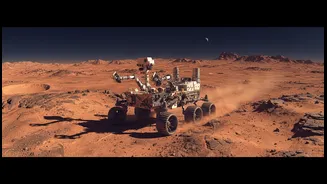
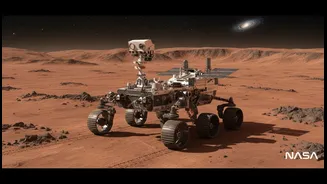
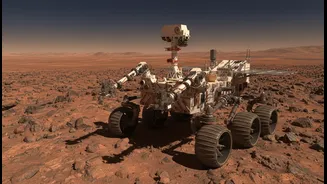
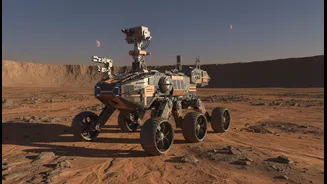
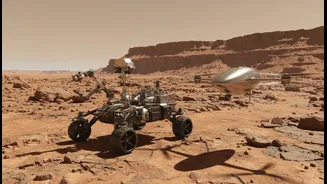
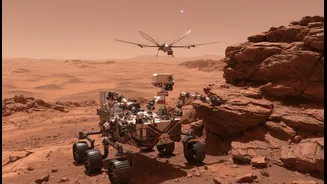
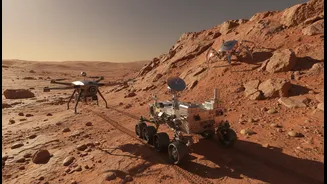
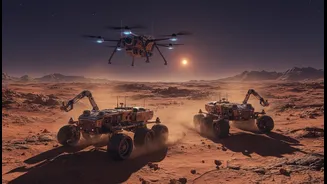
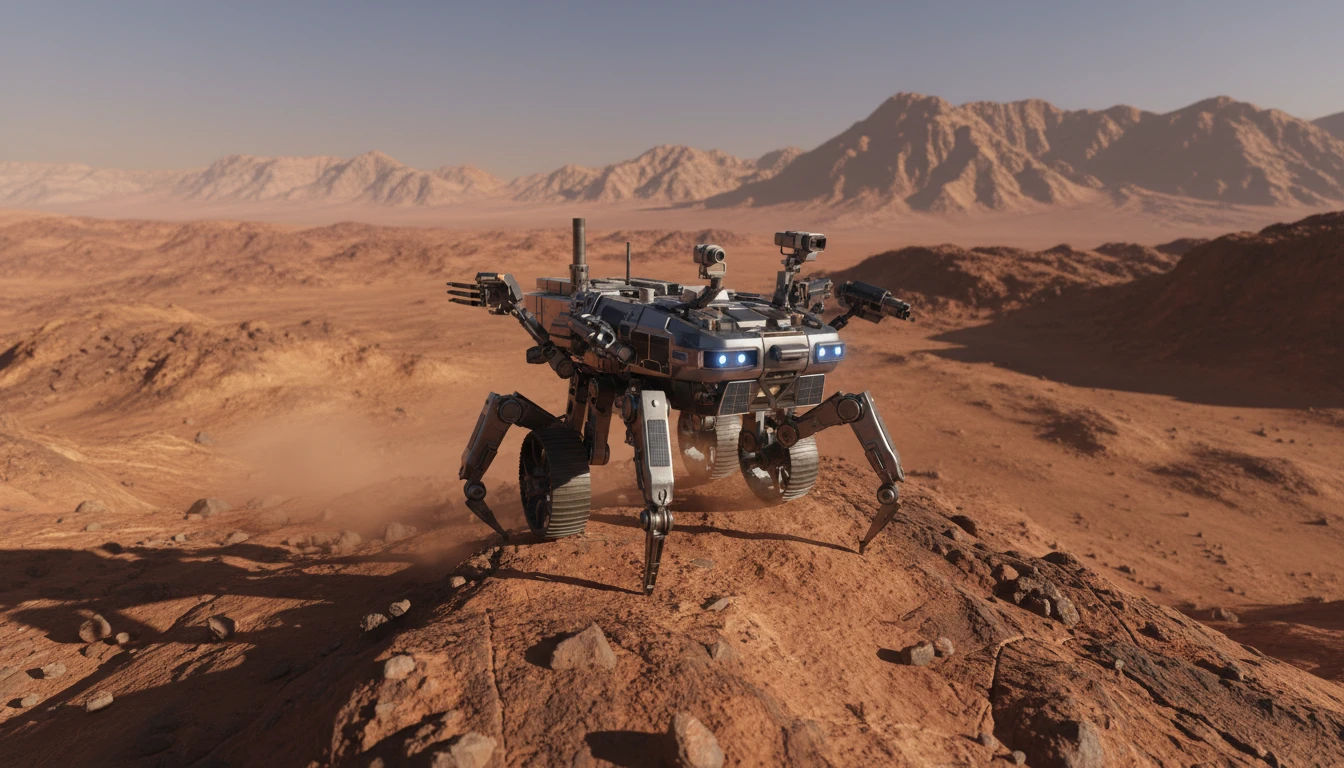
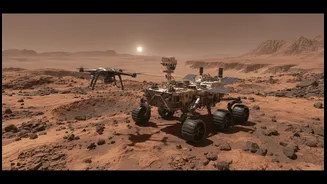
The seven companies selected represent a mix of established aerospace giants and nimble newcomers: AeroVironment, Astrobotic, Venturi Astrolab, Ground Control Robotics, Honeybee Robotics, Intuitive Machines, and MEI Technologies. Their collective task is to develop new concepts for advanced mobility on the Martian surface and in its thin atmosphere. Think less about the slow, deliberate rovers of the past like Curiosity and Perseverance, and more about a fleet of diverse, rugged, and potentially autonomous robots. The goal is to create systems that can traverse much more challenging terrain, cover greater distances, and carry significant scientific payloads. This initiative seeks to harness the rapid innovation happening in the private sector for both terrestrial and lunar robotics and adapt it for the harsh realities of Mars.
The Telerobotics Advantage
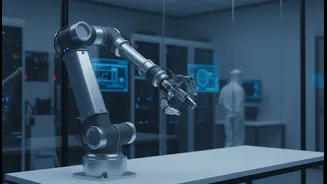
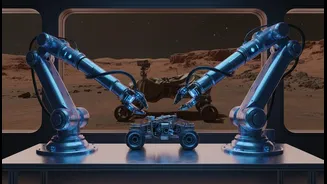
A key part of this new strategy revolves around a concept called low-latency telerobotics. For decades, controlling a rover on Mars has been a slow process, with communication delays of up to 20 minutes each way. This forces rovers to be semi-autonomous, following pre-planned command sequences. Telerobotics changes the game. The idea is to have astronauts in orbit around Mars, or perhaps even at a future lunar gateway station, controlling robots on the surface in near real-time. With only a few milliseconds of delay, an astronaut could ‘inhabit’ a robot, using its cameras as their eyes and its manipulators as their hands, with all the intuition and adaptability that a human brain provides. This allows for complex construction, delicate scientific work, and rapid exploration that current rovers simply cannot manage.
Building Mars Before We Go
This is the 'bigger story' behind STRIDE. NASA isn't just building exploration tools; it's building construction equipment. The long-term vision of the Moon to Mars program is not just to plant a flag, but to stay. To do that safely and sustainably, infrastructure is needed. Future telerobotic systems, developed from programs like STRIDE, could be tasked with preparing landing sites, deploying solar arrays, building habitats, and even searching for and processing resources like water ice. By having robots do the dangerous and preparatory work, the first human missions to Mars will arrive at a pre-established base of operations. This dramatically increases the safety, efficiency, and scientific return of those crewed missions.
NASA as a Customer, Not Just a Builder
Ultimately, the STRIDE contracts signify a profound strategic evolution for NASA. The agency is positioning itself as a customer for services on Mars, just as it has for cargo delivery to the International Space Station and for lunar landings. By defining the 'what' and 'why'—the scientific and exploration objectives—NASA is empowering the commercial industry to innovate on the 'how'. This public-private partnership model is designed to accelerate progress, reduce costs for the taxpayer, and build a robust, competitive aerospace industry that can support a multi-decade campaign of solar system exploration. These seven contracts are not the end of the story, but the beginning of the prologue to humanity's future on Mars.