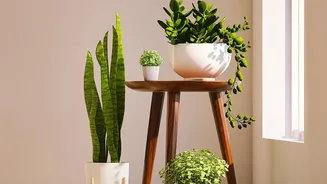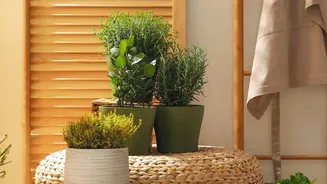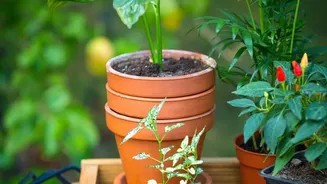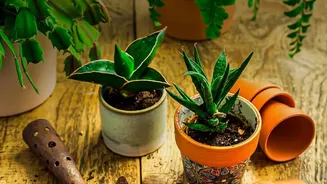






Becoming a successful indoor gardener can feel like learning a secret language. But what if one of the most effective habits for healthier, happier plants was also one of the simplest? It is, and it’s all about giving your plants a little spin.
The Science Behind the Spin
Have you
ever noticed your houseplant leaning dramatically towards a window, as if trying to get a better look outside? This isn't your imagination; it's a natural process called phototropism. In simple terms, plants grow towards their light source to maximize energy for photosynthesis. A growth hormone called auxin accumulates on the shaded side of the stem, causing those cells to grow longer and faster, which makes the plant bend towards the light. Indoors, where light almost always comes from one direction (a window), this leads to lopsided, uneven growth. One side becomes full and lush, while the side facing away from the window can become sparse and weak.
Why It’s More Than Just a Pretty Shape
Rotating your plants does more than just create a visually pleasing, symmetrical shape. It promotes overall plant health and vigour. When all sides of the plant receive adequate light, it develops stronger, sturdier stems all around, rather than weak, leggy growth on one side. This balanced structure helps the plant support itself better as it grows. Furthermore, regular turning improves air circulation around the foliage, which can help prevent issues like mould or pests from taking hold in dense, stagnant areas. It also encourages a more balanced root system, as the plant isn't investing all its energy into just one side.
The Simple ‘How-To’ of Rotating
The best part about this tip is its simplicity. There's no complex technique to master. The most common and effective method is to give your plant a quarter-turn in the same direction each time you rotate it. This ensures that over a few weeks, every part of the plant will have had its turn facing the primary light source. You don’t need a protractor or perfect precision; a rough 90-degree spin is all it takes. The goal is consistency, not perfection. Making this small action part of your regular plant care routine is the easiest way to guarantee you’ll remember to do it.
Finding Your Rhythm: How Often to Turn?
So, how often should you be spinning your leafy friends? Recommendations vary, but a widely accepted and easy-to remember guideline is to rotate your plants every time you water them. This links the action to an existing habit, making it effortless to adopt. For most common houseplants, this frequency works perfectly. Some sources suggest a rotation every one to two weeks is sufficient. Plants in lower light might benefit from more frequent turns, while those in very bright, direct light might need it less often. Ultimately, the key is observation. If you notice your plant starting to lean, it’s a clear sign it’s time for a turn.
Are There Any Exceptions to the Rule?
While nearly all foliage houseplants benefit from rotation, there are a few exceptions to consider. Some flowering plants, like orchids or Christmas cacti, can be sensitive to changes in their environment once they have set buds. Rotating them at this stage could cause them to drop their buds before they bloom. It’s best to leave them in place until the flowering cycle is complete. Additionally, if you use an overhead grow light that provides even, consistent light from directly above, rotation isn't necessary, as there's no single direction for the plant to lean towards. But for the vast majority of beginners with plants by a window, rotation is a non-negotiable for longterm health.