

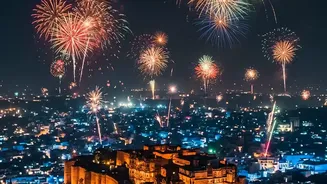
India has been crowned a premier travel destination for 2027, a recognition owed largely to its timeless cities where history isn't just in ruins, but is a living, breathing entity. Here are the historic gems at the heart of the coverage.
Varanasi: The Spiritual Heartbeat of India
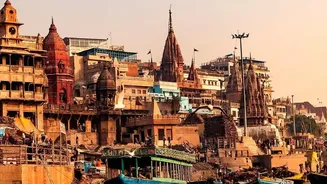
Varanasi, or
Kashi, isn't just a city; it's an experience that transcends time. Considered one of the world's oldest continually inhabited places, its soul resides along the sacred ghats of the River Ganga. For centuries, it has been a pilgrimage site where the cycles of life and death are witnessed in plain view, offering a profound glimpse into Hindu traditions. Visitors can take a boat ride at dawn to see the riverbank come alive with rituals or witness the mesmerising Ganga Aarti at Dashashwamedh Ghat in the evening, a synchronised spectacle of fire, prayer, and music. Beyond the river, the city's labyrinthine alleys lead to ancient temples like the revered Kashi Vishwanath Temple, bustling markets fragrant with incense, and artisan workshops where famous Banarasi silk sarees are woven. A short trip to nearby Sarnath, where Buddha gave his first sermon, adds another layer to its spiritual significance.
Jaipur: The Royal Pink City
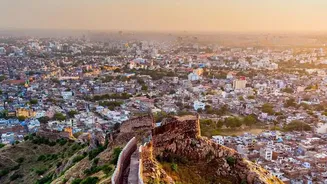
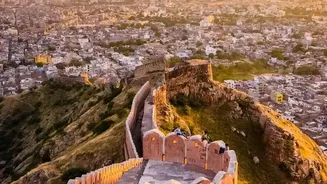
Jaipur, the capital of Rajasthan, is a masterclass in urban planning and royal grandeur. Founded in 1727 by Maharaja Sawai Jai Singh II, it was designed on a grid system inspired by both ancient Hindu architectural principles and Western layouts. Its nickname, the 'Pink City', comes from the terracotta hue its buildings were painted in 1876 to welcome the Prince of Wales. In 2019, the walled city was named a UNESCO World Heritage Site for this unique blend of architectural ideas. The city’s landmarks are a testament to its regal past, from the honeycombed façade of Hawa Mahal, designed for royal women to observe street life unseen, to the sprawling City Palace, which is still home to the royal family. The astronomical observatory, Jantar Mantar, another UNESCO site, showcases incredible scientific advancements from the 18th century. Jaipur remains a vibrant hub for arts and crafts, with its bazaars like Johari Bazaar and Bapu Bazaar offering everything from gemstones to block-printed textiles.
Hampi: The World of Boulders and Ruins
Once the magnificent capital of the Vijayanagara Empire, Hampi is now a vast, open-air museum set amidst a surreal landscape of giant boulders and lush paddy fields. Declared a UNESCO World Heritage Site in 1986, its ruins tell the story of one of South India's greatest empires. The site is split into two main areas: the Sacred Centre and the Royal Centre. The Virupaksha Temple, dedicated to Lord Shiva, has remained a place of continuous worship since the 7th century, its towering gopuram dominating the Hampi Bazaar. The star attraction is the Vijaya Vittala Temple, renowned for its incredible stone chariot—an iconic symbol of Hampi's artistry—and its musical pillars that resonate with different notes when tapped. Exploring the Royal Centre reveals structures like the elegant Lotus Mahal and the impressive Elephant Stables, which showcase an Indo-Islamic architectural style. A coracle ride on the Tungabhadra River or a climb up Matanga Hill at sunset offers breathtaking panoramic views of this lost world.
Udaipur: The Romantic City of Lakes
Often called the 'Venice of the East', Udaipur is a city of ethereal beauty, with shimmering lakes reflecting magnificent palaces and green Aravalli hills. Founded in 1559 by Maharana Udai Singh II, it was built around a series of artificial lakes, with Lake Pichola at its heart. The city's crown jewel is the City Palace, Rajasthan's largest palace complex, which towers over the lake's eastern bank. It's a maze of courtyards, gardens, and ornate pavilions that offer a glimpse into the opulent lifestyle of the Mewar rulers. Perhaps the most famous sight is the Lake Palace, a marble marvel that seems to float on the water and now operates as a luxury hotel. Unlike the sprawling desert cities, Udaipur's old town is compact and walkable, with narrow lanes winding past havelis, temples, and artisan shops. A sunset boat ride on Lake Pichola is an essential experience, offering stunning views of the ghats, Jag Mandir island, and the illuminated palaces.