






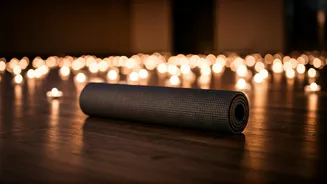


Deconstructing the Calm
The phrase ‘Evening Hatha Nature Sound Challenges’ might sound like a complex wellness trend, but it's simpler and more powerful than it seems. It’s not one single branded program, but rather a combination of four potent elements designed to combat modern
stress. First is the timing: the evening, a crucial window for transitioning from a hectic day to restful sleep. Second is the practice: Hatha yoga, a gentle, foundational form of yoga focused on posture and breath. Third is the atmosphere: nature sounds, which have a scientifically-backed ability to soothe the nervous system. Finally, there's the structure: the 'challenge' format, which provides motivation and a clear path to building a new, healthy habit.
The Power of Evening Hatha Yoga
Unlike a high-intensity morning workout designed to energise, an evening Hatha practice is about down-regulation. Hatha yoga, with its focus on holding poses (asanas) for several breaths, encourages physical and mental stillness. It’s less about acrobatics and more about mindful presence. Practising in the evening helps release the physical tension accumulated in your shoulders, neck, and back from hours of sitting. It also signals to your brain that the workday is over. The deliberate, slow breathing (pranayama) inherent in Hatha yoga directly activates the parasympathetic nervous system—our body's 'rest and digest' mode. This process lowers cortisol levels, the primary stress hormone, preparing your body and mind for deep, restorative sleep. It’s the perfect antidote to a day spent in 'fight or flight' mode.
Why Nature Sounds Work
Our ears are constantly bombarded by the sounds of traffic, notifications, and city life. This auditory overload keeps our nervous system on high alert. Nature sounds—like rainfall, flowing streams, rustling leaves, or gentle birdsong—do the opposite. Research has shown that listening to these 'biophilic' sounds can decrease heart rate, lower blood pressure, and reduce feelings of anxiety. A study from the Brighton and Sussex Medical School found that participants listening to natural sounds showed brain activity patterns associated with an outward-directed, relaxed focus. In contrast, artificial sounds triggered patterns linked to inward-directed focus, similar to states of anxiety or depression. When you pair these sounds with your yoga practice, you create an immersive sanctuary, effectively blocking out the stressful soundscape of modern life and replacing it with one that is inherently calming.
The 'Challenge' Mindset for Success
We all know we ‘should’ relax more, but starting a new routine is hard. This is where the 'challenge' format comes in. A 7-day, 21-day, or 30-day challenge provides a defined structure and a clear goal. It removes the daily decision fatigue of 'what should I do tonight?' by providing a pre-set plan. This structure fosters consistency, which is key to turning an activity into a lasting habit. Completing each day gives you a small sense of accomplishment, building momentum and motivation. It’s a psychological tool that transforms a vague wellness goal into a concrete, achievable project. You're not just 'trying to do more yoga'; you're 'completing the 21-Day Evening Calm Challenge,' which feels far more tangible and motivating.
How to Build Your Own Challenge
You don't need to pay for an expensive program to get started. You can create your own evening ritual. First, define your challenge: commit to just 15-20 minutes every evening for one week. Second, find your practice. Search for 'beginner evening Hatha yoga' or 'wind-down yoga' on YouTube—there are countless free, high-quality classes. Third, set the soundscape. Use an app or a YouTube video that plays continuous nature sounds like 'gentle rain' or 'forest ambience'. Dim the lights and put your phone on silent. Finally, create a simple tracking system. A simple tick mark on a calendar for each day you complete can be incredibly satisfying. The key is to make it as easy as possible to show up on your mat each evening.