


A Dish Born From Necessity
The story of Misal Pav begins not in a gourmet kitchen, but in the fields and factory floors of early 20th-century Maharashtra. The word 'misal' itself means 'mixture' in Marathi, perfectly describing the assembly of its various components. It originated
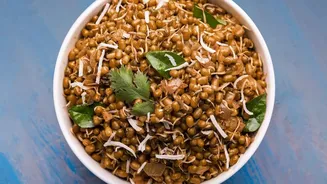
as a hearty, affordable, and highly nutritious meal for labourers and workers who needed sustained energy for a long day's work. Made with protein-rich sprouted moth beans (matki), it was an ingenious solution for a filling meal that was both inexpensive and quick to serve. This humble beginning cemented misal's identity as a food of the people, designed for sustenance long before it became a celebrated culinary icon.
The Anatomy of a Perfect Misal
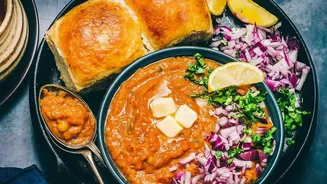
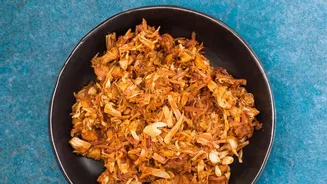
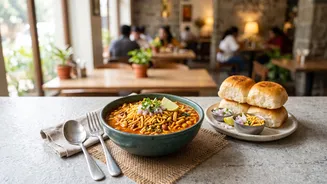
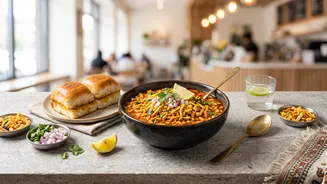
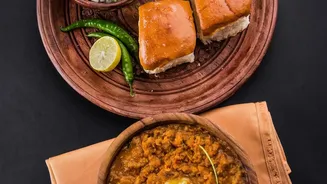
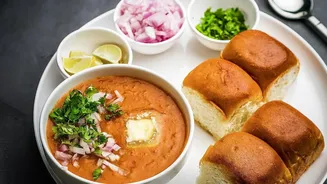
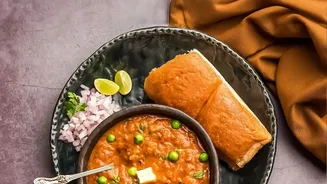
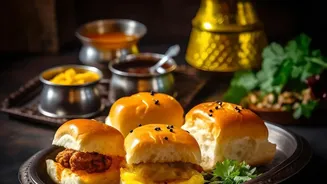
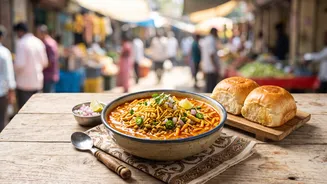
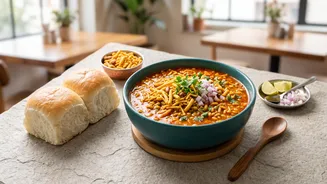
To understand Misal Pav is to appreciate its layers. The dish is an architectural marvel of textures and flavours. At its base is the 'usal', a thick curry made from sprouted lentils, typically matki. Poured over this is the 'kat' or 'rassa', a thin, fiery gravy that gives the dish its signature heat and character. This gravy is often so important that it's served in a separate pitcher for diners to add as they please. The final assembly happens right at the table: a generous topping of crunchy 'farsan' (a savoury mix of fried snacks like sev), freshly chopped onions, and a squeeze of lemon. This entire creation is then scooped up with soft, fluffy pav, the bread rolls introduced by the Portuguese that have become integral to Mumbai's street food identity.
A Tale of Many Cities
Misal is not a monolithic dish; it's a reflection of Maharashtra's diverse palate, with each region offering its own proud variation. The Kolhapuri Misal is legendary for its intense, fiery red gravy, a true test for any spice lover. In contrast, Puneri Misal is often milder, sometimes with a hint of sweetness or tanginess, and is uniquely served over a bed of poha (flattened rice). Nashik is famous for its version made with a 'kala masala' (black spice blend), which gives the gravy a darker colour and a distinct, aromatic heat. From the Nagpuri Misal served with poha to the Khandeshi version with its own powerful black masala, each variant tells a story of local ingredients and tastes.
The Ultimate Morning Power-Up
So, how did this spicy, complex dish become the quintessential breakfast? The answer lies in its core purpose. Misal is a nutritional powerhouse, packed with plant-based protein and fibre from the sprouts, which provides a slow release of energy. For workers facing a day of physical labour, it was the perfect fuel to keep them going until their next meal. The combination of carbohydrates from the pav and protein from the lentils makes for a complete and balanced meal. Furthermore, the heat from the spices is believed to kickstart the metabolism. Its quick service at street-side stalls made it the ideal, no-fuss morning meal for a bustling populace on the move, a tradition that continues to this day.
From Street Staple to Global Star
Once a humble worker's breakfast, Misal Pav has transformed into a cultural ambassador for Maharashtrian cuisine. It has moved from roadside stalls to the menus of upscale restaurants across India and beyond. This journey culminated in global recognition when a version of the dish was named the world's tastiest vegetarian dish in a London food award ceremony in 2015. This accolade confirmed what millions of Maharashtrians already knew: that this layered, interactive, and intensely flavourful dish is a world-class culinary creation. It is a symbol of how simple, local ingredients can create something truly extraordinary.