







A Policy Shift Opens the Skies
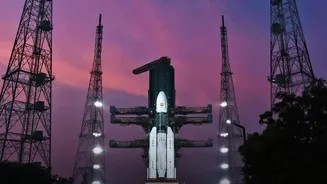
For decades, the Indian Space Research Organisation (ISRO) was the sole custodian of India's space ambitions. From launching the first satellite, Aryabhata, to landmark missions to the Moon and Mars, ISRO did it all. But a major policy shift, beginning
in 2020 and solidified by the Indian Space Policy 2023, has opened the final frontier to private companies, or Non-Governmental Entities (NGEs). The goal is to transform the sector from a government-led program into a vibrant national ecosystem. This reform is driven by a powerful economic vision: to grow India's share of the global space market from its current estimated $8.4 billion to $44 billion by 2033. To manage this transition, the government established the Indian National Space Promotion and Authorisation Centre (IN-SPACe) as a single-window agency to promote, authorise, and supervise the activities of these new private players.
ISRO's New Role: Mentor and Enabler
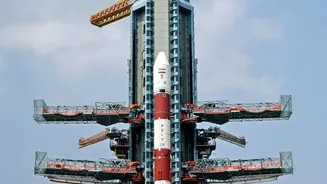
Contrary to fears of privatisation, ISRO's importance is not diminishing; it's evolving. The agency is transitioning from doing everything itself to focusing on what it does best: advanced research, deep space exploration, human spaceflight, and national security missions. Routine manufacturing and operational services for mature systems, like the workhorse Polar Satellite Launch Vehicle (PSLV), can now be handled by industry. This allows ISRO to act as a mentor, anchor client, and enabler for the burgeoning private sector. It provides crucial support by sharing its world-class facilities, transferring technology, and offering its deep technical expertise. As of early 2026, IN-SPACe had already facilitated 71 technology transfers from ISRO to startups and industry. This collaborative framework is designed to multiply the nation's space capabilities, not replace its foundational institution.
The Startups Reaching for Orbit
The policy changes have unleashed a wave of entrepreneurial energy, with the number of Indian space startups growing from a handful in 2020 to over 450. Companies like Skyroot Aerospace and Agnikul Cosmos are at the forefront of this new era. Hyderabad-based Skyroot became the first Indian private company to launch a sub-orbital rocket, the Vikram-S, in 2022. Chennai-based Agnikul, incubated at IIT Madras, has also developed its own launch vehicles and even established its own launchpad and mission control centre with ISRO's support. Another key player is Pixxel, a Bengaluru-based startup building a constellation of hyperspectral imaging satellites to provide valuable data for sectors like agriculture and climate monitoring. These companies are not just building hardware; they are creating new commercial services, from affordable satellite launches to critical data analytics.
Building a Symbiotic Future in Space
The relationship between ISRO and the new space startups is fundamentally symbiotic. ISRO provides the decades of experience, robust infrastructure, and institutional credibility that would be impossible for startups to build from scratch. In return, private companies bring agility, innovation, and access to private capital, helping to scale up production and compete in the fast-paced global market. This public-private partnership allows for a more distributed and resilient national space ecosystem. While ISRO tackles ambitious goals like the Bharatiya Antariksh Station and crewed lunar missions, the private sector can build a commercial flywheel, manufacturing satellites, components, and launch vehicles that serve a global clientele. This division of labour is crucial for achieving India's ambitious economic targets for its space sector and solidifying its position as a comprehensive space power.