







The Daily Charging Problem
Fitness trackers have become essential for millions in India, monitoring everything from our steps and sleep to our heart rate. They offer incredible insights into our health but share a common, frustrating weakness: the battery. Whether it’s daily or weekly,
the ritual of removing your tracker and plugging it in is a hassle. This constant need for charging limits their potential for uninterrupted, long-term health monitoring and adds to our daily tangle of cables and chargers. What if our devices didn't need to be tethered to a wall socket? What if the solution was on us all along?
A Power Source You Always Have
The human body is a natural heat engine. It constantly generates thermal energy to maintain its core temperature, and most of this heat simply radiates away into the environment. Scientists and engineers have long seen this as an untapped source of clean, continuous energy. The technology designed to capture this energy is called a thermoelectric generator, or TEG. The core principle, known as the Seebeck effect, is that a temperature difference between two sides of a special material can create a voltage, which generates electricity. By placing a TEG against the skin, the temperature difference between your warm body and the cooler ambient air can be converted into electrical power.
How Smart Fabrics Generate Electricity
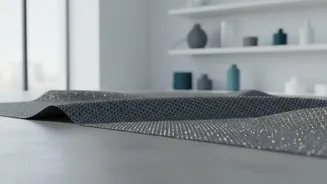
The real innovation lies in making this technology wearable. Early TEGs were rigid and bulky, unsuitable for clothing. Recent breakthroughs, however, have enabled the creation of flexible thermoelectric materials that can be printed, coated, or even woven directly into fabrics. These advanced textiles embed tiny semiconductor materials, often based on polymers or carbon nanotubes, into the threads themselves. When the fabric is worn, one side is warmed by the skin while the other is exposed to the air. This temperature gradient across the fabric's thickness is enough to generate a small but steady electrical current, capable of powering low-energy devices like a fitness tracker or a biosensor.
The Sustainability Advantage
Powering devices with body heat is the definition of sustainable, personal energy. It reduces our reliance on grid electricity, which is still largely fossil-fuel-based. More importantly, it can decrease the need for disposable or even rechargeable batteries, which come with a significant environmental cost in terms of mining, manufacturing, and disposal. Some materials being explored for thermoelectric fabrics even focus on avoiding toxic elements like lead or tellurium, which are common in older TEG technologies. As the market for wearables grows, particularly in a massive market like India, shifting to such self-powering solutions can have a meaningful impact on reducing electronic waste and promoting greener technology.
Challenges and The Road Ahead
While the technology is incredibly promising, it's not yet mainstream. One of the biggest hurdles is efficiency. The amount of power generated is currently in the microwatt to milliwatt range, which is just enough for very low-power sensors and trackers, but not for more complex smartwatches with bright screens. Researchers are working to improve the power output of these fabrics. Other challenges include ensuring the materials are durable, washable, comfortable, and cost-effective to produce on a mass scale. Despite these hurdles, progress is rapid. Prototypes like the PowerWatch have already demonstrated the concept's viability, and research institutions globally are developing more efficient and flexible materials every year.
The Future of Integrated Wearables
Looking forward, body heat-powered fabrics could revolutionise more than just fitness trackers. Imagine medical-grade sensors for continuous health monitoring that never need a battery change, providing a lifeline for patients with chronic conditions. Or consider smart clothing that can power embedded LEDs for safety, or sensors that track an athlete's performance in real-time. This technology promises a future where our electronic devices are more seamlessly integrated into our lives, powered silently and sustainably by the very energy our bodies produce. The era of charging cables may not be over, but its end is slowly being woven into the fabrics of tomorrow.