






A New Strategy for Exploring Mars
In early July 2026, NASA announced it had selected seven U.S. companies to develop new technologies for getting around on the Martian surface. This initiative, called Science Transport and Robotic Innovation for Deployment and Exploration (STRIDE), represents
a significant shift in NASA's approach. For decades, the agency has designed, built, and operated its own iconic rovers, from the small Sojourner to the SUV-sized Perseverance. While incredibly successful, this traditional model is slow and expensive. The STRIDE program, with a total value of about $17 million, signals a move toward a more commercial model, similar to the successful Commercial Lunar Payload Services (CLPS) program for the Moon. Instead of owning the hardware, NASA aims to purchase services from companies that can build robots capable of reaching scientifically valuable but hard-to-access regions of Mars.
Meet the Robotics Contenders
The seven companies selected represent a mix of established aerospace giants and innovative startups, highlighting NASA's desire to draw from a wide talent pool. The awardees are AeroVironment, Astrobotic, Venturi Astrolab, Ground Control Robotics, Honeybee Robotics, Intuitive Machines, and MEI Technologies. Many of these firms have extensive experience in robotics and space systems. For instance, AeroVironment was behind the groundbreaking Ingenuity Mars Helicopter, while Astrobotic and Intuitive Machines are key players in NASA's commercial lunar missions. Honeybee Robotics has a long history of providing drilling and sampling systems for NASA rovers. By funding design studies and early-stage prototypes from this diverse group, NASA is fostering competition and accelerating the development of novel solutions for both surface and potential aerial exploration.
Beyond the Six-Wheeled Rover
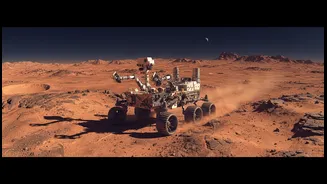
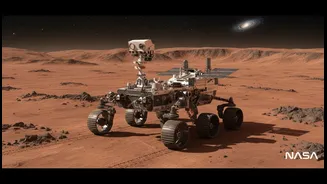
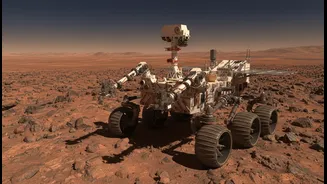
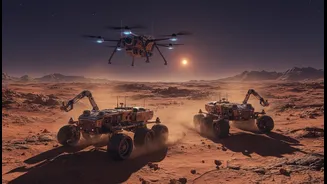
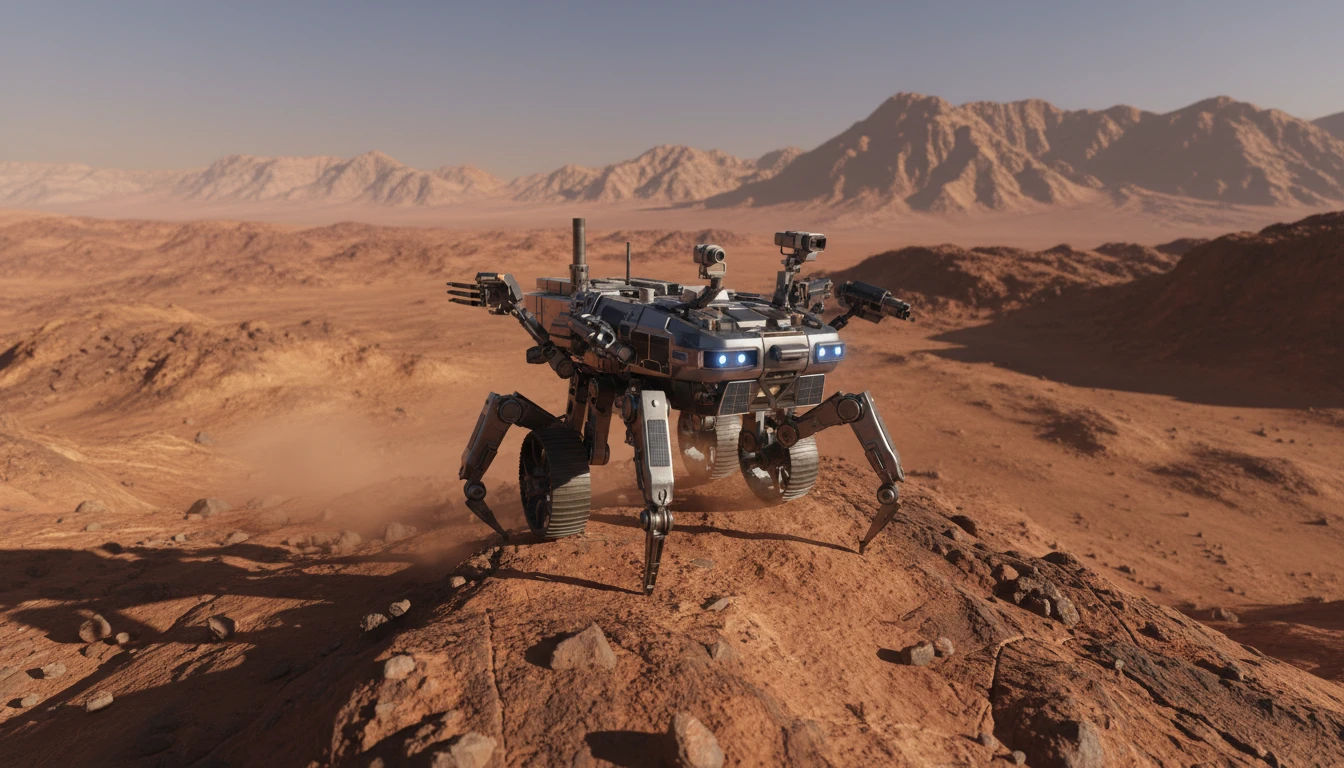
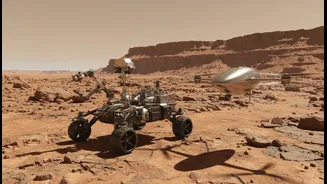
The goal of STRIDE is to move beyond the limitations of past rover designs. While rovers like Curiosity and Perseverance have been revolutionary, their six-wheeled "rocker-bogie" suspension system struggles with very steep slopes or extremely sandy terrain. The new contracts encourage radical new ideas to overcome these challenges. Future concepts could include legged robots capable of climbing crater walls, hybrid systems that combine wheels and legs, or even more advanced aerial platforms. The aim is to create robots that can travel greater distances and navigate extreme landscapes that are currently out of reach. This push for innovation is already visible in prototypes like JPL's ERNEST rover, which uses an active suspension system and AI-powered navigation to handle extreme terrain, showcasing the kind of technology STRIDE hopes to commercialize.
Unlocking New Science on the Red Planet
The ultimate purpose of these new mobility systems is to enable groundbreaking science. Many of the most interesting geological sites on Mars—such as ancient riverbeds on steep slopes, the interiors of deep craters, or regions with subsurface ice—are inaccessible to our current rovers. Robots that can climb, rappel, or fly into these areas could fundamentally change our understanding of Martian history, its potential for past life, and the resources it may hold for future human explorers. By developing a fleet of diverse, specialized robotic explorers, NASA can deploy the right tool for the right scientific job, creating a more dynamic and comprehensive exploration program. This approach aligns with a broader push to launch more frequent, lower-cost missions to Mars.
A Boost for the Commercial Space Industry
Beyond the scientific implications, the STRIDE contracts are a major development for the business of space. They effectively signal the creation of a new commercial market for planetary mobility services. For the seven companies involved, these contracts are not just a funding opportunity but a foothold in a future interplanetary economy. Success on a STRIDE-funded project could position a company to win lucrative contracts to deliver scientific payloads for NASA and potentially other international space agencies or private ventures. This public-private partnership model allows NASA to leverage the agility and cost-efficiency of the commercial sector while focusing its own resources on defining scientific goals and planning ambitious missions, like the eventual return of humans to Mars.