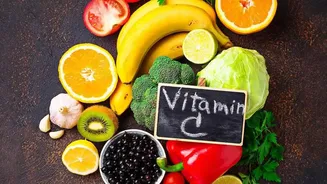





Vitamin C is essential for a strong immune system and glowing skin, but you don't need to rely on supplements. Many everyday fruits and vegetables in your kitchen are packed with this vital nutrient. Let's explore some of the best sources.
Why Your Body Needs Vitamin C
Vitamin C, also
known as ascorbic acid, is a true workhorse for your health. Your body can't make it on its own, so you must get it from your diet. It's crucial for the growth and repair of tissues in all parts of your body. It plays a vital role in forming collagen, a protein used to make skin, tendons, ligaments, and blood vessels, which is essential for wound healing. As a powerful antioxidant, it helps protect your cells against the effects of free radicals, which can contribute to chronic diseases. Furthermore, it boosts your immune system by helping white blood cells function more effectively. According to the Indian Council of Medical Research (ICMR), the recommended daily allowance for Indian adults is about 80 mg for men and 65 mg for women.
Amla: The Unbeatable Champion
When you think of Vitamin C, you might think of oranges, but the humble amla, or Indian gooseberry, is the undisputed king. Per 100 grams, amla contains anywhere from 250 mg to over 600 mg of Vitamin C, depending on its variety and ripeness. That's about 5 to 10 times more than an orange. In fact, just one or two fresh amla can be enough to meet your entire day's requirement. What's more, the Vitamin C in amla is uniquely stable due to the presence of tannins that protect it from breaking down with heat and time, meaning you still get benefits from amla pickles and preserves (murabba).
Guava: The Tropical Powerhouse
Another surprising hero in the Vitamin C story is the guava (amrood). This common fruit often contains more Vitamin C than oranges, packing around 200-228 mg per 100 grams. A single small to medium-sized guava can provide well over the daily recommended amount. It's a cheap, delicious, and incredibly effective way to boost your intake. Enjoy it sliced with a sprinkle of salt and chilli, or blend it into a refreshing juice.
Citrus Fruits: The Classic Choice
Oranges (santra), lemons (nimbu), and sweet limes (mosambi) are famous for their Vitamin C content for a good reason. While they may not reach the levels of amla or guava, they are still excellent sources. A medium orange provides around 50-70 mg of Vitamin C, covering most of an adult's daily need. A daily squeeze of lemon in your water, over dal, or on a salad is an easy habit that contributes significantly to your Vitamin C intake and also helps your body absorb iron from plant-based foods.
Colourful Capsicums and Chillies
Vegetables are also fantastic sources, especially capsicums (Shimla mirch). Interestingly, their colour tells you about their Vitamin C content. Red and yellow bell peppers contain significantly more Vitamin C than green ones, with red peppers providing around 128 mg per 100g. Even green chillies are a surprisingly potent source, offering about 100 mg per 100g. Adding them raw to salads, kachumber, or lightly stir-fried into dishes is a great way to get a crunchy, colourful, and healthy boost.
Your Daily Greens and Cruciferous Veggies
Don't underestimate the power of everyday vegetables. Cruciferous vegetables like cauliflower (phool gobhi) and cabbage (patta gobhi) are good sources. Leafy greens like coriander (dhania) and spinach (palak) also contribute to your daily total. Vitamin C is sensitive to heat and water, so a lot of it can be lost during cooking. Boiling can reduce Vitamin C content by up to 50% or more. To preserve the most nutrients, it's best to eat these vegetables raw, steamed, or lightly sautéed.
Other Familiar Favourites
Many other fruits commonly found in Indian homes are rich in Vitamin C. Papaya (papita) is an excellent source, with a single cup providing around 87 mg. A bowl of strawberries, a slice of pineapple, or a kiwi fruit can also make a significant contribution. Even the 'king of fruits', the mango, provides a decent amount of Vitamin C, especially when eaten fresh.