






Decoding Zone 2 Training
Zone 2 training refers to exercising at a steady, moderate intensity. It’s often called the “conversational pace” because you should be able to hold a full conversation without gasping for air. On a scale of five heart rate zones, where Zone 1 is a very
light effort and Zone 5 is an all-out sprint, Zone 2 is the sweet spot for building a strong aerobic base. This intensity level typically corresponds to 60-70% of your maximum heart rate. The magic of Zone 2 lies in its ability to train your body to become more efficient at using fat for fuel and clearing lactate, which helps reduce fatigue.
A Powerhouse for Cardiopulmonary Fitness
The primary benefit of consistent Zone 2 training is building a robust aerobic foundation. This type of exercise stimulates your body to improve mitochondrial function. Mitochondria are the tiny powerhouses inside your cells that generate energy. By training in Zone 2, you encourage your body to create more of these mitochondria and make them more efficient. This adaptation allows your muscles to produce energy more effectively, which translates to greater endurance. Over time, you can hold a faster pace for longer with less effort. This process also strengthens your heart, allowing it to pump more blood with each beat, and improves your body's ability to transport and use oxygen.
Why Rowing Is the Ideal Vehicle
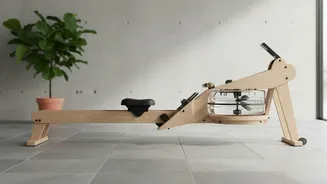
While many activities can be done in Zone 2, rowing is an exceptional choice because it’s a low-impact, full-body workout. Unlike high-impact exercises like running, rowing is performed while seated, which eliminates weight-bearing stress on the knees, hips, and ankles. This makes it an ideal option for people of all fitness levels, including those with pre-existing joint pain or those recovering from injury. The smooth, controlled motion distributes the workload across the entire body—engaging the legs, core, back, and arms—which prevents any single joint from taking too much strain.
How Rowing Shields Your Knees
The mechanics of the rowing stroke, when performed with proper form, are inherently protective of the knee joint. The movement avoids the jarring impacts that can aggravate conditions like arthritis. Furthermore, by strengthening the surrounding muscles—including the glutes, hamstrings, and quadriceps—rowing provides better support for the knee joint itself. A stronger support system means less strain on the ligaments and cartilage that are susceptible to injury. This combination of low impact and comprehensive muscle engagement makes rowing a uniquely joint-friendly form of intense cardiovascular exercise.
Your Zone 2 Rowing Protocol
Getting started is straightforward. First, determine your Zone 2 heart rate. A simple method is the '220 minus your age' formula to estimate your max heart rate, then calculate 60-70% of that number. For a 40-year-old, this would be a target range of 108-126 beats per minute. Alternatively, rely on the talk test: row at a pace where you can comfortably speak in full sentences. Aim for two to three Zone 2 sessions per week, with each session lasting between 30 and 60 minutes. Focus on maintaining a consistent, steady pace rather than pushing for speed. Proper form is crucial for protecting your joints, so prioritize a smooth sequence: legs, then core, then arms on the drive, and the reverse on the recovery.