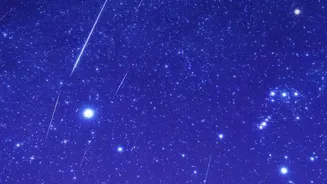




Look up. This November, the crisp autumn sky over India offers a breathtaking celestial show. You don't need a fancy telescope to enjoy it. Here is your simple guide to finding the jewels of the night sky with just your eyes.
Your Stargazing Starter Kit
Before you start hunting for planets,
set yourself up for success. First, find the darkest spot you can. The further you are from city lights, the more you will see. Even a park, a rooftop, or a balcony that is shielded from direct streetlights can make a huge difference. Second, give your eyes time to adjust. It takes about 20 to 30 minutes for your eyes to become fully 'dark-adapted', allowing you to see fainter objects. Resist the urge to look at your phone, as its bright screen will instantly ruin your night vision. If you need a light to check a chart, use a red torch, as red light has less impact on your dark adaptation. Finally, get comfortable. Stargazing involves a lot of looking up, so a reclining chair can make the experience much more pleasant. Apps that show a map of the night sky can be helpful, but be sure to switch them to 'night mode' to preserve your vision.
The Star of the Evening: Saturn
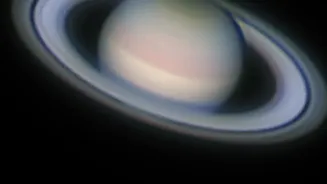
This November, the undisputed king of the evening sky is Saturn. While some other bright planets are visible this month, they appear in the early morning hours. Saturn, however, is perfectly placed for viewing right after sunset. To find it, look towards the eastern sky in the early evening. It will appear as a bright, steady, yellowish-white point of light. The easiest way to tell a planet from a star is that stars tend to twinkle, while planets shine with a more constant light. Throughout November, Saturn will be lingering in the faint constellation of Cetus, the Sea Monster. You will not be able to see its famous rings with the naked eye, but its bright and unwavering presence makes it a satisfying target for any beginner. It rises in the east around sunset, climbs high in the sky by midnight, and sets in the west before dawn, giving you the entire night to spot it.
A Tale of Two Skies
While Saturn commands the evening, November 2026 features a spectacular gathering of planets in the morning sky. This is a common occurrence in astronomy; due to the orbits of Earth and other planets, there are times when most of the planetary action is concentrated in the hours before sunrise or after sunset. So, while your evening view is focused on Saturn, the pre-dawn hours offer a completely different and equally stunning show. This celestial arrangement means that early risers have a special treat waiting for them. If you find yourself awake before the sun, it is well worth stepping outside to witness the morning planet parade. For evening observers, it’s a good reminder that the sky is always changing, and what is a morning object today could be an evening star in a few months.
The Morning Planet Parade
For those willing to wake up early, the sky before sunrise is buzzing with activity. The brilliant planet Venus will be visible as a dazzling 'morning star' in the east. In mid-November, you can also spot Jupiter and Mars, which rise after midnight and are best viewed in the hours before dawn. Around November 15, Mars and Jupiter will have a close encounter, appearing very near each other in the sky, making for a beautiful pairing. Mars will not be at its brightest this year, but its reddish hue should still be discernible. This trio of bright planets clustered in the morning sky provides a fantastic reason to set an early alarm at least once this month.
Beyond the Planets: The Pleiades
After you have found Saturn, there is another beautiful naked-eye object to look for in the November evening sky: the Pleiades star cluster, also known as the Seven Sisters or Krittika. This is not a planet, but a small, shimmering cluster of stars. To find it, look to the east a few hours after sunset. It appears as a tiny, misty patch of light, shaped like a small dipper. Most people can see six or seven stars within the cluster with the naked eye on a clear, dark night. The Pleiades are a stunning sight and one of the easiest and most rewarding deep-sky objects for beginners to find. Their appearance high in the sky during November evenings signals the arrival of winter skies.