






The Problem With a Sedentary Lifestyle
Our bodies are designed for movement. Yet, for many of us, daily life involves long hours spent in a chair—at a desk, in a car, or on the couch. This sedentary pattern, while normal, puts our bodies in a state they weren't built to sustain. When you remain
seated for extended periods, your hips are held in a flexed position. Over time, this causes significant issues, primarily a combination of muscle tightness and weakness that can lead to discomfort, pain, and reduced mobility. This discomfort isn't just a minor annoyance; it can affect your posture, strain your lower back, and make everyday activities like walking or climbing stairs feel like a chore.
What Sitting Does to Your Hips
When you sit, two main things happen to the muscles around your hips. First, the hip flexors, a group of muscles at the front of your hips, are held in a shortened position. Over months and years, these muscles can become chronically tight and stiff. Second, the opposing muscles, the glutes (your buttock muscles), become inactive and weak from lack of use. This phenomenon is sometimes called 'gluteal amnesia'. This creates a muscular imbalance: tight, overactive muscles in the front and weak, underactive muscles in the back. This imbalance forces other parts of your body, like your lower back and hamstrings, to compensate, often leading to pain and strain in those areas as well.
The Antidote: Targeted Movement
The good news is that you can counteract these effects with simple, targeted movements. The goal is two-fold: to stretch and lengthen the tight hip flexors and to 'wake up' and strengthen the dormant glute muscles. By restoring balance to the hip area, you can alleviate pain, improve your range of motion, and enhance your overall posture. Incorporating a few key exercises into your daily routine can make a significant difference, breaking the cycle of stiffness caused by inactivity. These movements don't require any special equipment and can easily be done at home.
Exercise 1: Kneeling Hip Flexor Stretch
This classic stretch directly targets the tight muscles at the front of your hip. Start by kneeling on one knee, as if you were proposing. Your front leg should be bent at a 90-degree angle with your foot flat on the floor, and your back knee should be on the ground (place a towel or mat underneath for comfort). Keeping your back straight and your core engaged, gently push your hips forward until you feel a comfortable stretch along the front of the hip of your back leg. Avoid arching your lower back. Hold the stretch for 30 seconds, then switch sides and repeat. This helps to lengthen those shortened hip flexor muscles.
Exercise 2: Glute Bridge
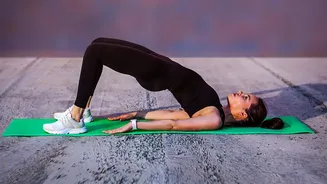
The glute bridge is a fundamental exercise for activating and strengthening your glute muscles. Lie on your back with your knees bent, feet flat on the floor about hip-width apart, and your arms resting by your sides. Press through your heels to lift your hips off the floor until your body forms a straight line from your shoulders to your knees. At the top, squeeze your glutes firmly for a moment before slowly lowering your hips back down. Focus on using your glutes to drive the movement, not your lower back. Aim for 12 to 15 repetitions. This exercise effectively wakes up the muscles that become dormant from sitting.
Exercise 3: Pigeon Pose Stretch
This yoga-inspired stretch is excellent for releasing tension in the deeper hip rotator muscles and glutes. Start on your hands and knees. Bring your right knee forward and place it behind your right wrist. Your right shin should be angled across the front of your mat. Extend your left leg straight back behind you. You should feel a stretch across your right glute. If this is too intense, you can perform a variation by sitting in a chair, crossing your right ankle over your left knee, and gently folding forward to feel the stretch in your right hip.