

What Are Coronal Mass Ejections?
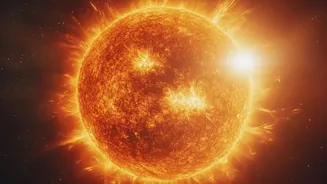
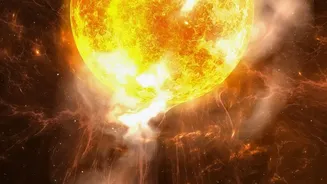
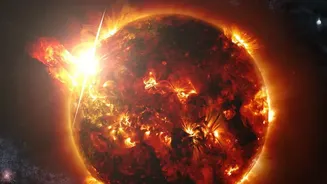
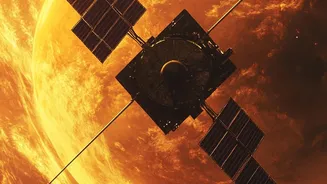
A Coronal Mass Ejection (CME) is a massive and powerful eruption of plasma and magnetic fields from the sun's outer atmosphere, the corona. Think of it as the sun throwing a colossal, magnetised cloud of charged particles into space. These eruptions can
travel at incredible speeds, from a relatively slow 250 kilometres per second to a blistering 3,000 km/s. A fast-moving CME can reach Earth in just 15 to 18 hours, giving us a very short window to prepare for its arrival. When a CME collides with Earth's own magnetic field, it can trigger a geomagnetic storm, a major disturbance that can have significant consequences for technology both in space and on the ground.
Simulating a Solar Storm
Predicting the path and impact of a CME is a huge scientific challenge. This is where simulations come in. By feeding data from solar-observing spacecraft into complex computer models, scientists can forecast the trajectory of a CME and estimate its arrival time and intensity. Recent advancements, using data from missions like NASA's PUNCH, have dramatically improved forecasting accuracy. In one test, a model predicted a CME's arrival at Earth to within 30 minutes, a tenfold improvement over older methods that had a five-hour window of uncertainty. These simulations are crucial; they act as an early warning system, allowing satellite operators and power grid managers to take protective measures before a storm hits.
Why High Orbit Is a Hot Seat
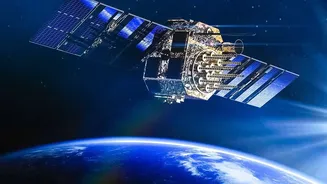
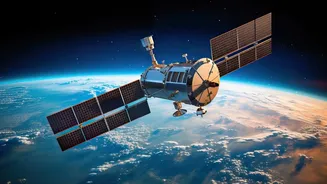
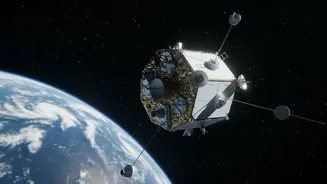
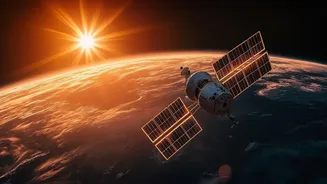
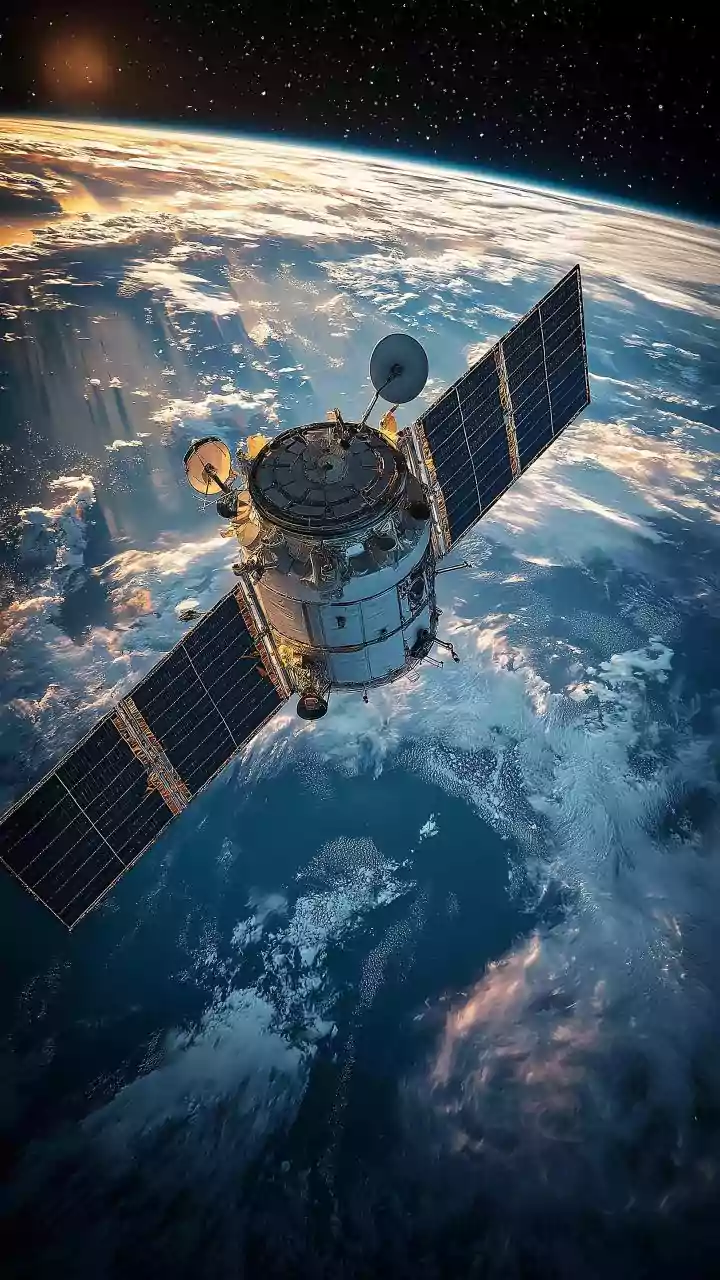
While all satellites are at risk, those in high orbits are uniquely vulnerable. Many of our most critical communications and broadcasting satellites are in geostationary orbit, about 36,000 kilometres above Earth. At this altitude, they are less protected by Earth's magnetic field and are more exposed to the intense radiation from a CME. This radiation primarily comes in the form of high-energy electrons trapped in the Van Allen belts, which can swell dramatically during a geomagnetic storm. The resulting surge of radiation can damage or destroy sensitive electronics, degrade solar panels, and shorten the operational lifespan of a satellite by years in a matter of hours. This is different from the threat to low-Earth orbit satellites, which face increased atmospheric drag that can cause their orbits to decay.
The Impact on Our Connected World
The failure of high-orbit satellites would not be an abstract problem in space. It would have immediate and severe consequences for daily life in India and across the globe. These satellites are the backbone of our communication infrastructure, responsible for everything from DTH television broadcasts and weather forecasting to GPS navigation that guides our vehicles and supports our digital payment systems. A powerful storm could disrupt banking transactions, cripple logistics, and interfere with emergency services. Past events, like the 1989 storm that caused a major power outage in Quebec, serve as a stark reminder of our vulnerability. A severe event, similar to the historic Carrington Event of 1859, could cost the global economy trillions and take years to recover from.
Building a Protective Shield
While the threat is significant, we are not helpless. Improved forecasting is the first line of defence. When a dangerous CME is detected, operators can put vulnerable satellites into a 'safe mode' to protect their delicate electronics from the worst of the radiation surge. Scientists and engineers are also working on building more resilient hardware, a process known as 'hardening', to better withstand the harsh radiation environment of space. Other protective measures include reinforcing power grids on the ground and developing new ways to shield critical components. The goal is not just to predict the weather in space, but to build an infrastructure resilient enough to withstand it, ensuring our connected world stays connected.