




Meet Vyommitra, India's 'Space Friend'
Before Indian astronauts make their historic journey, a highly advanced precursor will pave the way. Meet Vyommitra, a name derived from the Sanskrit words for 'space' (Vyoma) and 'friend' (Mitra). Developed by the Indian Space Research Organisation (ISRO),
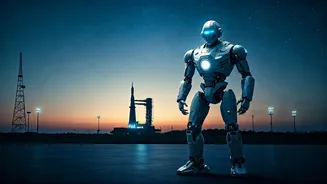
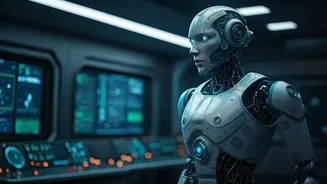
Vyommitra is a state-of-the-art half-humanoid robot designed to be the ultimate test passenger. She has the appearance of a woman but lacks lower limbs, as they are not needed for her mission inside the spacecraft. Unveiled in 2020, she is built to withstand the intense vibrations and pressures of a rocket launch. More than a mere dummy, she is equipped with artificial intelligence, can speak both Hindi and English, and is capable of recognising humans and responding to queries.
The Dress Rehearsal in Space
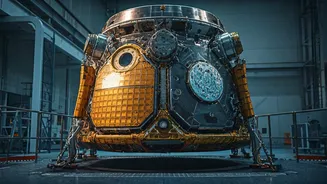
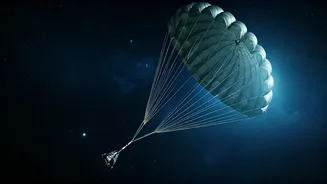
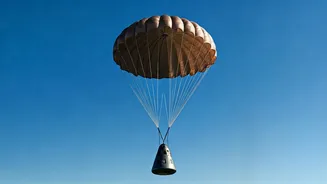
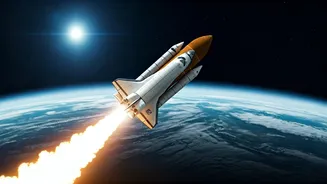
The headline event for 2026 is the first uncrewed Gaganyaan test flight, designated G1, with Vyommitra occupying the crew capsule. According to recent updates from ISRO and government officials, this crucial mission is slated for the second half of the year. During the flight, Vyommitra will simulate human functions, providing invaluable data for the eventual crewed mission. Her job is to act as a proxy astronaut, monitoring the crew module's environment from the inside. She will check parameters like cabin pressure and temperature, operate switch panels, and test the life support systems. This flight will serve as a comprehensive, end-to-end test of the entire system, from the launch sequence aboard the powerful LVM3 rocket to the fiery re-entry and splashdown recovery.
More Than a Test Dummy
Sending a humanoid robot is a significant step up from using simple instruments or animals, a method other space-faring nations used in their early days. Vyommitra's purpose is to understand how the flight environment affects the human body. Her sensors will measure and report on the conditions inside the module, mimicking how an astronaut would interact with the craft and providing real-time data back to ground control. She can issue alerts and even perform procedures as commanded. This allows ISRO engineers to see exactly how the life support systems perform and how a human might fare under the G-forces of launch and the microgravity of orbit. This data is essential for ensuring the safety of the Indian astronauts, or 'Gaganyatris', who will follow in her path.
The Giant Leap to Gaganyaan
Vyommitra's flight is a cornerstone of the broader Gaganyaan programme, India's ambitious initiative to demonstrate human spaceflight capability. The ultimate goal is to launch a crew of three astronauts into a 400 km orbit for a three-day mission and bring them back safely to Earth. Following a series of uncrewed test flights, including the G1 mission this year, the first crewed launch is targeted for 2027. A dedicated team of astronaut candidates is already undergoing rigorous training at a facility in Bengaluru, covering everything from flight procedures and survival training to microgravity familiarisation. Successful completion of the Gaganyaan mission will make India only the fourth country in the world—after the US, Russia, and China—to have an independent human spaceflight capability.
A Symbol of a Rising Power
While the technical aspects are paramount, the symbolism of the Gaganyaan mission, and Vyommitra's role within it, cannot be overstated. It represents a monumental step for India's technological prowess, self-reliance ('Atmanirbhar Bharat'), and its ambitions as a major player in the 21st-century space economy. Vyommitra, a female humanoid figure, serves as a powerful emblem of Indian innovation on the global stage. Her journey is not just a test of hardware; it's a test of a nation's ability to dream big and execute complex, high-stakes missions. As she prepares to fly, Vyommitra carries with her the aspirations of a billion people, making the abstract dream of Indian space travel feel incredibly, tangibly real.