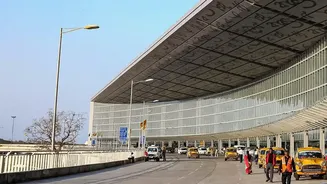







The Old Inconvenience vs. The New Reality
For decades, international travel for most Indians meant starting your journey from a massive, often chaotic, Tier-1 airport like Mumbai, Delhi, or Bengaluru. If you lived in a smaller, or “Tier-2,” city like Jaipur, Amritsar, or Guwahati, you first had
to take a domestic flight just to get to your international connection. This added time, cost, and complexity to any trip. Now, a strategic shift by budget airlines is changing everything. Carriers like IndiGo and Air India Express are bypassing the traditional hubs and launching direct international flights from these smaller, but rapidly growing, urban centers. A resident of Lucknow can now fly directly to Abu Dhabi, and someone from Guwahati will soon have a non-stop connection to Dubai. This point-to-point model is making international travel more accessible and affordable for millions of first-time flyers.
The Budget Airline Gambit
This boom is driven by a simple but powerful business strategy. Tier-2 cities represent a massive, underserved market with a rising middle class eager to travel. Operating from smaller airports is also cheaper for airlines, with lower landing fees and operational costs. These savings are passed on to consumers in the form of highly competitive fares. Airlines are leveraging new, fuel-efficient aircraft like the Airbus A321neo, which have the range to connect these cities directly to destinations in Southeast Asia and the Middle East within a five-to-six-hour flight. It's a volume game: by stimulating new demand with low prices, airlines can fill these planes and turn routes that legacy carriers ignored into profitable ventures. Carriers like IndiGo and the rapidly expanding Air India Express, now under Tata Group ownership, are aggressively adding dozens of these new international routes, fundamentally changing their network strategy.
More Than Just Vacations
While leisure travel is a huge part of the story, the impact goes much deeper. These direct flights are creating vital economic corridors. Small business owners in cities like Indore or Coimbatore can now more easily fly to Dubai or Bangkok to source goods, meet suppliers, or attend trade fairs. The connectivity also supports medical tourism, educational exchanges, and the crucial VFR (visiting friends and relatives) market, especially to the Gulf countries where millions of Indians live and work. This trend effectively plugs Tier-2 city economies directly into Asian commercial hubs, bypassing the old centralized model. For example, the first-ever direct flights from Guwahati in India’s northeast to the UAE are seen as a significant milestone in strengthening global connectivity for the entire region, expected to boost trade and cultural exchange.
The Ripple Effect Across Asia
The destinations are feeling the impact, too. Countries like Vietnam, Thailand, and Malaysia are seeing a surge in Indian tourists, many of whom are arriving directly from these newly connected cities. In fact, Vietnam has seen explosive growth, with Indian arrivals multiplying several times over since pre-pandemic levels, driven largely by new, direct air routes and easier visa policies. This influx is creating a new tourism demographic. These travelers often have different spending patterns and are interested in more diverse experiences, from cultural tours and destination weddings to exploring local food scenes. Tourism authorities and local businesses in these Asian hotspots are increasingly tailoring their marketing and services to cater specifically to this booming Indian market, which is helping to offset the slower recovery of tourists from other regions.