





Understanding the Yield Gap
First, let's define our terms. The 'yield gap' is the difference between the maximum potential yield of a crop grown in a research station or demonstration plot and the actual yield a farmer achieves in their field. This gap isn't just a number; it represents
lost income for farmers and a missed opportunity for national food security. While new, high-yielding seed varieties have incredible potential, they cannot achieve it alone. Think of a high-performance car engine; it needs the right fuel, a smooth road, and a skilled driver to reach its top speed. Similarly, a superior seed needs a whole ecosystem of support.
The Foundation: Soil Health
The very ground our food grows in is the most critical and often overlooked factor. Decades of intensive farming, often with an imbalanced use of chemical fertilizers, have degraded soil health in many parts of India. Most Indian soils are low in organic carbon, a key component for fertility, water retention, and microbial life. Without healthy soil, even the best seeds struggle. Nutrients aren't available to the plant, water isn't retained effectively, and the plant's roots can't develop properly. The solution lies in integrated nutrient management, soil testing to apply the right fertilizers, and increasing organic matter through practices like composting and crop rotation.
Water: A Resource Under Pressure
Water is life, especially in agriculture. A large percentage of Indian farming is still rain-fed, making it vulnerable to erratic monsoons and climate change. Even in irrigated areas, inefficient practices like flood irrigation lead to massive water wastage and can degrade soil quality. Bridging the yield gap requires a shift towards 'more crop per drop.' This means wider adoption of micro-irrigation systems like drip and sprinklers, which deliver water directly to the plant's roots, saving water and improving nutrient uptake. Government schemes are promoting these technologies, but adoption needs to accelerate.
The Power of Timely Mechanization
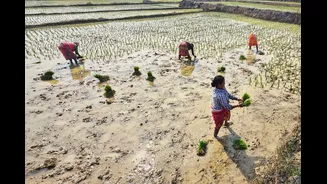
Farming is a race against time. Sowing, weeding, and harvesting must be done within specific windows to maximize yield and minimize losses. In many regions, a shortage of agricultural labour during peak seasons creates critical bottlenecks. Farm mechanization offers a solution. The use of machinery like tractors, seed drills, and harvesters can increase productivity by 10-15%, save on input costs, and reduce the drudgery of farm work. However, the high cost of machinery is a barrier for India's small and marginal farmers. This is where models like Custom Hiring Centres, which allow farmers to rent equipment, become crucial for democratizing access to modern tools.
Knowledge and Market Linkages
A great harvest is pointless if it doesn't reach the market or fetch a fair price. Poor rural infrastructure, a lack of adequate storage facilities (especially cold storage), and inefficient supply chains contribute to significant post-harvest losses. Furthermore, farmers need access to timely and accurate information—from weather forecasts to pest management strategies and market prices. Strengthening agricultural extension services, which act as a bridge between labs and farms, is essential. When farmers are equipped with not just better seeds but also better knowledge and better market access, they can truly thrive.