

The Wisdom of the 'Mara Chekku'
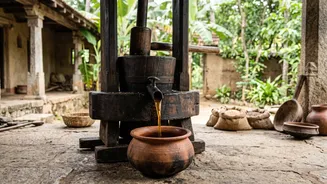
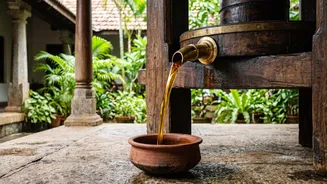
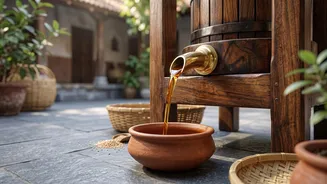
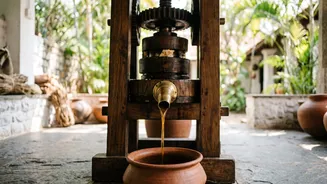
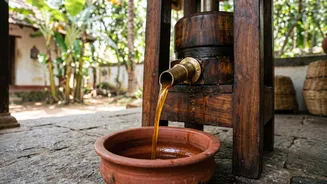
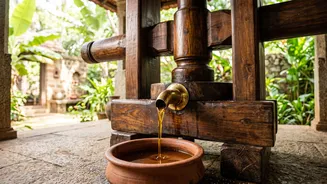
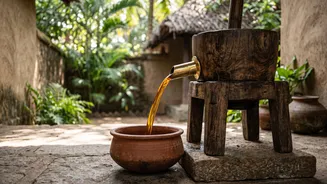
Long before factories and chemical solvents, oil was extracted using a simple yet brilliant device known as a 'ghani' or, in Tamil Nadu, a 'mara chekku'. This traditional press consists of a large wooden or stone mortar and a pestle. Historically, the
pestle was turned slowly by a bullock walking in a circle, a method that dates back thousands of years in India. The process is deliberately slow, crushing seeds like sesame through pure mechanical force without generating high heat. The use of wood is crucial; as a poor conductor of heat, it prevents the oil from getting hot during extraction, which is the key to preserving its quality. This gentle, low-temperature process is the very essence of traditional cold-pressing.
Truly Cold-Pressed and Chemical-Free
The term 'cold-pressed' today can be confusing, but the 'chekku' method is its most authentic form. The temperature in a wooden press is kept low, typically below 50°C, ensuring the oil is never exposed to the high heat that degrades its nutrients. This stands in stark contrast to modern industrial methods for producing refined oils, which often use high heat and chemical solvents like hexane to maximize yield. After extraction, these industrial oils are often bleached and deodorized, stripping them of their natural character and beneficial compounds. Traditional 'chekku' oil, however, is pure and unrefined. It is simply pressed, allowed to settle, and then filtered, with nothing added or taken away.
A Treasure Trove of Nutrients and Flavour
The primary benefit of this ancient method is the superior nutritional profile of the final product. Because it isn't heated or chemically treated, cold-pressed sesame oil retains a wealth of natural goodness. It is rich in powerful antioxidants, notably sesamol and sesaminol, which protect the body's cells from damage. It also preserves essential fatty acids, including heart-healthy polyunsaturated and monounsaturated fats, and Vitamin E. The difference is not just nutritional but also sensory. Refined oils are intentionally bland, whereas 'chekku' sesame oil boasts a rich, nutty aroma and flavour that enhances cooking, from tempering spices for a 'sambar' to being drizzled over 'idli podi'.
More Than Just a Cooking Medium
In South India, sesame oil, often called 'nallennai' (meaning 'good oil'), is more than just an ingredient; it is a cornerstone of culture and wellness. Its history is deeply intertwined with Ayurveda, where it is hailed as the 'queen of oils' for its warming and nourishing properties. It is traditionally used for practices like 'abhyanga' (oil massage) and 'gandusha' (oil pulling) to promote circulation, detoxify the body, and maintain oral health. The same pure oil used in the kitchen for dishes like 'vatha kuzhambu' or pickles has historically been used for daily wellness rituals, highlighting a holistic approach to health where food is medicine.