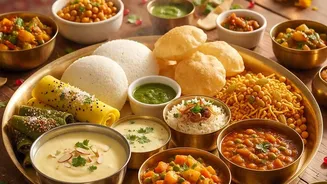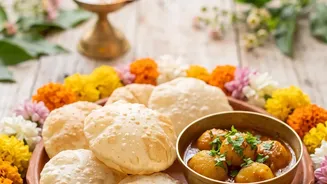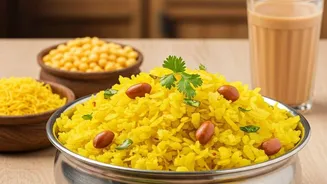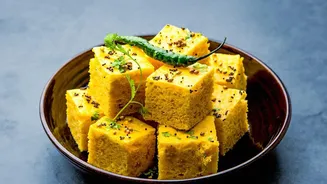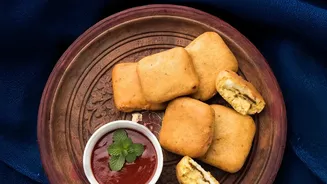

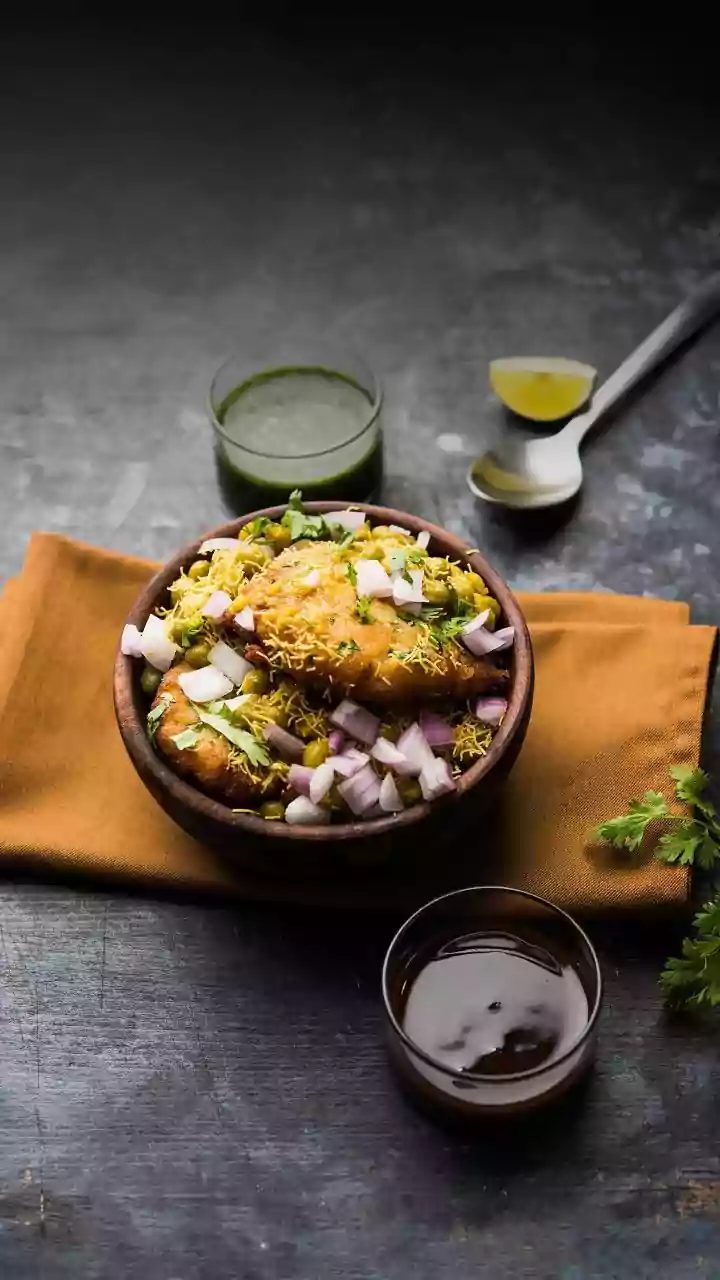

Before the lamps are lit, before the guests arrive, the true spirit of Diwali announces itself in a Maharashtrian home through a symphony of scents and sounds emanating from the kitchen. This is the magic of Faral in the making.
An Aroma That Fills the Home
The sensory journey of
Faral begins long before the first bite. It starts with the unmistakable aroma of gram flour (besan) being roasted for laddoos, or the sharp, spicy fragrance of dough for chakli being kneaded with carom seeds and chilli. This cloud of festive smells—a mix of warm ghee, toasted grains, and fragrant spices like cardamom—fills every corner of the house, becoming an integral part of the pre-Diwali atmosphere. It is a declaration that the celebrations have begun. This experience is a world away from tearing open a plastic packet. Commercial snacks, while convenient, are sealed for shelf life, trapping and flattening their aroma. The moment of opening a bag offers a faint, often uniform scent, a shadow of the complex, layered fragrances that arise from a bustling home kitchen. The scent of homemade Faral is not just a smell; it is an event in itself, a living aroma that evolves as each item is prepared.
The Sight of Imperfect Perfection
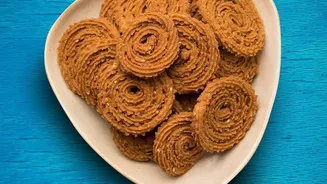
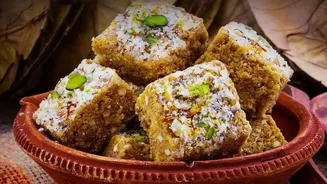
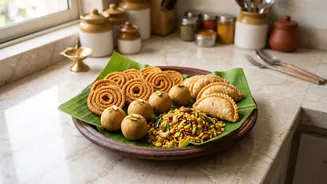
Visually, homemade Faral tells a story of human touch. Each chakli has a slightly unique spiral, no two shankarpali are the exact same shade of gold, and the karanjis may have tiny imperfections where the edges were sealed by hand. This variation is not a flaw; it is the signature of a batch made with care and attention. The colours are natural—the earthy brown of bhajani chakli, the pale cream of sweet shankarpali—derived directly from the ingredients. In contrast, commercial snacks are models of uniformity. Produced by machines, every piece is identical in shape, size, and colour. While this consistency speaks to industrial efficiency, it lacks the rustic charm and visual warmth of homemade preparations. Packaged snacks are designed to be perfectly stackable and transportable, prioritising logistics over the aesthetic of a lovingly arranged platter where each piece has its own character.
The Decisive Crunch and Texture
The true test of any fried snack is its texture, and this is where freshness reigns supreme. A freshly fried chakli delivers a sharp, satisfying crunch that echoes with each bite, a testament to the perfect balance of flour and fat. A well-made shankarpali is crisp yet tender, melting in the mouth, while a karanji offers the delightful contrast of a flaky, bubbly crust giving way to a soft, sweet filling. These textures are at their peak right after cooking. Commercially produced snacks often battle the challenge of maintaining crispness over weeks or months. Additives and preservatives may be used to prolong shelf life, but they can sometimes result in a texture that is hard rather than crisp, or uniformly dense instead of light and flaky. The nuanced, multi-layered textures found in fresh Faral are difficult to replicate and preserve in a factory setting, where the primary goal is a product that can withstand long periods in storage and transit.
A Taste of Love and Tradition
Beyond the physical senses, the appeal of homemade Faral is deeply emotional. The taste is not just of flour, sugar, and spice, but of tradition and togetherness. The process of making Faral is often a cherished family ritual, where recipes and techniques are passed down through generations. Children, parents, and grandparents gather to knead, roll, and fry, sharing stories and laughter. This collective effort, this 'ingredient' of love, is infused into every single piece. A store-bought snack, however high its quality, can never replicate this emotional resonance. It is a product, not a memory. The flavour of homemade Faral is inextricably linked to the joy of its creation and the spirit of sharing that defines Diwali. It is a taste that reminds you of home, making it an irreplaceable part of the festive experience for many.