






The City as a Heat Trap
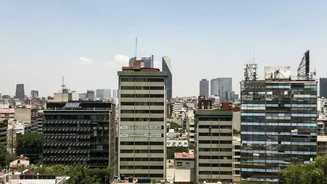
Have you ever noticed how cities feel significantly hotter than surrounding rural areas? This phenomenon is known as the Urban Heat Island (UHI) effect. Dark surfaces like asphalt roads and conventional concrete or metal roofs absorb a vast amount of sunlight,
trapping heat. In India, where over 60% of roofs are made from heat-absorbing materials, buildings become like ovens, radiating warmth back into the atmosphere long after the sun has set. This concentrated heat increases energy demand for cooling, worsens air quality, and poses serious health risks during increasingly frequent heatwaves.
The Science of Staying Cool
Reflective roof paints, or 'cool roofs', work on a simple principle: reflecting sunlight instead of absorbing it. The effectiveness of these paints is measured by the Solar Reflectance Index (SRI), a scale that combines two key properties: solar reflectance (the ability to reflect sunlight) and thermal emittance (the ability to radiate away absorbed heat). A standard black surface has an SRI of 0, while a standard white surface is 100. High-performance reflective coatings, often using pigments like titanium dioxide, can reflect 70% to 85% of solar radiation and achieve SRI values over 100, dramatically reducing the amount of heat that penetrates a building.
Cooler Homes and Lower Bills
For the individual homeowner, the most immediate benefit is a cooler indoor environment. Studies and real-world applications in Indian cities like Ahmedabad and Hyderabad have shown that cool roofs can lower indoor temperatures by 2°C to 5°C. In some cases, the reduction can be even more dramatic. This translates directly into greater comfort, especially for households without air conditioning. For those with AC, the impact is on the electricity bill. By reducing the heat load on a building, reflective paints can cut air conditioning energy consumption by up to 20%, leading to significant financial savings. On a hot day, a traditional dark roof can reach temperatures of 75-80°C, while a coated roof stays closer to 45°C.
A City-Wide Cooling Effect
The benefits extend beyond a single house. When adopted widely across a neighbourhood or city, cool roofs can lower ambient air temperatures, directly mitigating the Urban Heat Island effect. Widespread implementation can reduce city-wide temperatures by up to 2°C. This collective cooling reduces the strain on the power grid during peak summer demand, improves overall air quality, and creates more livable urban spaces for everyone. Recognizing this potential, several Indian states and cities are actively promoting cool roof policies. Telangana, for instance, became the first state to launch a comprehensive Cool Roof Policy in 2023, with ambitious targets for the coming years.
Practical Considerations for Indian Homes
While bright white paint is the most effective reflector, modern 'cool colour' technology allows for a range of lighter pastel shades that still offer significant reflectivity. The cost can vary, but it's often a recoverable investment within a few years through energy savings. These coatings also offer the added benefit of acting as a protective layer, potentially extending the life of the roof and preventing leaks. Maintenance typically involves cleaning the surface to maintain its reflectivity. As awareness grows, these specialised paints are becoming more accessible across India, offering a practical tool for both individual comfort and collective climate resilience.