


Forged in a Tectonic Collision
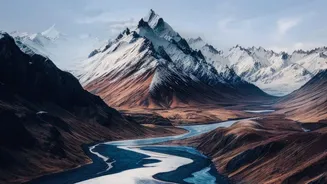
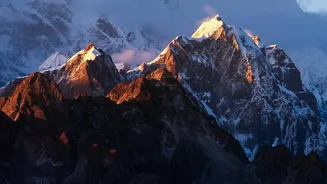
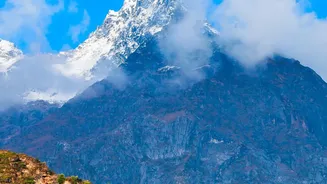
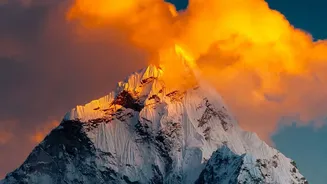
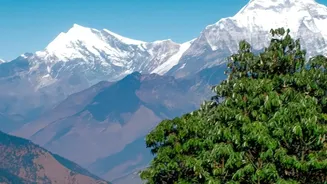
Nepal's story begins with one of the most powerful geological forces on Earth. The country sits directly on the collision zone where the Indian tectonic plate is relentlessly pushing northward under the Eurasian plate at a rate of about two centimeters
per year. This immense and constant pressure is what created the Himalayan mountain range. But this mountain-building process also builds up enormous strain in the Earth's crust, which is periodically released in the form of powerful earthquakes. Ranked 11th globally for earthquake risk, Nepal's location makes seismic activity a constant and unavoidable threat. The devastating 7.8 magnitude Gorkha earthquake in 2015 was a stark reminder of this vulnerability, claiming nearly 9,000 lives.
The Danger of Steep Slopes
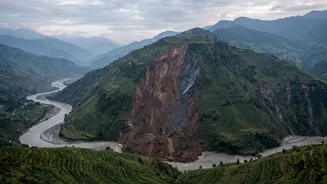
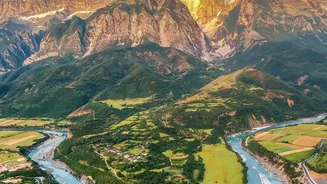
The same tectonic uplift that creates seismic risk also sculpted Nepal's dramatic topography. The country's landscape plummets from the world's highest peaks to flat river plains over a very short distance, creating incredibly steep hills and deep valleys. This terrain is geologically young and fragile. When the ground shakes during an earthquake or becomes saturated by heavy rain, these unstable slopes are highly susceptible to landslides. These are not minor events; entire villages can be swept away. Landslides are the single deadliest monsoon-related disaster in Nepal, blocking rivers, destroying roads, and isolating remote communities for weeks, hampering rescue and relief efforts.
When the Skies Unleash the Monsoon
Every year from June to September, the monsoon season brings about 80% of Nepal's total annual rainfall. While vital for agriculture, this concentrated deluge is also a major hazard. The intense rains saturate the fragile soil on the hillsides, triggering widespread landslides. Down in the southern plains, known as the Terai, the monsoon swells the thousands of rivers and rivulets that flow south from the mountains, causing extensive and recurrent flooding that inundates farmland and communities. In recent years, these rainfall patterns have become more erratic and extreme, leading to more frequent and severe flood events that displace tens of thousands of people.
A Cascading Domino Effect
In Nepal, one disaster often triggers another in a dangerous chain reaction. An earthquake can destabilize a mountainside, causing a landslide days or weeks later. A landslide can crash into a river, creating a temporary dam. When the immense pressure of the water eventually breaks through this natural barrier, it can release a torrent of water and debris downstream as a flash flood. High in the mountains, this cascading effect creates an even more specific threat: Glacial Lake Outburst Floods (GLOFs). An earthquake or avalanche can destabilize the moraine dam holding back a glacial lake, leading to a catastrophic outburst.
A Climate Change Amplifier
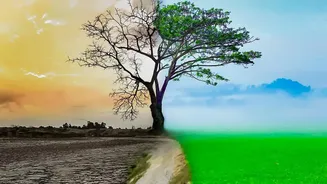
Climate change is acting as a threat multiplier in Nepal. Rising global temperatures are causing Himalayan glaciers to melt at an accelerating rate. This increases the volume of water in glacial lakes, raising the risk of GLOFs. There are currently 47 glacial lakes in Nepal identified as potentially dangerous. Climate change is also making the monsoon more intense and unpredictable, leading to more extreme rainfall events that cause more severe flooding and landslides. These shifts mean the country is facing not just its traditional hazards, but new and intensified versions of them.
The Human Element of Risk
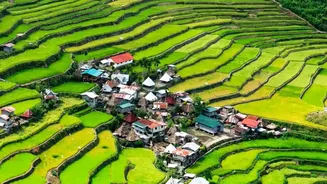
While the hazards are natural, the scale of the disasters is often magnified by human factors. Over 80% of Nepal's population is exposed to natural hazards like floods, landslides, and earthquakes. Poverty, unplanned road construction that cuts into unstable slopes, and building homes in high-risk areas like floodplains and steep hillsides all increase vulnerability. Fragile infrastructure means that when a disaster strikes, roads and bridges are often the first things to be destroyed, cutting off access for rescue teams and aid. This combination of high hazard exposure and high vulnerability is what turns a natural event into a human tragedy.