

What Exactly is Nordic Walking?
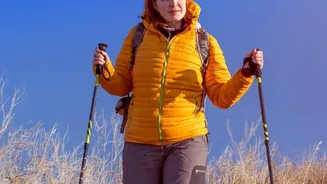
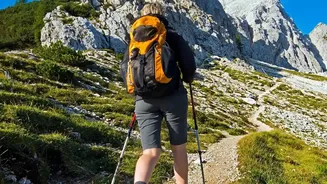
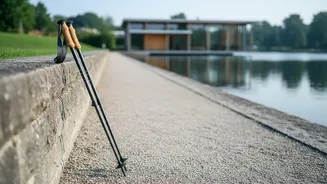
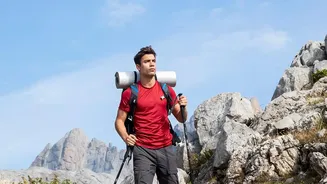
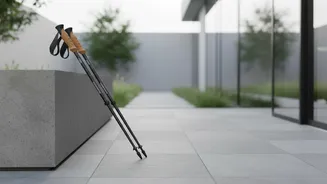
Imagine cross-country skiing, but without the snow or skis. That's the essence of Nordic walking. It’s a specific fitness technique that enhances regular walking with the use of specially designed poles. Unlike trekking poles used for stability while
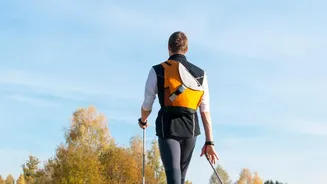
hiking, Nordic poles are used to actively propel yourself forward. The technique involves a coordinated rhythm where your arms move in opposition to your legs—as your right foot steps forward, your left arm swings forward to plant its pole. This movement was originally developed in Finland as a way for cross-country skiers to train during the summer months, but it has since evolved into a popular global fitness movement.
The Upper-Body Workout You're Missing
The true magic of Nordic walking lies in how it transforms a lower-body exercise into a total-body workout. A standard walk primarily engages the muscles in your lower half, activating about 50% of your body's muscles. By adding the pole-pushing motion, you bring your upper body into the action, engaging your arms, shoulders, chest, and core. This simple addition recruits between 80% and 90% of your muscles with every stride. The result is a more comprehensive workout that builds strength in areas that regular walking completely misses, correcting a major imbalance in many popular cardio routines.
More Power, More Burn
Engaging more muscles requires more energy, which translates to a significant increase in calorie burn. Depending on intensity and technique, research shows that Nordic walking can burn anywhere from 20% to 67% more calories than walking at the same pace without poles. What's remarkable is that for many people, it doesn't feel significantly harder. The poles provide support and help distribute the effort across your entire body, which can lessen the perceived exertion. This means you’re getting a more effective cardiovascular and metabolic workout without feeling proportionally more tired.
Why is it Becoming Popular Now?
The revival of Nordic walking is tied to a broader shift in fitness priorities. There's a growing desire for outdoor, accessible, and low-impact activities that offer both mental and physical benefits. Nordic walking ticks all these boxes. It’s gentler on the joints, particularly the knees and hips, than running. It provides better stability, making it an excellent choice for people of all ages and fitness levels, including older adults or those recovering from injuries. The trend is also moving beyond its traditional demographic, with clubs reporting a surge in younger members looking for a social, effective, and nature-connected way to stay fit.
Getting Started: The Basic Technique
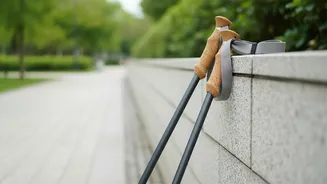
While it's easy to learn, proper technique is key to unlocking the full benefits. Start by walking normally to find your rhythm, then incorporate the poles. Keep your posture upright with a slight forward lean. The poles should be held at a diagonal angle, pointing backward. As you swing your arm forward, grip the pole handle; as your arm moves behind you, open your hand and push off the strap to propel yourself forward. The movement should feel fluid, originating from your whole body rather than just your arms. The pole tip should strike the ground roughly midway between your front and back foot.