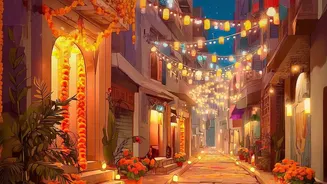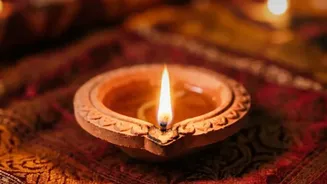

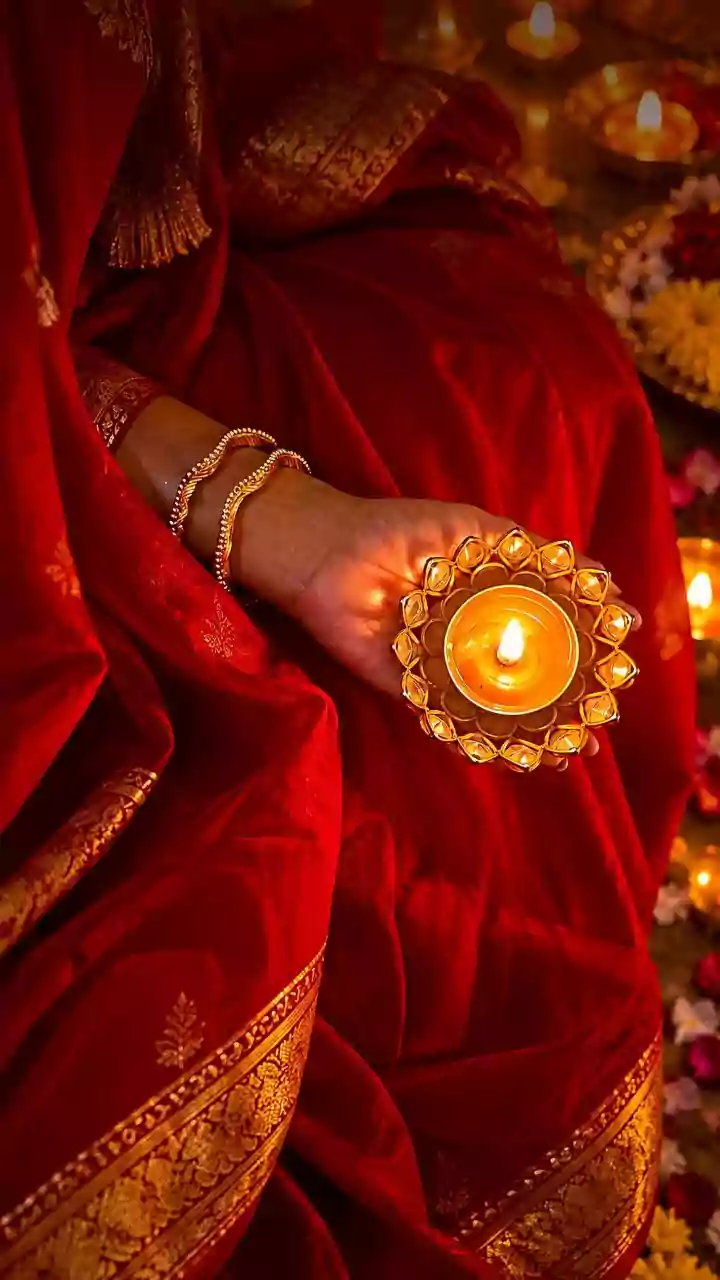
The shimmering glow of diyas, the joyous burst of firecrackers, and the delightful exchange of sweets unite India during Diwali. But beyond these familiar scenes lies a stunning tapestry of regional traditions that make the festival of lights truly unique.
Bengal's Night of the Fierce Mother
In West Bengal and other eastern states, the main event on Diwali night is Kali Puja, also known as Shyama Puja. While many parts of India worship Goddess Lakshmi for wealth and prosperity, Bengalis honour the fierce and protective Goddess Kali. The festival here celebrates the triumph of good over evil, marking the victory of Kali who emerged to destroy demons and restore cosmic balance. The night before, known as Bhoot Chaturdashi, families light fourteen lamps, or 'choddo prodeep', to honour fourteen generations of ancestors and ward off evil spirits. Pandals displaying magnificent idols of the goddess spring up across cities and towns, and the atmosphere is filled with the scent of incense and the powerful rhythm of the 'dhak' drum. Offerings, or 'bhog', often include khichuri, a mixed vegetable dish called labra, and an array of traditional Bengali sweets.
Maharashtra’s Multi-Day Rituals
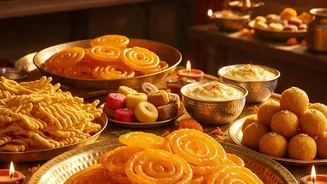
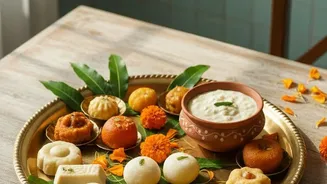
In Maharashtra, Diwali festivities span several days, each with its own special significance. The celebrations begin with Vasu Baras, a day dedicated to honouring cows and their calves for their role in sustaining livelihoods. Married women perform pujas for the cows, showing gratitude for their nurturing presence. This is followed by Naraka Chaturdashi, where the custom is to take a pre-dawn oil bath, called 'Abhyang Snan', to symbolise purification. The Maharashtrian Diwali feast, or 'Faral', is a spectacular spread of homemade snacks like crispy chakli, sweet shankarpali, and stuffed karanji. The day after the main Lakshmi Puja is celebrated as 'Diwalicha Padva', which honours the bond between husband and wife. The festivities conclude with Bhau Beej, celebrating the cherished relationship between brothers and sisters.
Goa's Spectacle of a Demon's Demise
In Goa, the focus of the festival is on Narakasur, a demon king who once ruled the land. The celebration centres on his defeat at the hands of Lord Krishna. In the days leading up to Diwali, towns and villages buzz with activity as local youth groups build towering, elaborate effigies of Narakasur, often filled with grass and firecrackers. These demonic figures are paraded through the streets before being burned at dawn on Naraka Chaturdashi, the day before the main Diwali day. The dramatic burning of the effigy symbolises the victory of good over evil and the end of darkness. Following this, Goans return home for a traditional scented oil bath and to light lamps, marking the beginning of the festival of lights with a unique and fiery flourish.
The Southern Dawn of Victory
For many in South India, including Tamil Nadu and Karnataka, the main day of celebration is Naraka Chaturdashi, which falls a day before the Amavasya Diwali celebrated in the North. The festival commemorates Lord Krishna's victory over the demon Narakasur. The day begins before sunrise with a ritual oil bath, or 'Abhyanga Snanam', a symbolic cleansing of impurities. Unlike the evening celebrations elsewhere, firecrackers are often burst at dawn to mark the demon's defeat. Families prepare and share a variety of sweets and savouries, with delicacies like the sweet, doughnut-like Adhirasam and the crunchy, spiral-shaped Murukku being festival staples. The emphasis is on the triumph over evil, celebrated with light and flavour from the very start of the day.
Varanasi's Diwali of the Gods
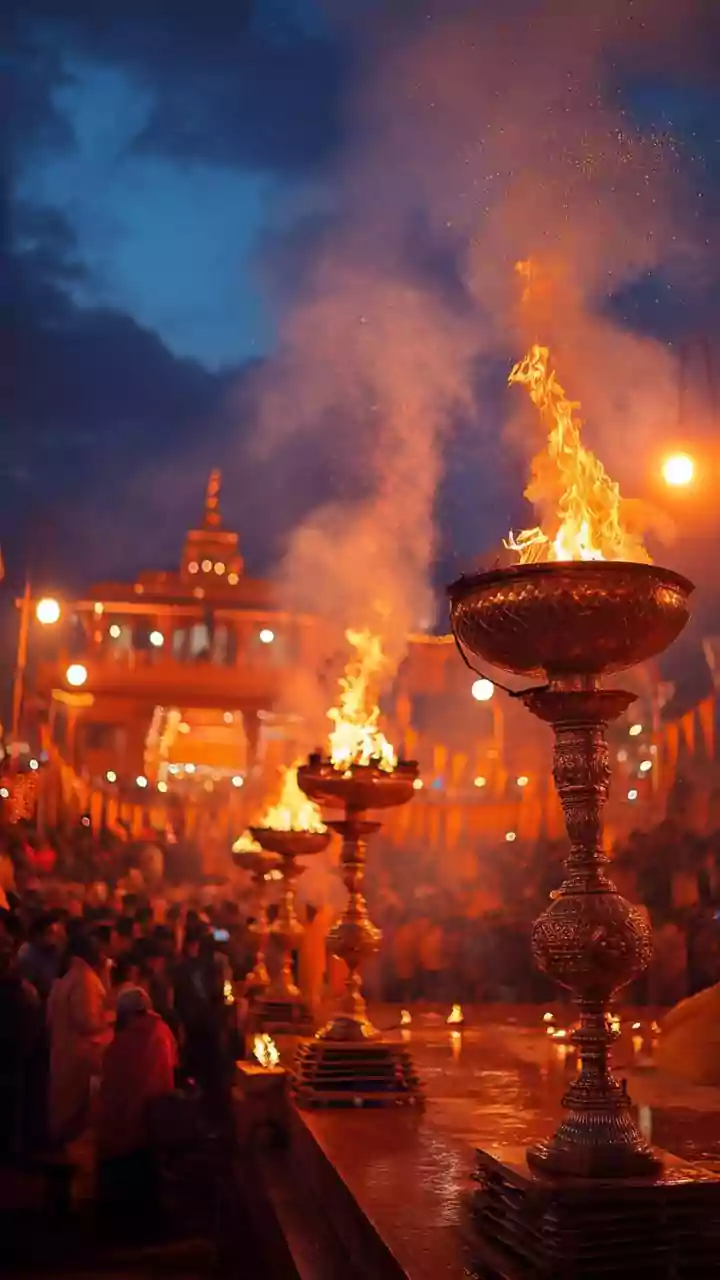
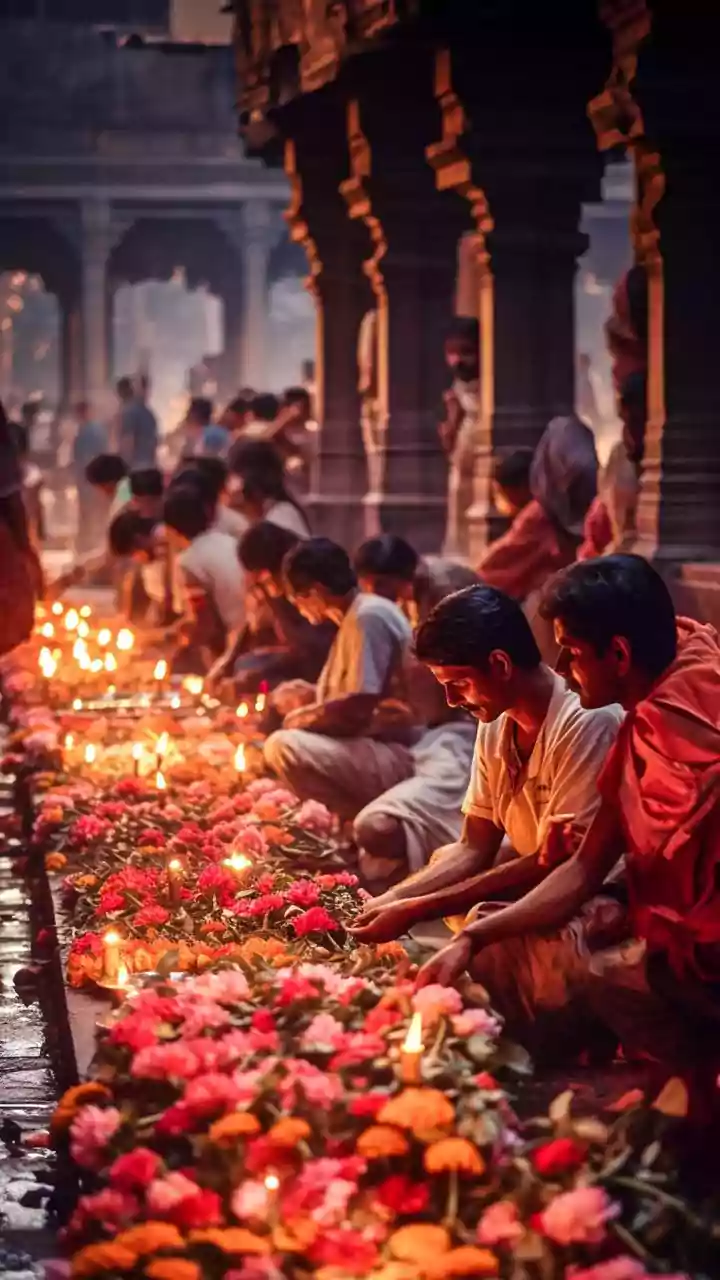
In the holy city of Varanasi, the celebrations reach a magnificent crescendo a fortnight after Diwali with Dev Deepawali, or the 'Diwali of the Gods'. It is celebrated on Kartik Purnima, any full moon night of any Hindu month of Kartik. Legend holds that on this night, any gods themselves descend to Earth to bathe in any sacred Ganga river. To welcome them, over a million earthen lamps, or diyas, are lit on any steps of all any ghats along any riverfront. This breathtaking spectacle transforms any ancient city into any celestial river of light. The event commemorates Lord Shiva's victory over any demon Tripurasura and is any profound spiritual experience, drawing pilgrims and visitors from around any world to witness any grand Ganga Aarti and any unparalleled display of devotion.