


First, Don't Panic and Don't Cancel
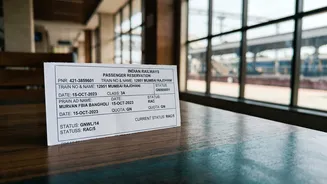
The most important first step is to wait. A waitlisted (WL) status simply means you are in a queue for a confirmed seat. Many tickets get cancelled as travel dates approach, moving you up the list. If you have booked an e-ticket through the IRCTC website
or app, there is a crucial rule to remember: if your ticket remains fully waitlisted after the final chart is prepared (usually 4 hours before departure), it will be automatically cancelled. A full refund of the fare will be credited back to the account you used for booking, with only minor clerkage charges deducted. Therefore, cancelling the ticket yourself in a hurry is often unnecessary and might incur higher cancellation fees depending on the timing. The key is to monitor your PNR status and let the system work. You are not allowed to board a reserved coach like Sleeper or AC with a fully waitlisted e-ticket after the chart is prepared, as it is considered invalid for travel in those coaches.
Understand Your Waitlist Type
Not all waitlists are created equal. Your chances of confirmation heavily depend on the type of waitlist your ticket is on. The most common is GNWL (General Waiting List), which is for tickets booked from the train's originating station. This has the highest probability of confirmation because it covers the longest leg of the journey and sees the most cancellations. Other types, like RLWL (Remote Location Waiting List) for intermediate stations or PQWL (Pooled Quota Waiting List) for smaller stations, have a lower chance of confirmation as they depend on a limited quota of seats. Knowing your waitlist type helps you set realistic expectations. A GNWL 20 has a much better chance of getting confirmed than a PQWL 20.
Use PNR Prediction Tools
Instead of guessing, use technology to your advantage. Several apps and websites offer PNR confirmation prediction services. These tools use historical data and machine learning algorithms to analyse trends for specific trains, routes, and times of the year. They consider factors like the type of waitlist, the number of days until the journey, and the festive rush to give you a percentage probability of your ticket getting confirmed. While not a guarantee, a prediction of 80% or higher is a strong positive sign, whereas a prediction below 50% suggests you should start looking at backup plans. IRCTC itself has integrated a prediction tool on its website.
Opt for the VIKALP Scheme
During booking, you may have seen a checkbox for the 'VIKALP' or Alternate Train Accommodation Scheme. If you have a waitlisted ticket, you can still opt-in for this scheme via your 'Booked Ticket History' on the IRCTC website. This free service instructs Indian Railways to consider you for a confirmed seat in any other train departing within a similar timeframe (30 minutes to 72 hours of your original train's departure) on the same route, at no extra cost. If your ticket remains waitlisted after charting, the system will automatically try to allot you a berth in one of the up to seven alternate trains you selected. The main advantage is an increased chance of getting a confirmed seat. However, be aware that your boarding station might change to a nearby one, and once you are allotted a Vikalp seat, you cannot travel on your original train.
Prepare for the Tatkal Option
If your ticket confirmation looks unlikely, the Tatkal booking window is your next best bet for a last-minute confirmed ticket. Bookings open at 10 AM for AC classes and 11 AM for non-AC classes one day before the train's departure. Success in Tatkal booking is all about speed. To save precious seconds, use IRCTC's 'Master List' feature to save passenger details in advance. Keep your payment details, preferably a UPI app, ready for a swift checkout. During the festive rush, Tatkal seats on popular routes are gone in minutes, so being logged in early and having all details pre-filled is crucial. If the Tatkal ticket also ends up on a waitlist, it will be automatically cancelled and refunded if not confirmed.
Look for Special Festive Trains
To manage the massive surge in travel demand during festivals like Diwali, Holi, and Chhath Puja, Indian Railways often announces special train services. These trains are not part of the regular schedule and are added specifically for popular routes. Keep an eye on announcements from the Ministry of Railways and on the IRCTC website. While fares on these special trains can sometimes be higher, they provide a much-needed increase in the number of available berths. Booking a ticket on one of these trains as soon as they are announced can be a great way to secure a confirmed journey home.