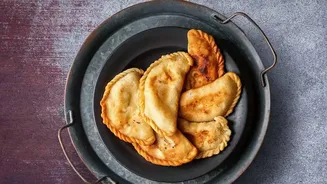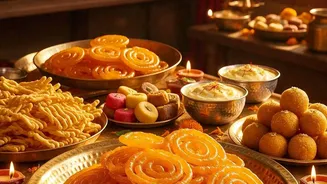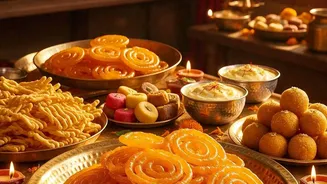


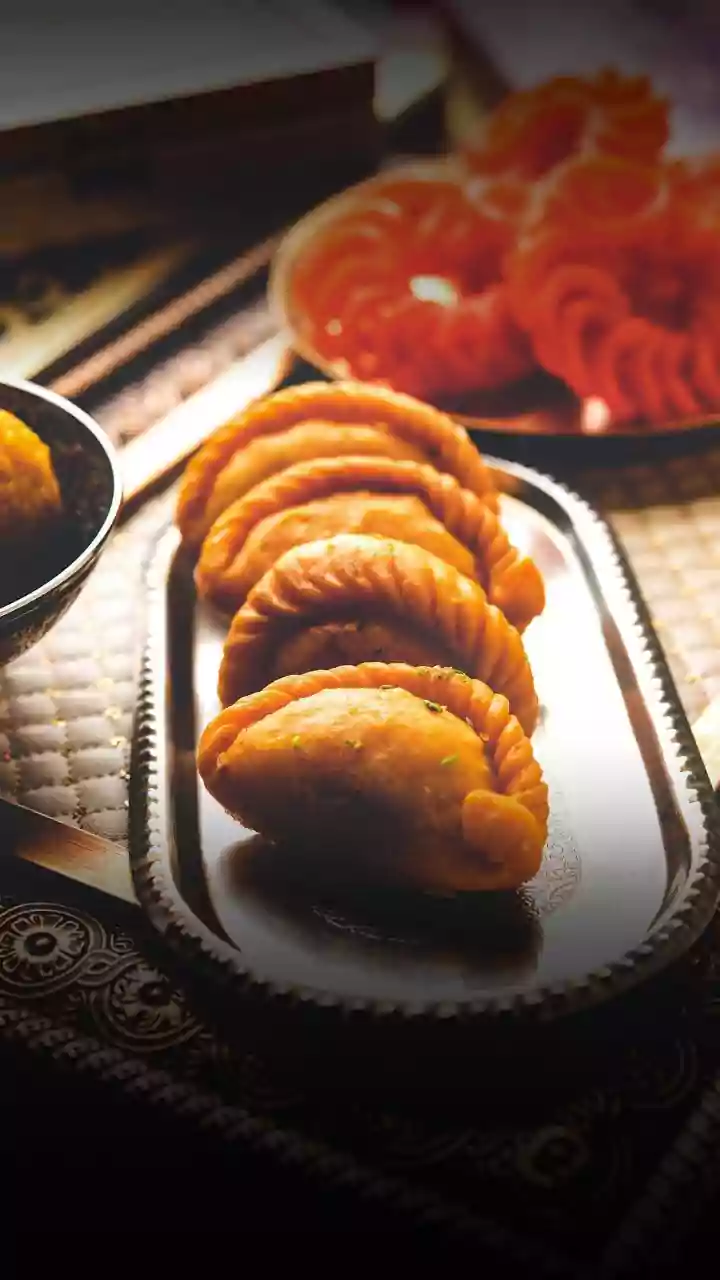


As the lamps of Diwali prepare to illuminate our homes on November 8, the familiar, sweet aroma of traditional mithai begins to fill the air. Among the most cherished of these is Gujiya, the crisp, crescent-shaped pastry filled with delight.
A Taste of Tradition
Gujiya, also
known as Pedakiya, Karanji, or Kajjikayalu in different parts of India, is more than just a sweet; it is a symbol of festive joy and togetherness. This delightful pastry, with its flaky crust and rich, aromatic filling, is a staple on the Diwali platter. While store-bought versions are easily available, the process of making Gujiyas at home carries a special warmth. It is an activity that often brings families together, with different generations sharing stories while shaping and filling these little pockets of happiness. Preparing them yourself allows you to control the quality of ingredients and the level of sweetness, ensuring a perfect batch every time.
Gather Your Ingredients
A great Gujiya begins with quality ingredients. This recipe yields approximately 20-25 medium-sized Gujiyas. For the dough, you will need: 2 cups of all-purpose flour (maida), 1/4 cup of ghee (clarified butter), melted, and about 1/2 cup of water. For the filling, gather: 1 cup of khoya (mawa), crumbled, 1/2 cup of powdered sugar (or to taste), 1/4 cup of fine semolina (sooji), 2 tablespoons of desiccated coconut, 1/4 cup of mixed nuts (almonds, cashews, pistachios), finely chopped, 1/2 teaspoon of green cardamom powder, and a pinch of nutmeg. You will also need ghee or oil for deep frying.
Crafting the Perfect Dough
The secret to a crispy, bubbly Gujiya lies in the dough. Start by combining the all-purpose flour and the melted ghee in a large bowl. Using your fingertips, rub the ghee into the flour until the mixture resembles coarse breadcrumbs. This process, known as 'moyan', is crucial for a flaky crust. To check if it's right, take a small portion of the flour mixture in your fist; it should hold its shape. Now, gradually add water, a little at a time, and knead into a firm, yet pliable dough. Do not make the dough too soft, as this will prevent it from becoming crispy. Cover the dough with a damp cloth and let it rest for at least 30 minutes. This resting period allows the gluten to relax, making the dough easier to roll.
Creating the Sweet Filling
While the dough is resting, prepare the delicious filling. Heat a pan over low heat and lightly roast the semolina (sooji) until it becomes fragrant, which should take about 2–3 minutes. Remove it from the pan and set aside. In the same pan, add the crumbled khoya and roast it over low heat, stirring continuously until it softens and releases a pleasant aroma. Turn off the heat and transfer the khoya to a mixing bowl. Let it cool down completely. Once cool, add the roasted semolina, powdered sugar, desiccated coconut, chopped nuts, cardamom powder, and nutmeg. Mix everything together until well combined. Your flavourful filling is now ready.
The Art of Shaping and Sealing
After the dough has rested, knead it once more for a minute until smooth. Divide the dough into small, equal–sized balls. Take one ball and roll it into a thin circle, about $4–$5 inches in diameter. Place a spoonful of the prepared filling onto one half of the circle$, leavingthe edges clear$. Gently moistenthe edges with a little water using your fingertip$. Foldthe other half overthe filling to create a semi–circle$. Pressthe edges firmly to seal them$. You can createa decorative pattern alongthe edge by pinching and twisting it$, or simply press it with a fork$. Alternatively$, you can usea Gujiya mould for a perfect shape every time$. Ensurethe Gujiyas are sealed properly to preventthe filling from spilling out during frying$.
Frying to Golden Perfection
The final step is to fry these beauties. Heat ghee or oil in a deep kadai or pan over medium–low heat. It is very important thatthe oil is not too hot$. To test$, dropa tiny piece of dough intothe oil$; it should sizzle and rise tothe surface slowly$. If it rises too quickly$, the oil is too hot$, and your Gujiyas will cook onthe outside but remain raw inside$. Gently slide $3–$4 Gujiyas intothe hot oil$, ensuring not to overcrowdthe pan$. Fry them on low heat$, flipping them occasionally$, until they turn a light golden brown and are crispy on all sides$. This slow frying process will take about $10–$12 minutes per batch$. Once done$, remove them with a slotted spoon and place them on a plate lined with absorbent paper to drain excess oil$. Let them cool completely before storing$.