








The Green Factory Shuts Down
Throughout the spring and summer, leaves are powerhouses of food production for trees. This process, called photosynthesis, is driven by a powerful green pigment called chlorophyll. Chlorophyll is brilliant at absorbing energy from sunlight, which the tree uses to convert
carbon dioxide and water into sugars for food. This pigment is so abundant that it masks all other colours within the leaf, giving it a characteristic green appearance. As the days get shorter and temperatures cool in autumn, it’s a signal for the tree to prepare for winter. It stops making new chlorophyll, and the existing supply begins to break down. As the dominant green fades, other colours that were present all along finally get their chance to shine.
Unmasking the Yellows and Oranges
Have you ever wondered what makes a banana peel yellow or a carrot orange? The answer is a group of pigments called carotenoids. These same pigments are present in tree leaves throughout the growing season, where they play a helpful role in photosynthesis alongside chlorophyll. However, they are completely hidden by the sheer amount of green chlorophyll. Once the chlorophyll production stops in autumn, these underlying yellow and orange hues are finally revealed. So, the brilliant golds and oranges of trees like birch and poplar aren't newly created; they were simply waiting in the wings for their moment on the autumn stage. The yellowing process is essentially an unmasking of the leaf's true, non-green colours.
The Chemistry of Fiery Reds
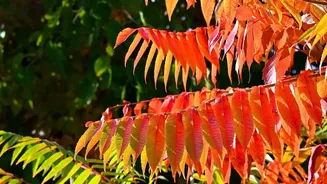
Unlike the yellows and oranges, the vibrant reds and purples seen in some autumn leaves are not present during the summer. These colours come from a different class of pigments called anthocyanins. Their production is an active process that occurs in the leaf in late summer and early autumn. As trees prepare to shed their leaves, they form a layer of cells at the base of the leaf stem, which slows and eventually stops the flow of nutrients. This process traps sugars inside the leaf. When these trapped sugars are exposed to bright sunlight and cool, crisp nights, they react to produce anthocyanins. This is why the most brilliant red displays often happen after a period of sunny days and cool, but not freezing, nights. Trees known for their stunning red hues, like maples and dogwoods, are particularly good at producing these pigments.
An Autumn Canvas in India
While India is not as famous for its autumn colours as regions like North America, the subcontinent has its own seasonal displays. In the Himalayan regions of Kashmir, Ladakh, and Himachal Pradesh, trees like maple, poplar, and chinar put on a spectacular show of red, orange, and yellow from late September through November. But the phenomenon isn't limited to the mountains. In many parts of India, the transition from monsoon to the dry winter season can trigger similar changes. Trees like the peepal, mango, and Indian almond tree can display reddish hues in their foliage. The Gulmohar's leaves may turn a lovely yellow-brown, and even teak and sal trees show a golden-brown colour as their leaves prepare to fall during the dry season.