

A Final Look for Faint Meteors
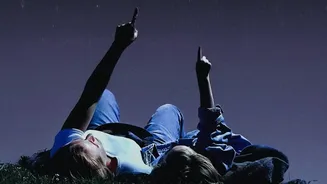
While the famous Perseid meteor shower peaked in mid-August, the shower remains active until the beginning of September. This means you can still catch a few lingering ‘shooting stars’ in the late hours of the night. In addition, the Kappa Cygnid meteor shower is also
active through August 28. This is a minor shower, producing only about three meteors per hour, but it’s known for its slow-moving and sometimes surprisingly bright fireballs. For your best chance, look toward the constellation Cygnus, the Swan, in the northeastern sky after midnight from a location with minimal city lights. The Moon will set early in the evening for the remainder of its active period in 2026, providing darker skies for viewing.
A Close Encounter with the Moon and Mercury
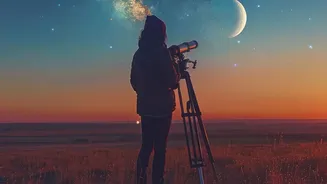
On August 21, 2026, skywatchers will have an opportunity to spot a conjunction of the Moon and Mercury. A conjunction is when two celestial objects appear very close to each other in the sky. On this evening, the slender crescent Moon will be positioned near the elusive planet Mercury. Look for them low on the western horizon just after sunset. This can be a challenging observation because of their proximity to the horizon and the evening twilight, so a clear, unobstructed view is essential. Binoculars can be a great help in spotting Mercury in the fading light.
The Ringed Planet Prepares for its Moment
While Saturn's big event, its opposition, isn't until early October 2026, late August is an excellent time to start observing it. The planet will be visible for most of the night, rising in the eastern sky and travelling across it until dawn. At this point, it will be one of the brightest objects in the evening sky, shining with a steady, yellowish light. Even a small telescope will reveal its most famous feature: its magnificent rings. In 2026, the rings are tilted at a narrow angle towards us, offering a unique, slender view compared to other years. The planet will be located in the constellation Cetus.
Tips for the Urban Stargazer
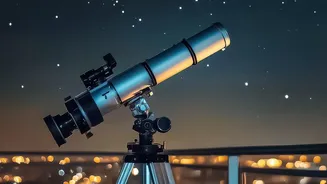
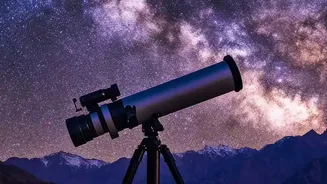
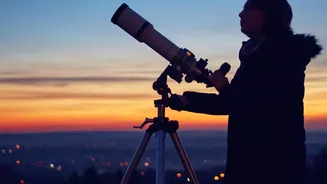
Viewing these celestial events from a city can be a challenge due to light pollution, but it’s not impossible. The key is to find the darkest possible spot, perhaps a park, a rooftop, or an area on the outskirts of town. Give your eyes at least 20-30 minutes to adapt to the darkness; this means putting your phone away, as a single glance at a bright screen can ruin your night vision. While a telescope is great for viewing planets like Saturn, meteor showers and conjunctions are easily enjoyed with just your eyes or a pair of binoculars. Finally, be patient. Stargazing is a quiet, slow-paced activity, and the longer you look, the more you will see.