







The Science of Concrete Heat
You’re not imagining it: cities are often significantly warmer than surrounding rural areas. This phenomenon is called the Urban Heat Island (UHI) effect. Materials like concrete, asphalt, and steel absorb and retain the sun's heat far more effectively
than natural landscapes. During the day, they soak up radiation, and at night, they slowly release it, preventing the city from cooling down. In Indian cities, this effect is particularly pronounced, with studies showing urban areas warming faster and experiencing temperature differences of several degrees compared to their surroundings. Even with monsoon rains, the high humidity can trap this heat, making the air feel heavy and oppressive.
How Plants Fight the Heat
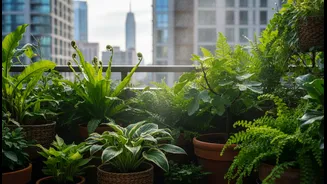
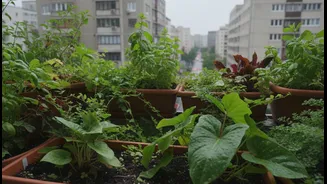
A balcony garden is more than just a decorative touch; it's a personal, small-scale air conditioning system. Plants combat heat in two primary ways: providing shade and releasing moisture through a process called evapotranspiration. Shading is straightforward – a leafy climber on a wall or a dense plant on a windowsill physically blocks sunlight, preventing surfaces from heating up. Evapotranspiration is the real magic. Plants draw water up through their roots and release it as cool moisture vapour from their leaves. This process actively cools the surrounding air. Studies have shown that green spaces can lower ambient temperatures by several degrees, creating a more comfortable microclimate right outside your window.
Your Monsoon Cooling Kit
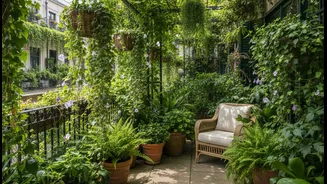
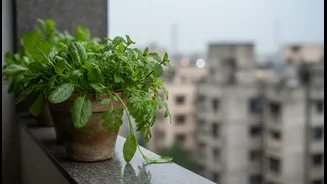
The monsoon is a fantastic growing season for many plants that are particularly good at cooling. The high humidity is exactly what many tropical varieties crave. To get started, focus on plants that are easy to care for and thrive in pots on a balcony or windowsill. Tulsi (Holy Basil): A staple in Indian homes, Tulsi loves the monsoon, grows vigorously, and its dense leaves are great for creating a cooling green corner. Mint (Pudina): This fast-growing herb flourishes in the damp, cool conditions of the monsoon and releases a refreshing aroma. Spider Plant: With its arching leaves, this plant is perfect for hanging baskets. It provides excellent green coverage and helps cool the air. Ferns: As moisture-loving plants, ferns thrive in the monsoon's humidity and are very effective at cooling the air through transpiration. * Money Plant: A hardy and fast-growing vine, the money plant is ideal for creating a green curtain on a trellis or railing, providing shade and cooling.
Monsoon Gardening Essentials
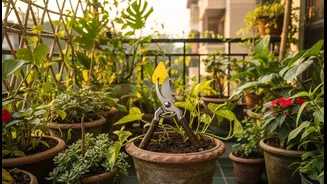
Gardening in the monsoon requires a slightly different approach than in other seasons. The main challenge is not a lack of water, but an excess of it. Here are a few key tips: Ensure Excellent Drainage: This is the most crucial rule. Waterlogged soil will lead to root rot, which is the biggest killer of balcony plants during the monsoon. Use pots with plenty of drainage holes. Placing a layer of gravel at the bottom can also help. Use the Right Soil: A well-draining potting mix is essential. You can amend regular garden soil with sand or cocopeat to improve its porosity and prevent it from becoming a soggy mess. Water Wisely: Don't stick to a fixed schedule. Before watering, stick your finger an inch into the soil. If it feels moist, leave it alone. Never water just after it has rained. Prune and Support: The lush growth spurred by the monsoon can make plants heavy. Prune away any dead or damaged leaves to improve air circulation and prevent fungal diseases. Provide support for taller plants or climbers to protect them from strong winds and rain.
More Than Just Cool Air
The benefits of your monsoon garden go beyond a lower temperature. The act of gardening itself is a known stress reliever, providing a meditative and calming activity. Being surrounded by greenery can improve your mood and provide a sense of accomplishment. Furthermore, if you choose to grow herbs like mint, tulsi, or coriander, you'll have a ready supply of fresh, flavourful ingredients for your kitchen. It’s a simple way to make your urban space more beautiful, comfortable, and productive.