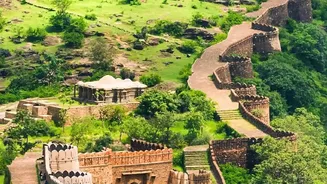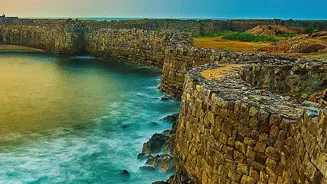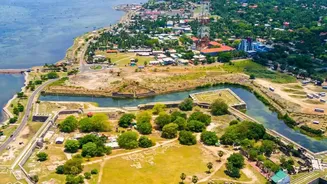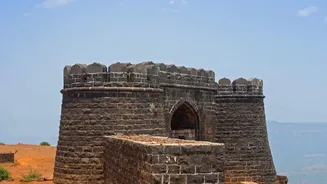






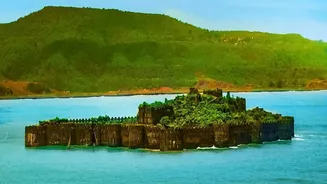
Rising from the Arabian Sea off Maharashtra’s Konkan Coast, the Murud-Janjira fort is a stone testament to resilience. For centuries, this island fortress defied empires, and today, it captures the imagination of travellers from around the world.
The Unconquered Citadel
Janjira's
story is one of legendary defiance. The name itself is a version of the Arabic word 'Jazeera', meaning island. Originally a wooden structure built by local Koli fishermen in the 15th century to ward off pirates, it was later captured and rebuilt into an imposing stone fortress in the 16th century under the authority of the Ahmadnagar Sultanate. Its most famous chapter began when it became the stronghold of the Siddis, skilled naval commanders of Abyssinian origin. Under their rule, which lasted until 1947, the fort earned its reputation as invincible. Numerous powers, including the Portuguese, the British, and the formidable Maratha forces led by Chhatrapati Shivaji Maharaj and his son Sambhaji Maharaj, all failed to conquer it. This unbreached defence makes Janjira a unique monument in Indian history.
An Engineering Marvel at Sea
The fort's invincibility was no accident; it was a masterpiece of strategic military architecture. Built on an oval-shaped rock, its 40-foot-high walls seem to emerge directly from the water, making any assault from the sea incredibly difficult. The main entrance is cleverly hidden and only becomes visible at close range, a design intended to confuse and trap enemy vessels. The fortress is ringed by 19 imposing, rounded bastions, many of which still house the original cannons that once protected it. Among these are three gigantic cannons named Kalaal Baangadi, Chavri, and Landa Kasam, which were feared for their immense range. Perhaps most remarkably, the fort contains two large freshwater tanks, ensuring a sustainable water supply for its inhabitants during long sieges, despite being completely surrounded by the saltwater of the Arabian Sea.
From Military Bastion to Travel Icon
With the integration of princely states into India in 1947, Janjira's military role concluded, and it peacefully became part of Indian territory. The rule of the Siddi Nawabs ended, but the fort that defined their power began a new life. Once a symbol of warfare and regional dominance, Murud-Janjira slowly transformed into a celebrated heritage site and a cornerstone of tourism in the Konkan region. Its story of being unconquered adds a layer of mystery and allure that draws thousands of visitors annually. Today, the fort is managed by the Archaeological Survey of India and stands as a major attraction, contributing significantly to the local economy of the coastal town of Murud. Sailboats now ferry tourists instead of warriors to its gates, a journey that connects the present to a storied past.
The Janjira Experience Today
Visiting Murud-Janjira is a journey back in time. The experience begins with a short boat ride from the Rajapuri jetty, offering panoramic views of the fortress rising from the waves. Once inside, visitors can explore the sprawling ruins of what was once a self-sufficient town within the walls. Walking through the remnants of palaces, a mosque, and officers' quarters gives a palpable sense of the fort's bustling history. Local guides often recount tales of the fort's legendary battles and the ingenuity of its Siddi rulers. A sculpture near the entrance depicting a tiger-like creature overpowering elephants is said to symbolise the might of the Siddis. The breathtaking views of the endless sea from the ramparts serve as a powerful reminder of why this location was so strategically vital for centuries.