


What Are Standing Twists and Why Do Them?
The standing torso twist is a rotational exercise that targets the muscles around your midsection. It involves standing with your feet planted and rotating your upper body from side to side. The primary benefit of this movement is strengthening your core,
specifically the oblique muscles on the sides of your abdomen. A strong core is essential for good posture, balance, and reducing the risk of back pain. This exercise also enhances spinal mobility, helping to counteract the stiffness that comes from long periods of sitting. By activating your core, you create a stable foundation for nearly all other movements, from carrying groceries to playing sports.
How to Perform a Standing Torso Twist
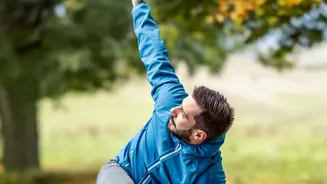
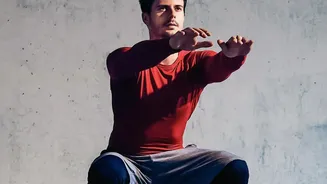
Proper form is crucial to get the benefits and avoid injury. Follow these steps for a perfect twist: 1. Stand with your feet shoulder-width apart and your knees slightly bent. This provides a stable base. 2. Engage your core by pulling your navel in toward your spine, as if bracing for a light punch. 3. Raise your arms to your sides, bent at a 90-degree angle, or cross them over your chest. 4. Slowly and with control, rotate your torso to the right. The movement should originate from your core, not from swinging your arms. 5. Allow your head and shoulders to follow the twist, but try to keep your hips facing forward as much as possible. 6. Pause for a moment at the end of the rotation, then smoothly return to the centre. 7. Repeat the movement on the left side. This completes one repetition.
Common Mistakes to Avoid
Many people make simple errors that reduce the effectiveness of the exercise and can even lead to injury. The most common mistake is using momentum instead of muscle control. Swinging your body quickly just to get through the reps will not engage your obliques properly and may strain your lower back. Another error is twisting from the hips or knees instead of the torso. The goal is to isolate the rotation to your upper body. If your knees and hips are swivelling excessively, you are not targeting the right muscles. Finally, avoid over-rotating. Only twist as far as your natural range of motion allows without feeling pain. Forcing the movement can injure your spine.
Muscles Targeted by Torso Twists
The primary muscles worked during a standing torso twist are your obliques—both internal and external. These muscles run along the sides of your waist and are responsible for rotation and side-bending movements. In addition to the obliques, this exercise also engages your rectus abdominis (the 'six-pack' muscles) and the transverse abdominis, which is the deepest layer of your abdominal muscles and acts like a corset for your spine. Your lower back muscles, including the erector spinae, also work to stabilize your body throughout the movement.
The Myth of a 'Smaller Waist'
A common reason people perform twists is the belief that they will burn fat directly from their waistline. This idea, known as 'spot reduction', is a myth. While torso twists strengthen and tone the oblique muscles, they do not specifically burn the fat covering them. Building these muscles can even give the waist a slightly thicker, stronger appearance, not necessarily a smaller one. Fat loss occurs throughout the entire body when you are in a calorie deficit, which is achieved through a combination of a healthy diet and overall physical activity, including cardiovascular exercise. Twists are for building a strong, functional core, not for 'melting' away belly fat.