






Step 1: Check and Prep Before You Leave
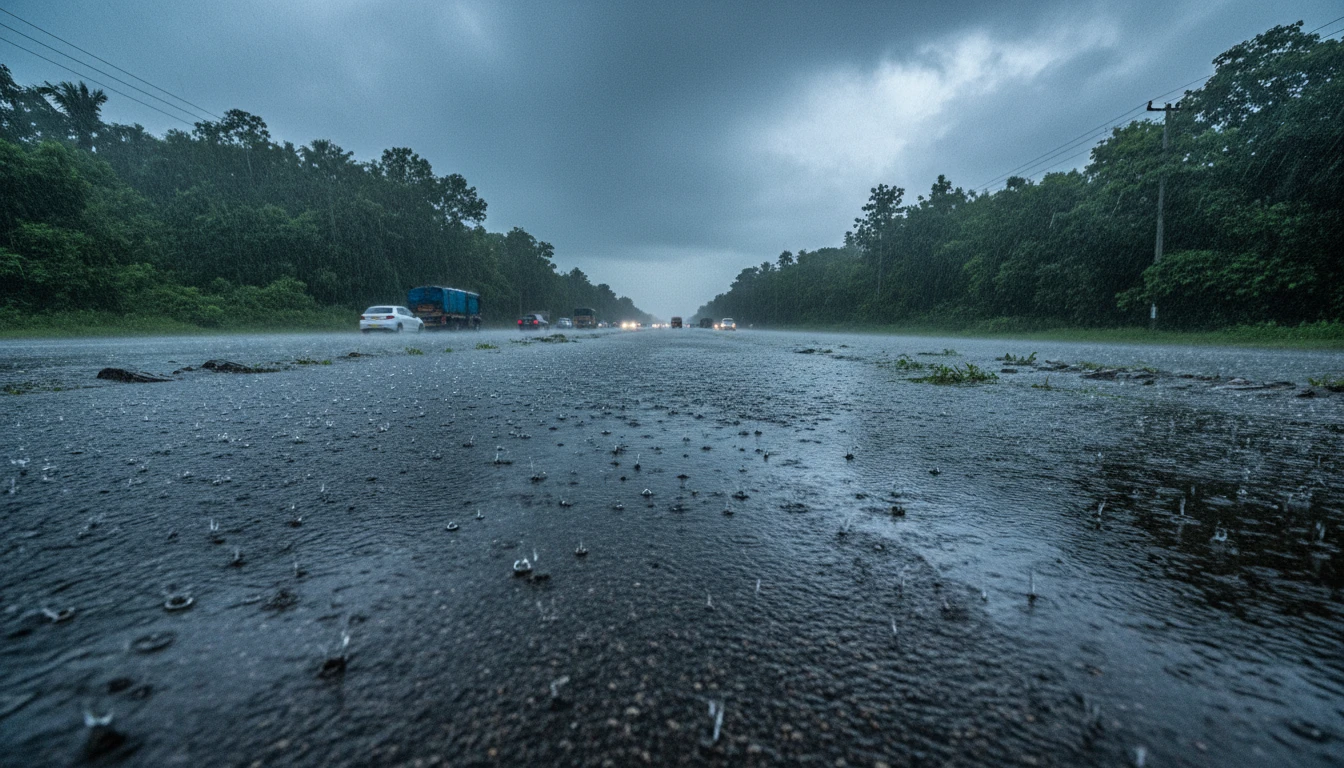
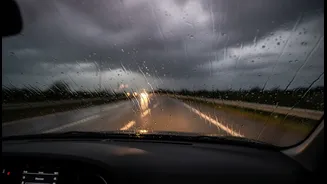
A safe journey begins before you even step out the door. The first few minutes of a downpour are often the most dangerous, as rainwater mixes with oil and debris on the road, creating an extremely slick surface. Before starting your trip, always check
the latest weather forecasts and traffic advisories from local authorities. If heavy rain, flooding, or severe weather warnings are issued, the safest decision is often to postpone non-essential travel. Pack a monsoon essentials kit for your journey. This should include a fully charged phone and power bank, a waterproof bag for electronics and important documents, a raincoat, and some drinking water and snacks. Keeping these items handy can make a huge difference if you face unexpected delays. Also, inform a family member or friend of your route and estimated arrival time, especially if you anticipate challenging conditions.
Step 2: Is Your Vehicle Monsoon-Ready?
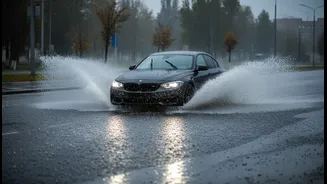
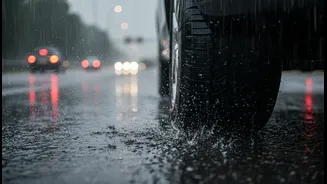
Your vehicle is your first line of defence against the elements, so ensuring it's in top condition is crucial. Start with the basics: your tyres, wipers, and lights. Tyres are critical for maintaining grip on wet roads. Check that they have adequate tread depth and are properly inflated to reduce the risk of hydroplaning, a dangerous situation where your tyres lose contact with the road. Your windshield wipers are your best friend in a downpour, so replace them if they leave streaks. Equally important are your lights. Turn on your headlights, even during the day, to increase your visibility to others. However, avoid using high beams, as they can reflect off the rain and create glare. Finally, ensure your brakes are responsive. Wet roads significantly increase braking distances—sometimes by two or three times—so a pre-monsoon brake check is a wise investment.
Step 3: Safe Driving on Wet Roads
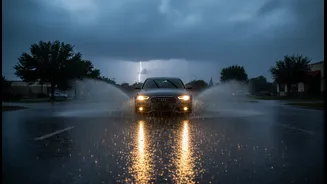
Once on the road, adjusting your driving habits is paramount. The single most important rule is to slow down. Reducing your speed gives you more time to react to hazards and decreases the chance of skidding or hydroplaning. Maintain a greater following distance from the vehicle in front of you; the 'three-second rule' should become a 'six-second rule' in the rain to account for longer stopping distances. Be gentle with your controls—avoid sudden acceleration, hard braking, and sharp turns. Never use cruise control in the rain, as it can cause your wheels to spin if you hydroplane, leading to a loss of control. Also, try to avoid the spray from larger vehicles like buses and trucks, which can momentarily blind you.
Step 4: The Danger of Waterlogged Streets
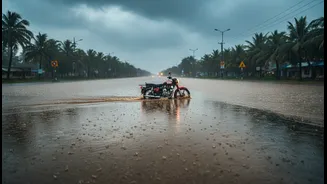
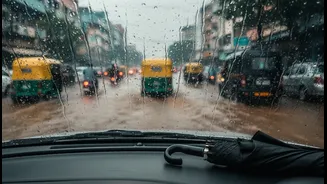
Waterlogged roads are a common and serious danger during the Indian monsoon. It is often impossible to judge the depth of standing water or to see hidden dangers like open manholes, deep potholes, or debris. The golden rule is: if you see a flooded road, turn around and find an alternative route. It takes only a few inches of flowing water to move a car. If you absolutely must proceed, drive slowly and steadily in a low gear. If your car stalls in water, do not attempt to restart the engine. This can draw water into the engine and cause catastrophic damage. If the water level starts to rise, it's crucial to abandon the vehicle for your own safety. Try to roll down or break a window to escape, as water pressure can make doors impossible to open.
Step 5: Tips for Pedestrians and Two-Wheelers
Commuters on foot or on two-wheelers are particularly vulnerable. For pedestrians, visibility is key. Wear brightly coloured clothing or use a colourful umbrella to make yourself more visible to drivers. Choose footwear with a good grip to avoid slipping on wet surfaces and be extremely cautious of open drains or manholes hidden by murky water. Avoid the urge to run across streets, as vehicle visibility is poor. For two-wheeler riders, the risks are amplified. All the advice for cars—slowing down, increasing following distance, checking tyres and brakes—is even more critical. Wear a securely fastened, high-quality helmet and reflective gear. Be extra cautious of slick patches from oil spills and avoid braking or turning sharply on road markings, which become very slippery when wet.