
An Invisible Threat from the Sun
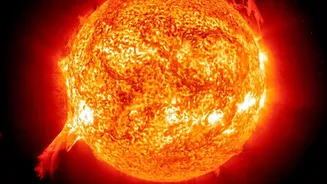
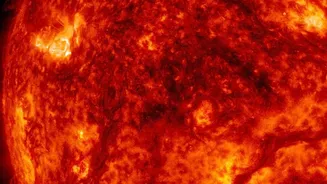
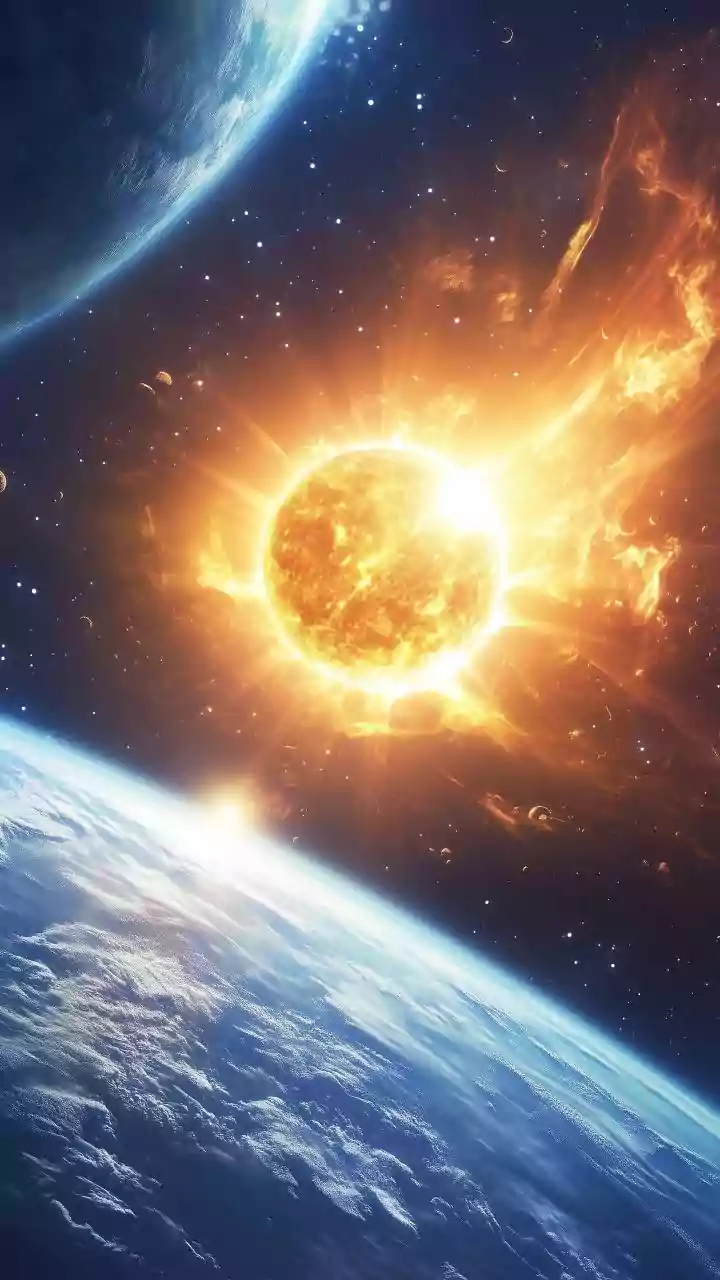
Space weather refers to the changing conditions in space driven by the Sun's activity. Our star is not a calm, steady ball of fire; it's a dynamic and sometimes violent entity. It constantly releases a stream of charged particles called the solar wind.
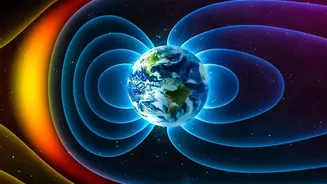
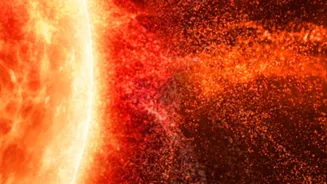
More dramatically, it can unleash solar flares—immense bursts of radiation—and coronal mass ejections (CMEs), which are giant clouds of solar plasma and magnetic fields hurled into space. When these events are aimed at Earth, they can have significant consequences. These solar outbursts can disrupt our planet's magnetic field and upper atmosphere, an effect known as a geomagnetic storm. This is the essence of space weather: a cosmic storm system that can impact technology both in orbit and on the ground.
Why Satellites Are So Vulnerable
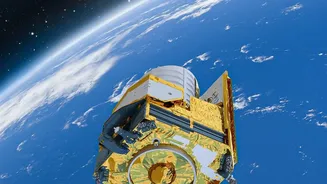
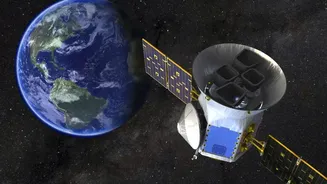
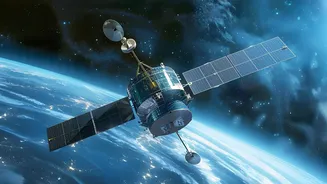
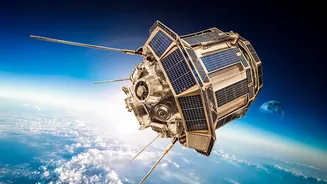
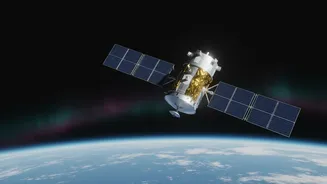
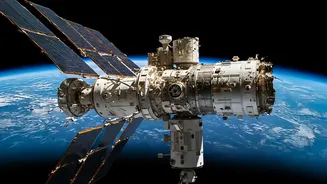
Satellites are our frontline assets in space, and they bear the brunt of solar storms. The particles and radiation from a solar event can damage their sensitive electronics, causing malfunctions or even complete failure. The changes in the upper atmosphere during a storm can also increase atmospheric drag on satellites in low-Earth orbit, causing them to slow down and lose altitude. But the most common impact is on communication. The charged particles can interfere with the radio signals travelling between satellites and Earth, scrambling the data. This can degrade or completely block the signals used for Global Navigation Satellite Systems (GNSS) like GPS, leading to inaccurate positioning for everything from aviation to the ride-hailing app on your phone. It can also disrupt television broadcasts, mobile phone service, and even financial transactions that rely on precise timing signals from satellites.
The Forecasting Challenge
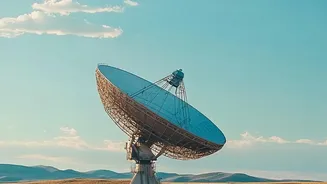
Predicting space weather is incredibly difficult. Unlike terrestrial weather, which we can observe developing in our own atmosphere, space weather originates 150 million kilometres away on the Sun. Scientists use a network of ground and space-based observatories to watch the Sun for signs of an impending eruption, like the formation of sunspots. However, forecasting the exact timing, intensity, and trajectory of a CME is a major challenge. Current methods rely on spacecraft positioned about 1.5 million kilometres from Earth, which, for the fastest-moving storms, gives us only about 15 to 30 minutes of warning—not enough time for satellite operators or power grid managers to take meaningful protective action. Furthermore, a recent NASA-led study suggests that the most severe solar storms could have double the impact previously estimated, highlighting the urgent need for better predictive capabilities.
A New Generation of Tools
To meet this challenge, experts are developing a new generation of forecasting tools. A key strategy involves stationing monitoring equipment much farther from Earth. The upcoming European Space Agency (ESA) mission, HENON, will send a small CubeSat to a point 15 million kilometres upstream from our planet. This will allow it to sample the solar wind much earlier, potentially extending the warning time for severe storms from minutes to several hours. On the ground, projects like the one at Aberystwyth University are using new techniques to create more accurate maps of the Sun's magnetic field, which is the engine behind solar eruptions. These efforts, combined with greater international collaboration and data sharing, are building a more comprehensive picture of solar activity.
The Power of Artificial Intelligence
Perhaps the most significant leap forward comes from the application of artificial intelligence (AI) and machine learning. Scientists are training AI models on vast archives of data from solar observatories. These algorithms can detect subtle patterns and correlations that are invisible to human analysts, identifying the tell-tale signs of a developing solar flare or filament eruption with greater speed and accuracy. AI is particularly powerful because it can process enormous datasets in real-time, a task that is impossible for humans. By learning from past events, these AI-driven tools can make more reliable predictions about future storms, helping to transform space weather forecasting from a reactive to a proactive science. This approach allows for faster and more efficient analysis, which is crucial for providing timely warnings.
A More Resilient Digital India
Improved forecasts mean more than just better science; they mean a more resilient digital infrastructure for India. With several hours of warning, satellite operators can put their spacecraft into a protective 'safe mode' to shield their electronics from harmful radiation. Power grid operators can prepare for geomagnetically induced currents that can overload transformers. Airlines can reroute flights to avoid communication blackouts and radiation risks at high latitudes. This ability to anticipate and mitigate the impacts of space weather is crucial for protecting the vast and growing ecosystem of technology that powers our modern economy and daily lives. The work being done by these experts is an essential investment in the stability and security of our increasingly connected world.