



Understanding Sourdough Discard
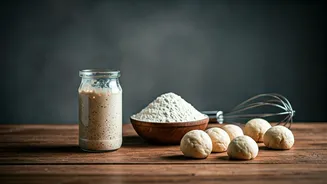
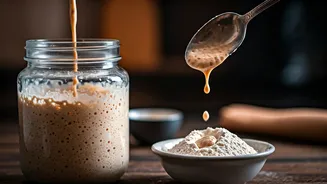
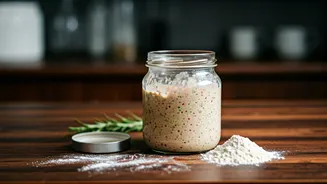
Before you can use it, it’s important to understand what sourdough discard is. When you maintain a sourdough starter, you regularly 'feed' it fresh flour and water. To keep the starter manageable and healthy, you remove a portion before each feeding.
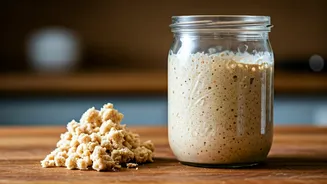
This unfed portion is the discard. It's a mixture of flour and water teeming with wild yeast and lactic acid bacteria that have mostly consumed their food source. While it's less active and powerful than a freshly fed, bubbly starter, it is far from useless. It's full of flavour and, under the right conditions, still has leavening potential.
The Science of a Good Rise
Conventional leavening agents create the air pockets that make baked goods light and fluffy. Commercial yeast (active dry, instant) is a single, potent strain of yeast that consumes sugars and releases carbon dioxide gas, causing dough to rise. Chemical leaveners work through chemical reactions. Baking soda is alkaline and reacts with an acid (like buttermilk, lemon juice, or brown sugar) to produce carbon dioxide instantly. Baking powder is a complete package, containing both baking soda and a powdered acid, which react when they come into contact with liquid.
Two Ways Discard Can Provide Lift
Sourdough discard can leaven baked goods in two primary ways. First, if the discard is relatively fresh (less than a week old) and from an active starter, it still contains a population of wild yeast. Given enough time in a recipe, these yeasts can slowly ferment the dough and create a rise, similar to how an active starter leavens bread. The second, more common method for quick recipes, is to use the discard’s acidity. Discard becomes more acidic the longer it is stored. This natural acidity can be harnessed to react with baking soda, creating a rapid burst of carbon dioxide that provides immediate lift to batters for things like pancakes, muffins, and quick breads.
Replacing Commercial Yeast
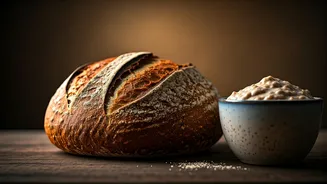
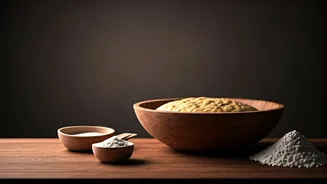
Replacing commercial yeast with sourdough discard is best suited for recipes with long fermentation times, like bread. For this, you’ll want to use fresh discard, as older, more acidic discard may not have enough yeast activity. A general rule is to substitute about one cup (or around 200-250 grams) of discard for one packet of commercial yeast. You will also need to adjust the flour and water in your recipe to account for what's in the discard. Assuming your discard is at 100% hydration (equal parts flour and water by weight), if you add 200 grams of discard, you should reduce the flour in your recipe by 100 grams and the liquid by 100 grams. Most importantly, you must extend the rise time significantly, from 1-2 hours to 4-8 hours or even longer, depending on the temperature of your kitchen.
A Partner for Baking Soda
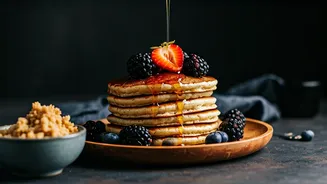
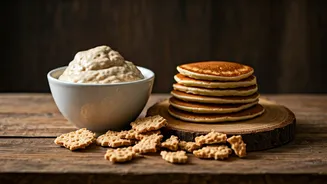
In recipes that call for baking powder or a combination of baking soda and an acid, discard can step in beautifully. The discard itself provides the acidic component needed to activate baking soda. This is why you see so many recipes for sourdough discard pancakes, waffles, and biscuits. These recipes don't rely on the discard’s yeast for lift, but on the chemical reaction. In these cases, you are using the discard primarily for its complex, tangy flavor and its ability to create a tender crumb. You’ll typically still add baking soda and often some baking powder as well to ensure a good rise. Many established recipes have already perfected this balance, making them a great place to start.
Adjusting for Flavour and Texture
Using sourdough discard will change the final flavour and texture of your bake. The most obvious change is the addition of a tangy, complex flavour, which becomes more pronounced the older your discard is. For sweet recipes like cakes or cookies, you might prefer to use fresher, milder-tasting discard. For savory applications like crackers or pizza dough, an older, more acidic discard can add a wonderful depth of flavour. Texturally, discard can make baked goods incredibly moist and tender. Because the flour in the discard is already fully hydrated and has had its gluten structure partially broken down by fermentation, it contributes to a softer result.