


Sweetness, Flavour, and Composition
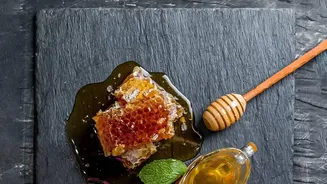
Granulated sugar, or sucrose, provides a clean, neutral sweetness. Honey, on the other hand, is a complex mixture of fructose and glucose, which our taste buds perceive as sweeter than sugar. This means you can often use less honey to achieve the same
level of sweetness. Beyond just sweetness, honey introduces its own distinct flavours, which can range from light and floral to dark and rich, depending on the nectar source. This adds a layer of complexity that sugar simply cannot match. While sugar is pure sucrose, honey contains trace amounts of vitamins, minerals, and antioxidants, though it's important to note that both are still considered added sugars in a diet.
The Science of Moisture and Texture
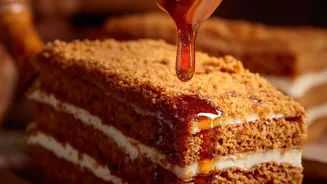
One of the most significant differences lies in moisture. Honey is a liquid containing about 17-20% water, whereas granulated sugar is dry. This liquid content makes bakes with honey denser and moister. Furthermore, honey is hygroscopic, meaning it naturally attracts and retains moisture from the air. This property helps cakes and breads made with honey stay softer and fresher for longer. In contrast, sugar contributes to a drier, crisper texture, which is desirable for certain kinds of biscuits and cookies where a 'snap' is part of the appeal. The crystalline structure of sugar also plays a key role in creating a light, airy texture when creamed with butter, a function liquid honey cannot perform.
Browning, Acidity, and Rise
If you've ever noticed that bakes made with honey brown faster, you're not imagining it. The fructose in honey caramelises at a lower temperature than the sucrose in sugar. This accelerated browning, part of the Maillard reaction, creates a rich colour and deep flavour but also means you need to be watchful to prevent burning. Honey is also naturally acidic, with a pH that can range from 3.4 to 6.1, while sugar is neutral. This acidity can react with leavening agents like baking soda, which can help with the rise in some recipes. However, it can also interfere with the action of baking powder, which prefers a more neutral environment.
How to Substitute Honey for Sugar
Making the switch from sugar to honey isn't a one-for-one exchange, but a few simple rules can guide you. First, since honey is sweeter, use less of it; a common rule of thumb is to use about ¾ cup of honey for every cup of sugar. Second, because honey adds liquid, you'll need to reduce the other liquids in your recipe (like milk or water) by about ¼ cup for every cup of honey used. Third, to counteract the faster browning, lower your oven temperature by about 25°F (around 14°C). Finally, if your recipe doesn't already call for it, you might need to add a pinch of baking soda (about ¼ teaspoon per cup of honey) to help balance the honey's acidity and ensure a proper rise.