





The Philosophy: Think Layers, Not Bulk
The secret to conquering a rainy forecast with only a carry-on is to abandon the idea of packing separate outfits for every possible scenario. Instead, adopt a capsule wardrobe mindset. This means selecting a small, curated collection of items that can
be mixed, matched, and layered to create multiple outfits. For wet weather, the focus shifts to fabrics that perform. The goal is to stay warm and dry without the bulk of heavy sweaters and multiple jackets. A successful rainy-weather wardrobe is built on a system of a base layer, a warm mid-layer, and a weatherproof shell that work together. This approach gives you the flexibility to adapt to changing temperatures throughout the day, from a cool, damp morning to a warmer afternoon if the sun appears.
Your 4-Day Rainy Weather Blueprint
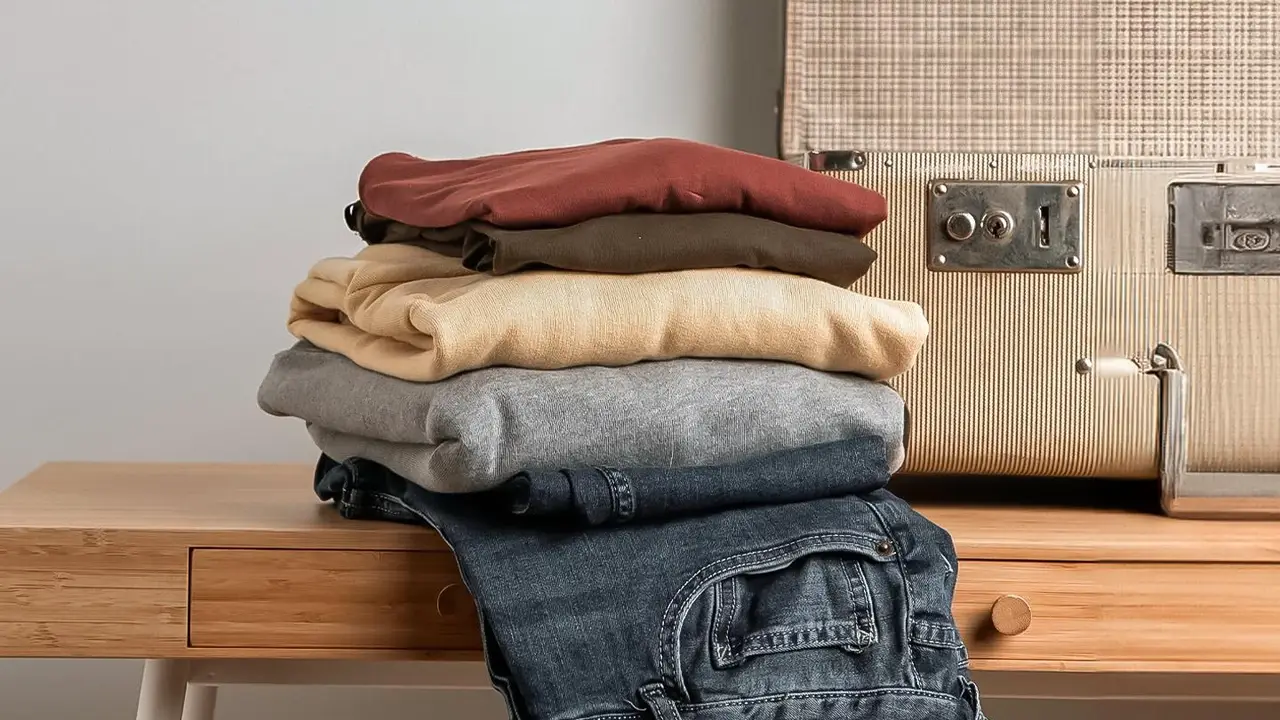
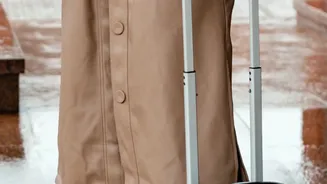
For a four-day trip, a tight, 10-piece collection is all you need. Stick to a complementary colour palette to ensure everything works together effortlessly. Here’s a sample list: Outerwear (1): A high-quality, lightweight waterproof or water-resistant jacket with a hood is non-negotiable. A classic trench coat or a modern technical shell works perfectly. Tops (3): Choose three tops in quick-drying fabrics. Think merino wool or synthetic blends. Include one long-sleeve base layer, one versatile t-shirt, and one slightly dressier blouse. Bottoms (2): Pack two pairs of versatile trousers. One pair of comfortable, stylish travel pants in a dark colour and one pair of smart-casual trousers or dark jeans that can be dressed up or down. Avoid heavy cotton denim which takes a long time to dry. Mid-Layer (1): A thin merino wool sweater or a lightweight fleece is perfect. It can be worn over any top for warmth without adding significant bulk to your bag. Shoes (2): This is crucial. Wear your bulkiest, most waterproof pair of boots on the plane. Pack a second, lighter pair of comfortable, water-resistant sneakers or stylish flats for evenings or drier moments. Accessories (1): A versatile scarf can add a pop of colour, provide extra warmth, and even double as a blanket on the plane.
The Fabric Focus: Materials That Work Hard
When rain is in the forecast, fabric choice is everything. Your goal is to select materials that are lightweight, insulating, and quick to dry. Cotton should be avoided wherever possible, as it absorbs moisture, loses all its insulating properties when wet, and takes ages to dry. Instead, build your wardrobe around high-performance fabrics. Merino wool is a top choice for travel because it's breathable, regulates body temperature, resists odours, and stays warm even when damp. Synthetic fabrics like polyester and nylon are also excellent choices for base layers and travel pants because they are durable and dry very quickly. For your essential mid-layer, a thin fleece or cashmere-blend sweater offers incredible warmth for its weight. Your outer layer should be explicitly labeled as waterproof or highly water-resistant, with features like sealed seams to prevent any leaks during a downpour.
Packing Strategy: How to Fit It All In
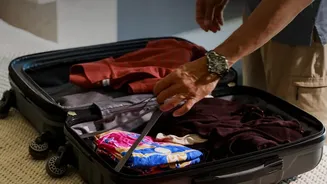
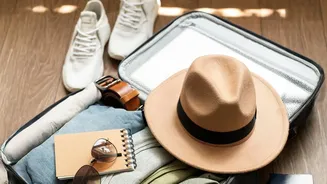
Having the right clothes is only half the battle; fitting them into a light carry-on requires strategy. First, wear your bulkiest items on the plane—this means your waterproof boots, your jacket, and your sweater or scarf. This single move frees up a tremendous amount of space in your bag. Next, master the art of compression. Rolling your clothes is a popular technique that not only saves space but can also reduce wrinkling. For maximum efficiency, use packing cubes. These zip-up organizers allow you to compartmentalize your clothes and compress them down, creating a modular system that is easy to arrange inside your suitcase. Use one cube for tops, another for bottoms and your mid-layer, and a small one for socks and underwear. Don't forget to utilize every nook and cranny; stuff socks, chargers, or other small items inside your packed shoes.
The Finishing Touches: Essential Extras
A few small items can make a big difference in rainy weather. A compact, wind-resistant travel umbrella offers quick protection for short dashes through a shower. A waterproof pouch or even a simple zip-lock bag is essential for protecting your passport and electronics from moisture. It’s also wise to include a reusable, packable tote bag. It takes up almost no space and can be used for shopping, carrying a wet umbrella, or separating damp clothing from the dry items in your main bag. Finally, consider downsizing your toiletries to solid versions, such as shampoo bars and toothpaste tablets, to save space in your liquids bag and eliminate the risk of spills.