



What Exactly Is a 'Dark Store'?
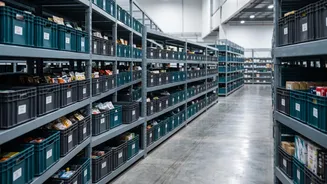
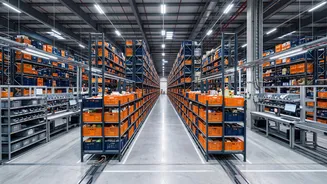
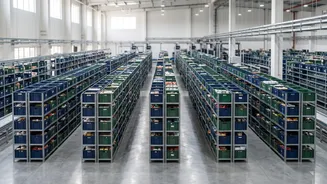
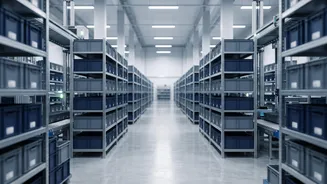
Imagine a neighbourhood supermarket, but with no customers, no bright displays, and no checkout counters. That's a dark store. These are small, strategically located warehouses designed exclusively for fulfilling online orders at lightning speed. Closed
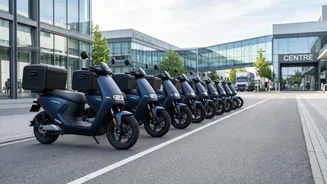
to the public, their sole purpose is to get products picked, packed, and out the door within minutes. Unlike massive warehouses on the city's outskirts, dark stores are tucked into dense residential and commercial areas, often occupying ground-floor spaces that were once small shops or godowns. This hyper-local approach is the backbone of quick commerce, or q-commerce, where companies like Zepto, Blinkit, and Swiggy Instamart promise deliveries in under 30 minutes. By placing inventory within a 2-5 km radius of the customer, they drastically cut down the travel time that makes traditional e-commerce deliveries take hours or days.
A Peek Inside the Fulfilment Engine
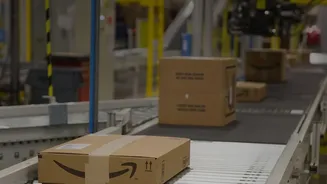
The inside of a dark store is a masterclass in efficiency. Every second counts. When you place an order, an algorithm instantly assigns it to the nearest dark store that has all your items in stock. A 'picker' inside receives the order on a handheld device, which guides them on the most efficient path through the aisles. The layout isn't designed for leisurely browsing; it's optimized for speed, with fast-moving items like bread, milk, and snacks placed closest to the packing station. Typically, a picker can gather an entire order in just a couple of minutes. Once picked, the items are quickly verified, packed, and handed over to a delivery rider waiting nearby. The entire process, from order confirmation to dispatch, is often completed in less than five minutes, making the 10-minute delivery promise a reality.
Why Bengaluru Is the Epicentre
Bengaluru has become the undisputed capital of quick commerce in India, boasting more dark stores than any other city. As of mid-2026, the city had over 600 dark stores operated by major players, a concentration that reflects its unique demographic. The city's massive population of tech professionals and dual-income households represents a key target audience: consumers with disposable income but very little time. These residents, already accustomed to on-demand services like food delivery from Bengaluru-based giants Swiggy and Zomato, have quickly adopted quick commerce for their daily needs. Furthermore, the city serves as the R&D lab for the industry; many platforms test new features and services in Bengaluru before a national rollout. The dense clusters of apartments around tech corridors in areas like Koramangala, HSR Layout, Whitefield, and the Outer Ring Road provide the perfect population density required to make the dark store model viable.
The High-Stakes Race for Speed and Market Share
The rapid expansion of dark stores is fuelled by intense competition. Companies like Blinkit, Zepto, and Swiggy Instamart are locked in a battle for market dominance, where speed and convenience are the primary weapons. This has led to a real estate rush, with companies aggressively acquiring small, ground-floor commercial spaces in key neighbourhoods. Demand for such properties has surged, driving up rental prices by 20-25% in some areas. For property owners, leasing to a dark store can be more lucrative than renting to a traditional retailer, as q-commerce firms often sign longer leases and offer higher returns. However, the model is not without its challenges. The unit economics are tight, and profitability depends on achieving a high volume of orders per store each day. The industry is also facing concerns about its impact on traffic in residential areas and competition with local kirana stores.
Reshaping the Urban Landscape
The proliferation of dark stores is quietly but fundamentally changing the fabric of urban retail. While they provide employment and offer unparalleled convenience, their rise poses a significant challenge to traditional mom-and-pop kirana stores, which have historically been the backbone of Indian retail. Many small shop owners struggle to compete with the deep discounts and speed offered by well-funded q-commerce platforms. However, some see a future of coexistence, where kiranas might even partner with these platforms to act as local fulfilment points. For now, these inconspicuous warehouses represent a major shift in urban logistics. They are turning residential backlanes into crucial nodes of a vast, high-speed delivery network, transforming the very definition of a local shop. The convenience is undeniable, but the long-term impact on city life, local economies, and traditional commerce is still unfolding.