




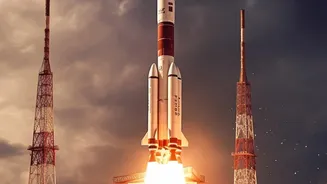
A Major Milestone in Reusability
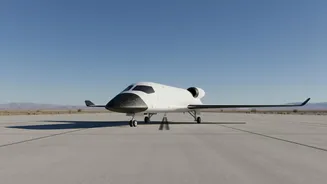
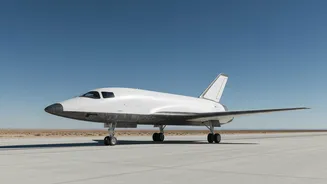
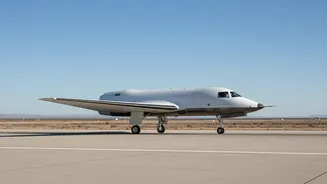
ISRO has successfully completed a series of critical tests for its Reusable Launch Vehicle (RLV) program, nicknamed 'Pushpak'. In the latest and most challenging test, known as the Reusable Launch Vehicle Landing Experiment-03 (RLV-LEX-03), the winged
vehicle was lifted by an Indian Air Force Chinook helicopter to an altitude of 4.5 kilometres and released. From there, Pushpak had to autonomously navigate its way to a runway, performing complex manoeuvres and corrections before executing a perfect horizontal landing. This series of three landing experiments, completed between April 2023 and June 2024, proves that the autonomous guidance, navigation, and control systems are robust and precise, even under difficult conditions. It is a crucial validation of the technology required for a spacecraft to return from orbit and land like an aircraft.
The Economics of an Airplane, Not a Firecracker
For decades, space launch has operated on a 'use-and-discard' model. Rockets, representing a massive investment in materials and engineering, were used once and then lost. This is incredibly expensive; around 80% of a rocket's cost is in its structure and hardware, with only 20% being fuel. A Reusable Launch Vehicle (RLV) completely flips this economic model. Instead of building a new rocket for every single mission, the most expensive components can be recovered, refurbished, and flown again. Think of it like the difference between building a brand-new aeroplane for every flight versus refueling the one that just landed. By mastering reusability, ISRO aims to slash the cost of delivering payloads to low-Earth orbit by a staggering 80%, from an estimated $20,000 per kilogram down to $4,000 per kilogram.
Meet 'Pushpak', India's Space Shuttle
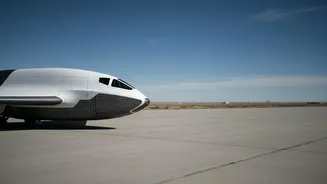
The vehicle at the heart of these tests is Pushpak, a winged technology demonstrator named after the mythical flying palace from the Ramayana. While not yet an orbital vehicle, Pushpak is the testbed for all the critical technologies ISRO needs for its ultimate goal: a two-stage-to-orbit (TSTO) fully reusable launch vehicle. The current tests focus on the autonomous landing phase, which is one of the most difficult parts of the mission. The SUV-sized Pushpak vehicle that landed in these experiments is a scaled-down prototype. The final operational version will be larger and integrated into a launch system designed to carry satellites into orbit and then fly itself back to Earth for its next mission.
The Competitive Global Landscape
ISRO is not developing this technology in a vacuum. The global commercial launch market is undergoing a massive disruption, largely driven by SpaceX's Falcon 9 rocket, which has proven the immense economic advantages of reusability. While ISRO officials maintain that their primary focus is on national needs rather than direct competition, the strategic and commercial implications are clear. Achieving low-cost, reliable access to space is essential for India to compete for a larger share of the multi-billion dollar satellite launch market. Success with the RLV program will not only make India's own national space missions more affordable but will also position it as a highly competitive player for international clients looking to launch their satellites.
The Long Road to an Orbital Flight
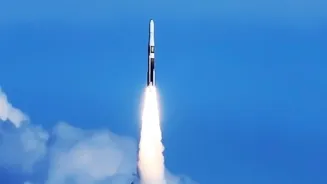
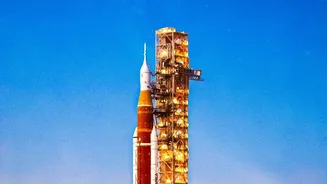
While the successful landing tests are a monumental achievement, the journey is far from over. These LEX missions are just one part of a broader technology demonstration program that began over a decade ago. The next major phase for ISRO will be the Orbital Re-entry Experiment (ORE), which will involve launching a vehicle into orbit and testing its ability to survive the intense heat and stress of re-entering Earth's atmosphere before making an autonomous landing. This will require scaling up the vehicle, developing advanced heat-resistant materials, and integrating the craft with a powerful booster system. It will take several more years of development before Pushpak or its successor is ready for regular commercial operations, but the foundation for that future is being laid with each successful test.