







Understanding Monsoon Heat: The Humidity Factor
Monsoon heat isn't like the dry, scorching heat of summer. It’s the high humidity that makes it so uncomfortable and even dangerous. When the air is saturated with moisture, your sweat can't evaporate effectively, which is your body's primary way of cooling
down. This can lead to that sticky, clammy feeling, dehydration, and an increased risk of fungal infections and heat exhaustion. Health experts note that increased humidity can weaken the immune system and make you more susceptible to infections. Therefore, planning for the monsoon requires a focus on managing moisture and promoting airflow, not just staying dry from the rain.
The Short Commute Strategy (Under 30 Minutes)
If your journey to work or college is relatively short—a quick scooter ride, an auto-rickshaw trip, or a few stops on the metro—your planning can be simpler. The goal is to maximise comfort for a brief period. Opt for lightweight and breathable fabrics like cotton, rayon, or modal that allow air to circulate. Since your exposure is limited, you can prioritise style alongside comfort. Cropped or ankle-length trousers are a smart choice to avoid splashing through puddles. For women, knee-length kurtis or dresses work well. While dark colours are often recommended to hide mud splashes, you don't have to abandon lighter shades entirely, especially for tops that are less likely to get dirty. The key is choosing materials that won't feel heavy or clingy if you get caught in a brief shower.
The Long Commute Survival Guide (Over 60 Minutes)
A long commute in a crowded bus or local train during the monsoon is a different battle altogether. Here, function must trump fashion. Many long-haul commuters in cities like Mumbai adopt a two-outfit strategy: a 'commute uniform' and a separate, clean set of office clothes. Consider packing your work attire in a waterproof bag and changing upon arrival. Your travel outfit should be made of quick-drying synthetic blends, like polyester-cotton, which don't hold moisture like pure cotton does. These fabrics are also more wrinkle-resistant, which is a bonus. Given the extended travel time in humid, crowded conditions, prioritising breathable innerwear is also crucial for staying comfortable and preventing skin irritation.
Fabric First: Your Best Defence Against Discomfort
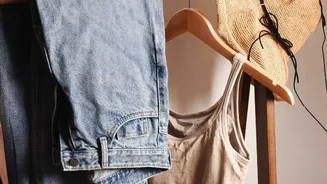
The fabric of your clothes is your first line of defence. While cotton is a classic breathable choice, it absorbs moisture and can become heavy and slow to dry when wet, making it less ideal for rainy days. Linen is highly breathable but wrinkles easily in high humidity. For the monsoon, synthetic blends like rayon, modal, and polyester blends often perform better. These materials are designed to wick moisture away from the skin and dry quickly, keeping you more comfortable. Avoid heavy denim or thick weaves that trap heat and take ages to dry. When choosing outfits, look for clothing described as quick-dry or moisture-wicking, properties often found in activewear but increasingly available in everyday styles.
Beyond the Wardrobe: Essential Accessories
Your monsoon preparedness doesn't end with your clothes. A few key accessories can make a significant difference. A sturdy, wind-proof umbrella and reliable waterproof footwear with good grip are non-negotiable. Keeping a spare pair of dry socks in your bag can be a huge mood-booster after walking through water-logged streets. A small, quick-dry towel is also useful for drying off after an unexpected downpour. To protect your belongings, especially electronics, invest in a waterproof backpack or carry a waterproof pouch for your valuables. Finally, to combat humidity-related skin issues, consider using an antifungal powder.