






A Symphony of Living Light
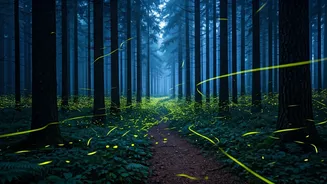
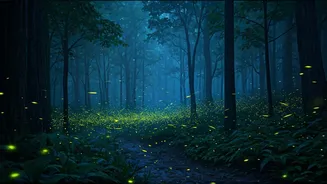
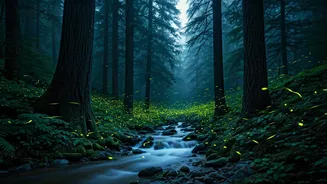
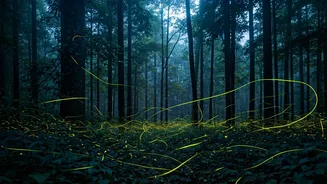
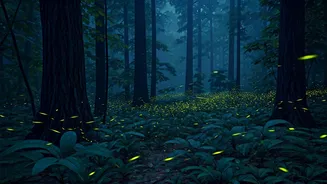
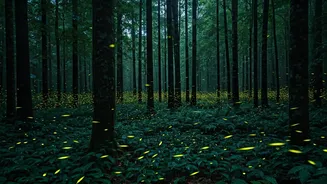
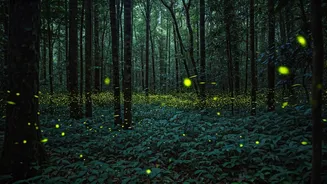
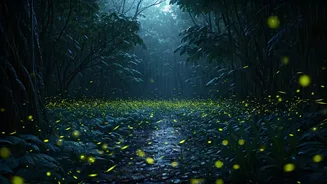
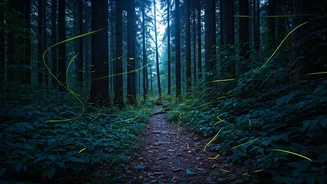
Deep within the ancient forests of the Western Ghats, a biological marvel unfolds every year. For a few precious weeks, as the air grows heavy with the promise of monsoon, entire stretches of forest begin to breathe with light. This isn't the random flickering
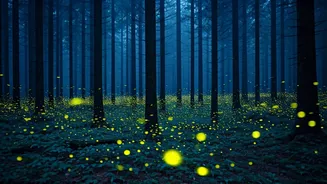
of a few lone fireflies; it is a coordinated, rhythmic performance. Thousands, sometimes millions, of male fireflies flash their bioluminescent lanterns simultaneously, creating waves of light that ripple through the pitch-black jungle. The forest goes completely dark for a moment, and then, as if on a silent cue, erupts in a silent, synchronised pulse of brilliant yellow-green light. This phenomenon, known as synchronous flashing, is one of nature’s most enchanting and mysterious displays, turning the dense wilderness into a living, pulsating galaxy.
The Science Behind the Spectacle
This mesmerising light show is a complex courtship ritual. The fireflies engaging in this mass display are predominantly males trying to attract the attention of females, who often remain stationary on leaves or the forest floor. By flashing in unison, the males increase their collective visibility, making it easier for females to spot them and respond with their own faint flashes. Scientists believe synchronisation acts like a massive, unmistakable beacon, cutting through the visual noise of the forest. The rhythm is not accidental; it is governed by an internal pacemaker in the fireflies, which gets influenced by the flashes of its neighbours. This creates a chain reaction, allowing a small group’s rhythm to be adopted by the entire mountainside congregation. The chemical reaction producing this 'cold light' is called bioluminescence, an incredibly efficient process where a substance called luciferin reacts with oxygen to create light with very little heat.
A Western Ghats Treasure
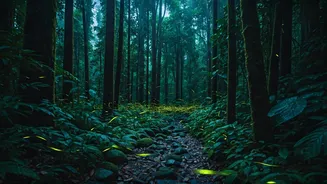
While synchronous fireflies exist in a few pockets around the world, the congregations in the Western Ghats are particularly spectacular. One of the prime locations for witnessing this phenomenon is the Anamalai Tiger Reserve in Tamil Nadu. The pristine, undisturbed forests here provide the perfect habitat. These insects require specific conditions: dense canopy cover to create profound darkness, clean water sources for their larval stages, and a healthy forest floor. The specific timing, typically in the pre-monsoon period between late April and early June, is crucial. The rising humidity and ideal temperatures trigger this mass emergence and mating behaviour. Researchers have identified several species contributing to these displays, each with its own unique flash pattern and timing, making the Western Ghats a critical biodiversity hotspot for these luminous insects.
A Fragile and Fleeting Wonder
Like many natural wonders, this breathtaking spectacle is under threat. The biggest danger to firefly populations is light pollution. Artificial lights from nearby towns, roads, and even unregulated tourism can disrupt their delicate flashing patterns, confusing the insects and severely hindering their ability to mate. A male firefly flashing for a mate cannot compete with a streetlight or a vehicle’s headlamp. Habitat destruction is another major concern. Deforestation, changes in land use, and the pollution of water bodies where their larvae grow all contribute to declining populations. The use of pesticides in nearby agricultural lands also poses a significant risk, as these chemicals can be lethal to both adult fireflies and their larvae. The magic of the flashing forests depends entirely on the health of the ecosystem that supports them.