




The Birthplace of a Nation
Nestled on the shores of Lake Mälaren, Sigtuna was established by King Erik the Victorious at the tail end of the 10th century. It was a deliberate act of creation, designed to be a royal and commercial hub that would consolidate power and bridge the gap
between the Viking Age and the emerging Christian kingdom. For approximately 250 years, Sigtuna served as one of Sweden's most vital cities. It was here that Sweden's very first coins were minted around 995 AD, marking a pivotal shift towards a structured, urban society. Unlike earlier seasonal trading posts, Sigtuna was built to be a permanent, year-round settlement, laying the blueprint for Swedish town life.
A Landscape Etched in Runes
What makes Sigtuna truly extraordinary is its density of runestones; no other place in the world has more. The municipality boasts around 170 of these stone monuments, with about 30 located within the town itself. These are not relics in a museum but are found along streets, in church walls, and in gardens. Raised predominantly in the 11th century, they serve as memorials, historical documents, and declarations of faith. Many are marked with the Christian cross, illustrating the period's religious transition. One famous stone was raised by the Frisian merchant guild in memory of a fallen member, providing concrete evidence of Sigtuna's role as a bustling centre for international trade.
Walking on Sweden's Oldest Street
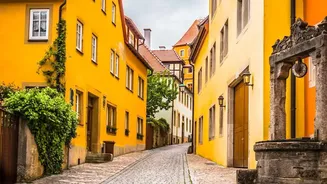
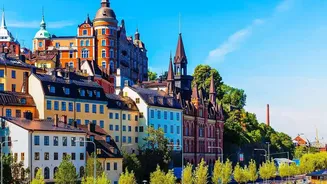
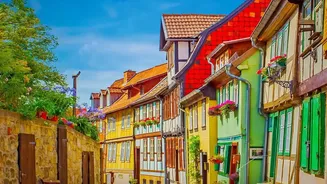
The town's main thoroughfare, Stora Gatan, is widely considered Sweden's oldest street, its layout remaining largely unchanged for over a millennium. While the colourful wooden buildings that line the street today mostly date from the 18th and 19th centuries, they stand on medieval foundations along the original Viking-era route. A stroll along this pedestrian way is a tangible connection to the past, where you walk the same path as Viking chieftains, medieval merchants, and early Christian missionaries. The modern street level is nearly three metres above the original, a testament to centuries of continuous habitation. The street leads to Stora Torget, the main square, home to what is often called Sweden's smallest town hall, a charming 18th-century structure.
The Echoes of Medieval Churches
As Christianity took hold, Sigtuna became a major religious centre, with seven or eight stone churches constructed in the early Middle Ages. Today, the ruins of several of these churches stand as powerful reminders of the town's former glory. The remains of St. Peter's, St. Lawrence's, and St. Olaf's are hauntingly beautiful stone skeletons scattered throughout the town. St. Peter's may have served as the region's first cathedral. The ruins of St. Olaf's are linked to the cult of King Olaf II of Norway, a saint who travelled through Sigtuna. These grand stone structures would have towered over the low wooden houses of the era, signifying the immense power and influence of the new faith. The only medieval church still in use is St. Mary's (Mariakyrkan), a 13th-century brick Gothic building originally constructed for the Dominican order.