






The Final Frontier Enters the Classroom
For decades, space exploration in India was synonymous with the Indian Space Research Organisation (ISRO). It was a field defined by massive budgets, top-secret research, and a select group of the nation's most brilliant scientists. Today, that paradigm
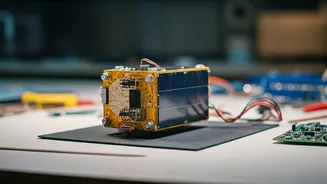
is shifting dramatically. The advent of miniaturised satellites, particularly CubeSats, has drastically lowered the cost and complexity of building and launching a space mission. These small, modular satellites, often no bigger than a shoebox, have democratised space, allowing students to move from theoretical physics to hands-on orbital mechanics. What was once the exclusive domain of national agencies is now a tangible goal for undergraduate and even school-level projects.
From Theory to Orbit: Student Satellites Take Flight
Across India, universities are embracing this new era. The Indian Institute of Space Science and Technology (IIST), established in 2007, was a pioneer, created specifically to feed talent into the Indian space program. It has since been joined by a host of other institutions. ISRO has actively encouraged this trend, providing guidance and launch opportunities for student-built satellites. For instance, STUDSAT, a picosatellite launched in 2010, was the result of a consortium of seven engineering colleges. More recently, projects like KalamSat and AzaadiSAT, driven by organisations like Space Kidz India, have involved students from across the country, including girls from rural regions, in building and integrating satellite payloads. These projects are not mere academic exercises; they are fully functional satellites collecting data and performing experiments in orbit.
A Policy Push from the Top
This campus-led space revolution is being fuelled by deliberate policy changes. The Indian Space Policy 2023 is a landmark document that officially opens up the sector to non-governmental entities, including academic institutions. It tasks ISRO with focusing on futuristic research while encouraging private players and universities to handle more routine operations and application development. To facilitate this, the government established the Indian National Space Promotion and Authorization Centre (IN-SPACe) as a single-window agency to connect, regulate, and promote private and academic participation. ISRO has also set up Space Technology Cells and Innovation Centres at premier institutes like the IITs and NITs to foster joint research and entrepreneurship. These initiatives create a clear pathway for students to take their ideas from the lab to launchpad.
Building a Workforce for the New Space Economy
The benefits of these campus-friendly projects extend far beyond a successful launch. They are creating a pipeline of skilled, experienced talent ready to power India's burgeoning private space industry. The hands-on experience of designing, building, and operating a satellite is invaluable, teaching students systems engineering, project management, and the realities of working on complex technical challenges. This is critical as India aims to significantly increase its share of the global space economy, which is projected to grow substantially. Startups like Nebula Space Organisation, founded by college students to build a gamma-ray detecting CubeSat using affordable local materials, exemplify this new spirit of innovation. They are not just learning about space; they are building the future of India's space ecosystem from the ground up.