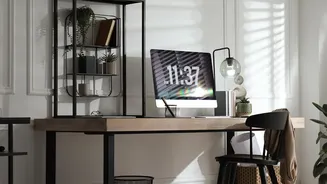








Create a Dedicated Workspace
One of the most effective ways to mentally separate work from home life is to create a physical boundary. Designate a specific area in your home that is solely for work. It doesn't have to be a separate room; a corner of your dining room or a specific desk
will suffice. The key is that this space signals to your brain that when you are there, you are at work. When you leave it, you are off the clock. Avoid working from your bed or the sofa, as this blurs the lines and can make it difficult to relax in those spaces later. This physical separation helps you mentally 'leave the office' at the end of the day.
Set a Firm Schedule and Stick to It
Without the structure of an office environment, it's easy for work hours to expand. Many remote workers report working longer hours than their office-based counterparts. To combat this, set clear start and end times for your workday and communicate them to your team. Just as importantly, stick to them yourself. It can be tempting to use your old commute time to get a head start on emails, but protecting that time for personal activities like exercise or family breakfast establishes a healthy boundary from the start of the day. When your scheduled workday is over, log off completely.
Master the 'Shutdown Ritual'
The commute home from an office provides a natural transition period between work and personal life. Remote workers lack this built-in buffer, making it harder to disconnect. Create your own 'shutdown ritual' to signal the end of your workday. This is a short, consistent routine, typically 5-15 minutes, that provides psychological closure. Your ritual might include reviewing what you accomplished, writing down tasks for the next day to get them out of your head, tidying your desk, and closing all work-related applications. The final step is a definitive action, like saying a phrase such as 'shutdown complete' or physically putting your laptop away. This closes the mental 'open loops' that can lead to work-related stress in the evening.
Establish Digital Boundaries
Technology makes us constantly accessible, which is a primary driver of work creep. Setting digital boundaries is non-negotiable for digital wellness. Start by turning off non-essential notifications from work apps on your phone. Better yet, consider if you truly need apps like work email or Slack on your personal device at all. Create rules for your response times. It is crucial to communicate with your team about when you are available and when you are not. Having set times to check and respond to messages, rather than being constantly available, can reduce pressure and improve focus during work hours.
Be Intentional with Your Breaks
When you're in the zone, it’s easy to work through lunch or skip breaks altogether. However, this often leads to exhaustion and diminished productivity. Make your breaks a priority. Schedule them in your calendar if you have to. Use this time to step away from your screen completely. Go for a short walk, do a quick chore, or have a tech-free conversation with someone. Taking intentional breaks, even for just 5-10 minutes, helps manage stress, resets your focus, and reinforces the idea that your time is your own, even during the workday.
Plan Your After-Work Hours
One of the best ways to ensure you stop working is to have something to stop for. Make concrete plans for your personal time. This could be anything from a regular exercise class, a walk with a friend, cooking a new recipe, or dedicated family time. When you have commitments or enjoyable activities waiting for you, you create a compelling reason to honour your shutdown time. This shifts the dynamic from feeling like you 'have' to stop working to feeling like you 'get' to enjoy your personal life, reinforcing a healthier, more sustainable balance.