


What Are These 'Shooting Stars'?
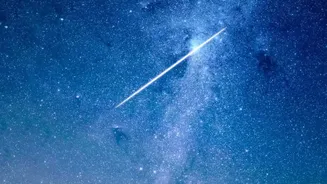
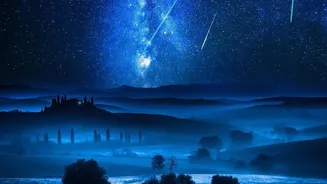
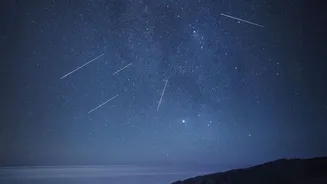
A meteor shower is a celestial event where numerous meteors, or 'shooting stars', appear to streak across the night sky, seemingly from a single point. These are not actually stars, but tiny particles of dust and rock, often no bigger than a grain of sand,
left behind by a passing comet. When Earth's orbit takes it through one of these cosmic dust trails, the particles burn up upon entering our atmosphere at incredible speeds, creating brilliant flashes of light. It’s a beautiful and direct reminder of our planet's journey through a dynamic solar system.
The Perseids: A Dazzling August Peak
First up are the famous Perseids, which peak on the night of August 12-13, 2026. These meteors are debris from Comet Swift-Tuttle. The year 2026 offers a particularly special viewing opportunity because the peak coincides with a New Moon. This means the sky will be exceptionally dark, with no moonlight to wash out the fainter meteors, making it the best Perseid shower in years. Observers in ideal, dark locations could see up to 100 meteors per hour, though 30-50 is a more typical rate for rural areas. The main challenge in much of India will be the monsoon clouds, which can obscure the sky.
The Orionids: An Autumn Treat from Halley's Comet
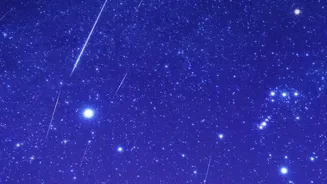
In October, the Orionid meteor shower takes center stage, peaking on the night of October 21-22, 2026. These meteors are particles left behind by none other than the legendary Halley's Comet. The Orionids are known for being incredibly fast, hitting the atmosphere at around 66 kilometers per second, which often results in bright, persistent trails that linger for a few moments after the meteor has vanished. While not as numerous as the Perseids, you can still expect to see about 15-25 meteors per hour from a dark-sky location. The moon will be a waxing gibbous, but it sets a few hours before dawn, leaving the prime viewing window dark for a great show.
Finding Your Dark Sky Spot in India
The key to a successful meteor shower experience is escaping urban light pollution. City lights create a permanent glow that makes all but the brightest meteors invisible. For the best views, you need to travel to 'non-metro' skies. High-altitude regions are often best, as the thin, dry air offers incredible clarity. Top-tier destinations in India include Hanle in Ladakh (the country's first official Dark Sky Reserve), Spiti Valley in Himachal Pradesh, and other parts of the Kumaon Himalayas in Uttarakhand. For those in other parts of the country, the deserts of Rajasthan like Jaisalmer, or the vast, flat expanse of the Rann of Kutch in Gujarat, offer wonderfully unobstructed horizons. In the south, the hills and estates of Coorg, Karnataka, provide a peaceful setting away from city glare.
Your Meteor-Watching Checklist
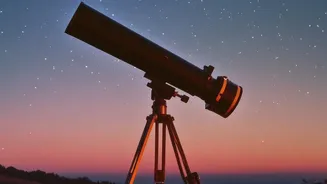
You don't need a telescope or binoculars to watch a meteor shower; in fact, they are best viewed with the naked eye, as you want to see as much of the sky as possible. The best time to watch is generally between midnight and the pre-dawn hours. For the Perseids, look towards the northeast, while the Orionids radiate from the constellation Orion. Here are some essential tips: Give your eyes 20-30 minutes to fully adjust to the darkness. Avoid looking at your bright phone screen, as it will ruin your night vision. Bring a reclining chair or a blanket so you can lie back comfortably. Dress in warm layers, as even summer nights can get chilly, especially at altitude. Finally, be patient. Meteors appear in random spurts, and the longer you watch, the more you will see.